

A good warm up is one of the simplest habits that separates comfortable, expressive playing from tense, error prone playing. Learning how to warm up before you play helps your body ease into motion, sharpens your focus, and lowers the risk of strain over the long run. The key word throughout is gentle. A warm up should feel loosening and easy, never forceful. This guide covers why warming up matters and how to do it kindly for both instruments and voice.
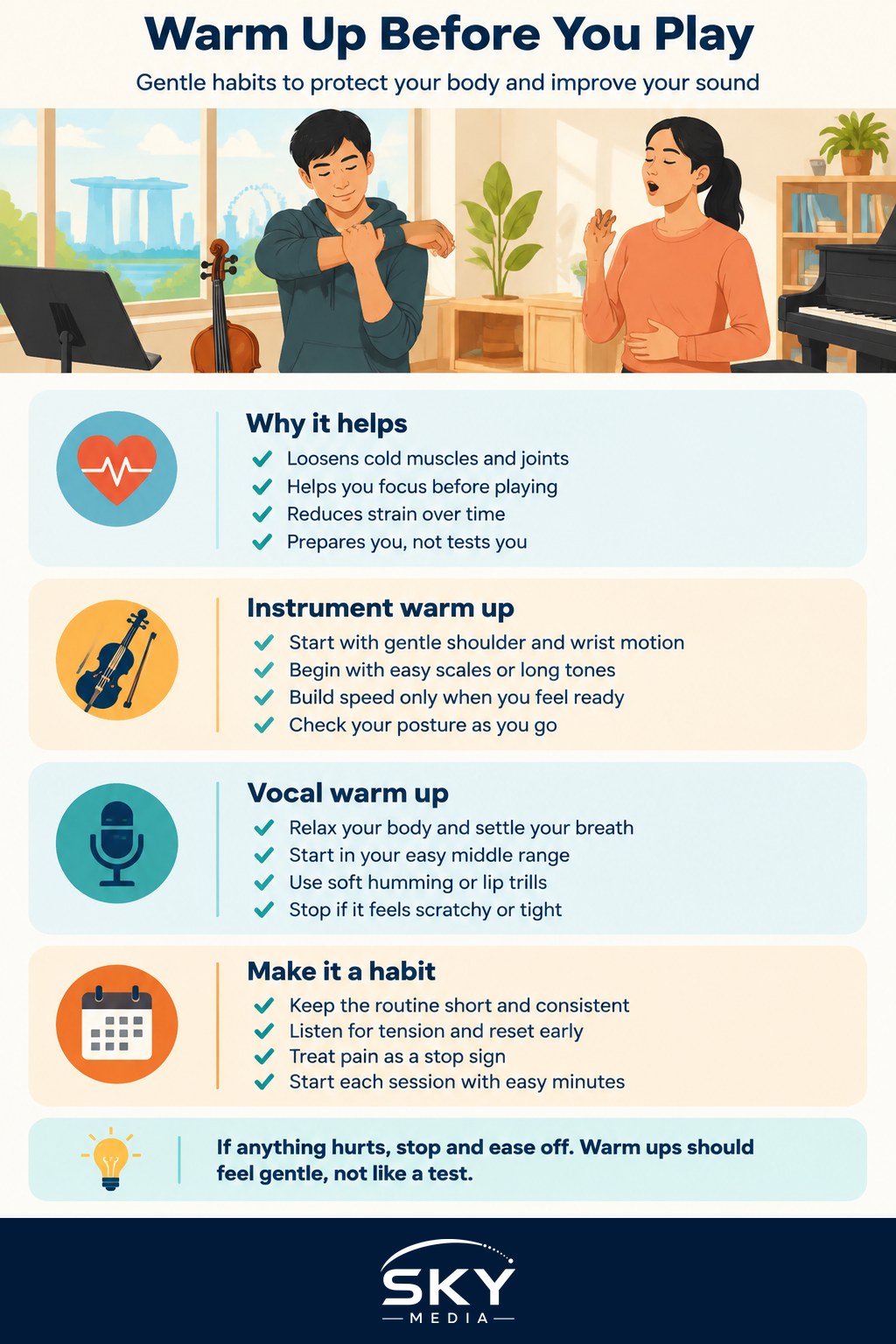
Why Warming Up Matters
When you jump straight into demanding playing with cold muscles and a wandering mind, two things suffer: your sound and your body. Warm muscles move more freely, so your fingers, wrists, breath, or embouchure respond better. Just as importantly, a warm up gives your brain a runway to shift into a focused, musical mindset before the real work begins.
There is also a health angle worth taking seriously. Musicians place small, repeated demands on the same muscles and joints, which over time can contribute to overuse injuries, often grouped under the term repetitive strain injury. Warming up gently, keeping good posture, and taking breaks all reduce that risk. None of this is medical advice, and if you ever feel persistent pain, numbness, or tingling, stop and see a doctor or physiotherapist rather than pushing on.
The golden rule is that a warm up prepares you, it does not test you. If any part of it hurts, that is a signal to back off, not to try harder.
Warming Up as an Instrumentalist
The aim is to get blood flowing and movements loose without straining anything. Start away from your instrument with a little gentle motion, rolling your shoulders, loosening your wrists, and taking a few easy breaths to settle. Then ease into your instrument slowly.
A gentle instrumental warm up might include:
- Slow, simple exercises at a comfortable tempo, such as easy scales or long tones, before anything fast.
- Light, relaxed movements rather than forceful playing, keeping your hands and shoulders loose.
- A gradual build, adding speed or difficulty only once you feel warm and easy.
- Regular check ins on your posture, so you are not hunching or gripping.
Practising slowly and cleanly at the start of a session also builds better technique, and our guide to how to practise music effectively explains why unhurried, focused reps pay off. Using a metronome for those first slow minutes can keep you honest, and our piece on practising with a metronome shows how to use one without turning warm ups into a race.
Watch for tension. If your shoulders creep up, your grip tightens, or your wrist aches, pause, shake it out, and reset. Warm ups should leave you feeling ready, not tired.
Warming Up as a Singer
The voice is delicate, so vocal warm ups should be especially gentle. Begin by relaxing your body and settling your breath, since singing rides on air. Start in the easy, comfortable middle of your range and only gradually explore higher or lower notes as your voice loosens. Never force volume or reach for extremes while cold.
Simple, kind vocal warm ups include light humming, gentle lip trills, and easy slides through a comfortable range, always at a soft to moderate volume. Stop the moment anything feels scratchy, tight, or painful. Our dedicated guide to vocal warm ups for singers walks through friendly routines, and our piece on caring for your singing voice covers hydration and rest, which matter just as much as the warm up itself. If you have persistent hoarseness or pain, do not push through it, and see a doctor or a qualified vocal coach.
Make It a Habit
Warming up takes only a few minutes, but done consistently it protects your body, improves your tone, and helps you play with ease. Keep it gentle, listen to how you feel, and never trade comfort for a faster start. Build a short warm up into the beginning of every session, treat any pain as a stop sign, and your future self will thank you. Start today with just five easy minutes, and let that small habit carry you for years.
Frequently Asked Questions
How long should a warm up before playing take? A few easy minutes is enough for most everyday practice, and the article suggests starting with just five. Allow a little longer if you are cold, tired or about to play something demanding. Judge it by how you feel: you should be loose and comfortable, not worn out.
Do I still need to warm up if I only have ten minutes to practise? Yes, but keep it very short and make it part of the session itself. Spend the first minute or two on slow, easy notes before moving to anything harder. A brief warm up is better than none, and rushing cold into fast passages is where strain tends to creep in.
Is stretching before playing a good idea? Gentle movements such as rolling the shoulders and loosening the wrists are fine and often helpful. Avoid forcing or holding painful stretches, as a warm up should feel easy. If a particular stretch hurts, stop, and ask a physiotherapist for guidance suited to your instrument.
Can I warm up quietly backstage before a performance? Yes, and it is usually wise to. Use light movements, slow breathing and quiet, easy playing or humming that will not disturb others or tire you out. Save your energy for the performance itself, and only go as far as feels comfortable.
Does an air-conditioned room affect how I should warm up? It can. Cool air may leave your hands, muscles and voice feeling stiffer, so allow a little more time to loosen up. Keep your hands warm if you can, and avoid blasting cold air directly on you. Singers should also sip water, as aircon dries the throat.