
Pigmentation is one of the most common skin concerns in Singapore. Year-round sun, heat and humidity can make melasma, sun spots and dark marks after acne linger for months. If you have searched for stronger treatments, you will almost certainly have come across hydroquinone. Hydroquinone in Singapore is treated differently from the brightening serums you can pick up at a pharmacy shelf, and understanding why helps you use it safely and avoid the illegal creams that regularly turn up online. This is general information, not medical advice: please speak to a doctor or dermatologist about your own skin.
What Hydroquinone Is and Why It Is Controlled
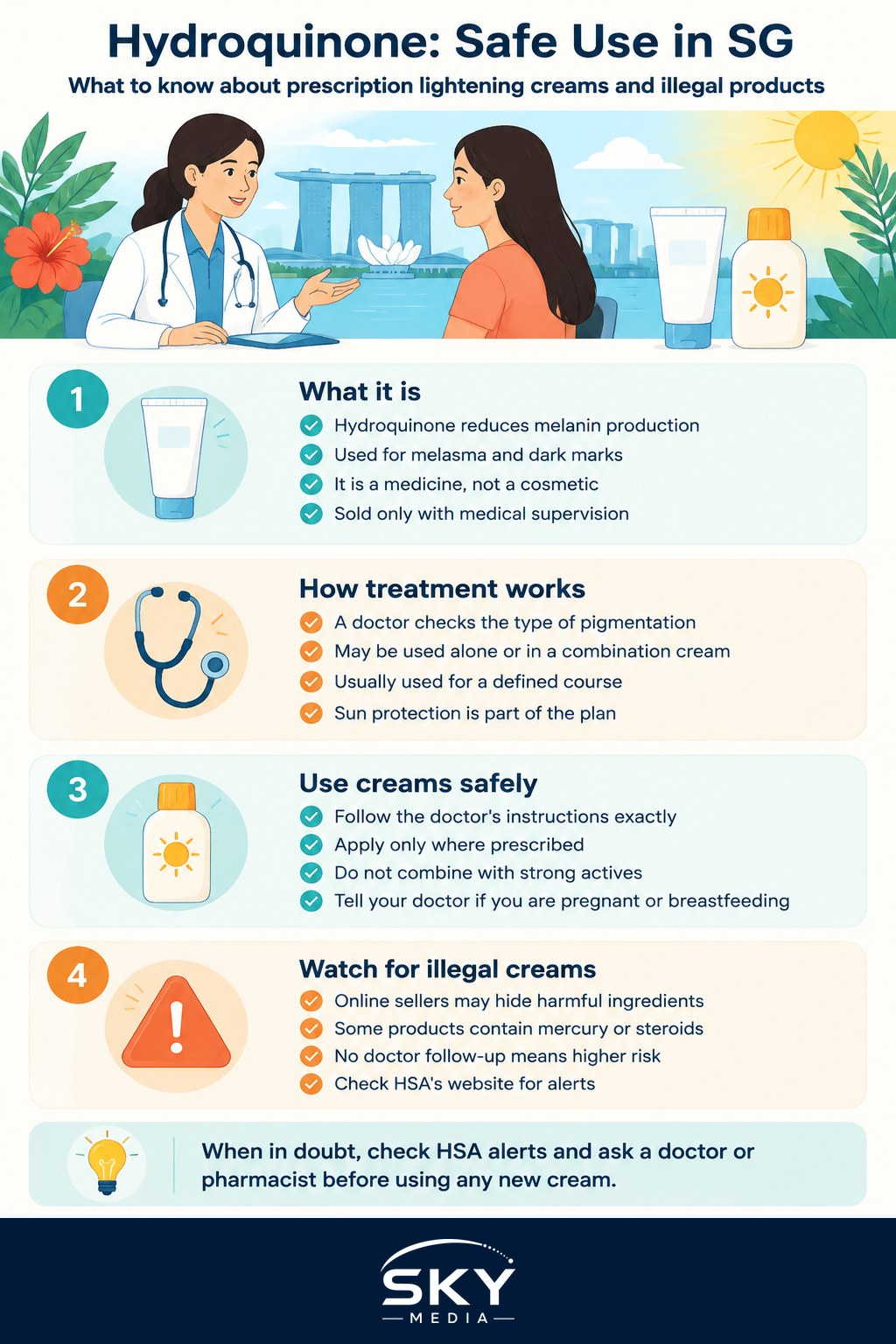
Hydroquinone is a skin-lightening agent that reduces the production of melanin, the pigment that gives skin its colour. Doctors have used it for decades to treat conditions such as melasma, post-inflammatory hyperpigmentation and some types of sun spots.
It is effective, but it is also potent. Misused, it can irritate skin, and prolonged or unsupervised use has been linked to side effects including a rare condition where the skin darkens with a bluish-grey tint. Because of this, Singapore regulates hydroquinone as a medicine rather than a cosmetic ingredient. Cosmetic products sold in Singapore are not allowed to contain it for skin lightening, so hydroquinone creams are generally available only through a doctor, with a prescription, and dispensed by a clinic or pharmacy.
In practice, this means:
- You will not legally find hydroquinone creams on normal beauty shelves.
- A doctor decides whether it suits you, at what strength and for how long.
- Products sold as cosmetics that claim to contain hydroquinone, or are found to contain it, are breaking the rules.
For the exact current regulatory status, the Health Sciences Authority (HSA) is the official source.
How Prescription Lightening Treatment Usually Works
If you see a GP with an interest in skin, an aesthetic doctor or a dermatologist, they will usually start by working out what kind of pigmentation you have. Melasma, freckles, sun spots and post-acne marks look similar but respond differently, and some pigmented spots need checking to rule out other skin conditions.
A treatment plan may include:
- A prescription cream, sometimes hydroquinone alone and sometimes a combination product that pairs it with other ingredients. Your doctor will explain what each one does.
- A defined course, typically with a planned break, rather than indefinite daily use.
- Strict sun protection, because UV exposure quickly undoes progress.
- Follow-up visits to check results and side effects.
- Other options such as gentler topical actives, chemical peels or laser, depending on your skin and budget.
If you are moving to Singapore and already use a prescription lightening cream from home, do not assume you can keep importing it. Our guide on how to bring prescription medicines into Singapore explains the general rules, and it is usually simplest to see a local doctor for a fresh prescription. If you need ongoing treatment, repeat prescriptions and refilling medication covers how refills typically work.
Using Prescription Creams Safely
Follow your doctor’s instructions exactly. These general habits help most people get better results with fewer problems:
- Patch test first on a small area if your doctor suggests it, and watch for redness or burning.
- Apply only where prescribed, usually on the pigmented patches rather than the whole face.
- Use sunscreen every day, including indoor days near windows, and reapply when outdoors.
- Do not combine with other strong actives such as retinoids or exfoliating acids unless your doctor has said it is fine.
- Stop and see your doctor if you notice significant irritation, darkening or any unusual change.
- Do not extend the course on your own or share your cream with others.
- Tell your doctor if you are pregnant, planning pregnancy or breastfeeding, since this changes what is suitable.
Results take time. Pigmentation often fades gradually over weeks to months, and maintenance with sun protection matters long after the cream course ends.
HSA Warnings About Mercury and Illegal Lightening Creams
HSA has issued many public warnings over the years about skin-lightening creams sold online, through social media and by unlicensed sellers. Tests on some of these products found hidden ingredients such as mercury, undeclared hydroquinone, tretinoin or potent steroids.
Why this matters:
- Mercury can be absorbed through the skin and may cause rashes, skin discolouration and, with longer exposure, harm to the kidneys and nervous system.
- Undeclared hydroquinone or steroids mean you are using a prescription-strength drug with no medical supervision and no idea of the dose.
- Steroid creams used long term on the face can thin the skin, trigger acne-like breakouts and cause other side effects.
The table below compares what you should expect from a legitimate source versus warning signs.
| Feature | Prescription from a doctor | Risky or illegal cream |
|---|---|---|
| Where you get it | Clinic or licensed pharmacy | Social media sellers, overseas sites, unlabelled jars |
| Ingredients | Listed and known to your doctor | Missing, vague or in another language only |
| Claims | Realistic, gradual improvement | “Instant whitening”, “results in 7 days” |
| Supervision | Follow-up and advice | None |
| Packaging | Proper labels, batch details | Plain containers, repacked products |
Check HSA’s website for its list of products found to contain harmful ingredients, and stop using any product that appears there. If you have used a suspicious cream and feel unwell or have skin problems, see a doctor and bring the product with you.
Over-the-Counter Alternatives and When to Stick With Them
Not everyone needs prescription treatment. Mild, recent dark marks may fade with consistent sunscreen and gentler cosmetic actives sold over the counter, such as tranexamic acid, alpha arbutin, niacinamide, azelaic acid at cosmetic strengths and vitamin C. These work more slowly but suit long-term use better.
Consider seeing a doctor rather than self-treating if:
- Pigmentation is spreading, changing shape or colour, or bleeding.
- Patches have not improved after a few months of good sun protection and gentle actives.
- You suspect melasma, which often needs a structured plan.
- You have sensitive skin or a history of reactions.
Making a Safe Choice
Hydroquinone can be a useful treatment, but in Singapore it belongs in a doctor’s hands rather than your online shopping cart. Get a proper diagnosis, use any prescription cream exactly as directed, protect your skin from the sun, and be very wary of creams promising dramatic overnight lightening. When in doubt, check HSA’s alerts and ask your doctor or pharmacist before you apply anything new.
Official sources: Health Sciences Authority (HSA)
Further reading: Managing Melasma