
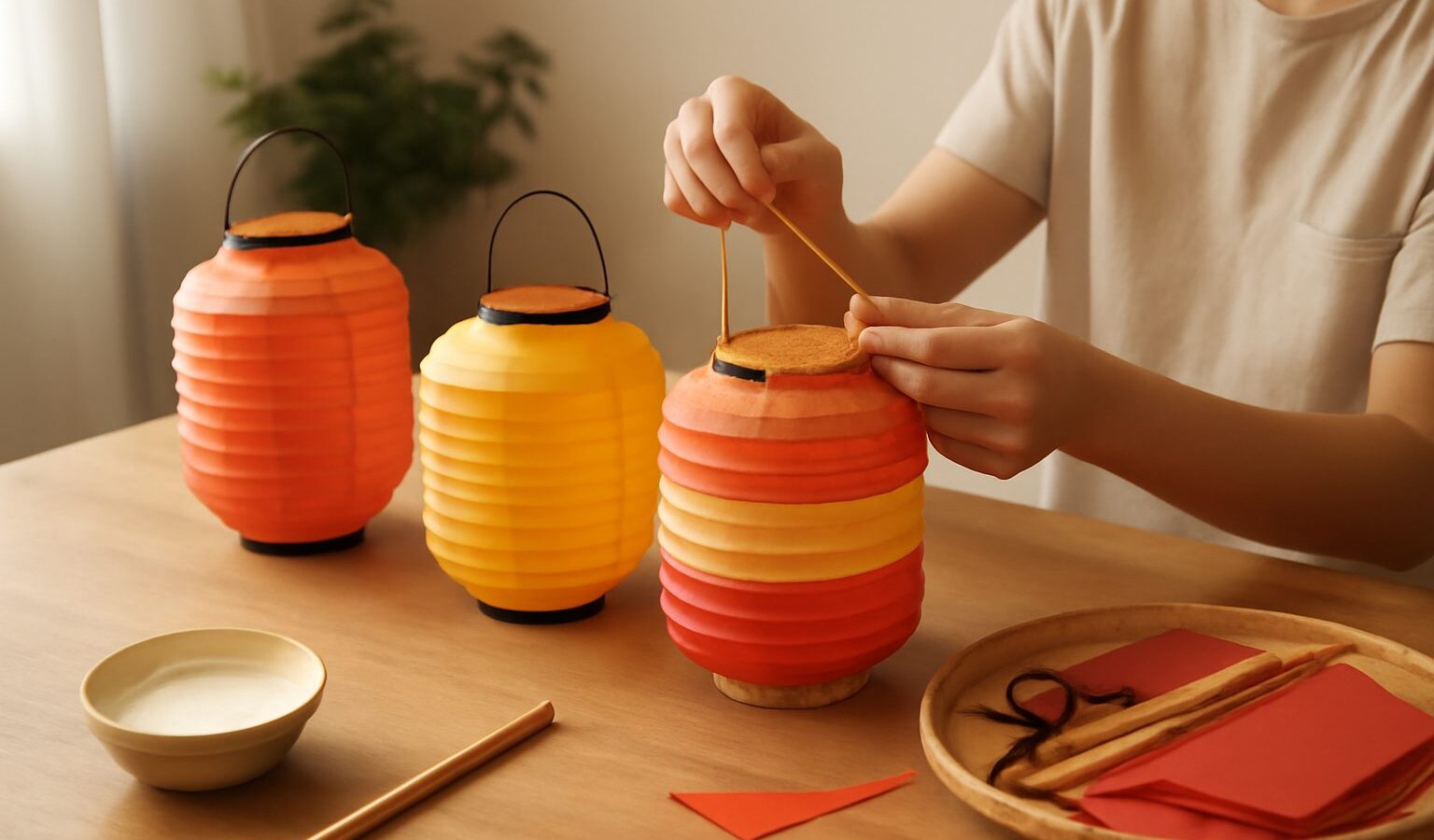
When the Mid-Autumn Festival draws near, Singapore glows. Children carry glowing lanterns through parks, streets are strung with colour, and craftspeople coax paper, wire and bamboo into shapes from rabbits to carp. This is the world of lantern making, a craft that lights up several of Singapore’s festivals and carries meaning far beyond simple decoration. From delicate handmade pieces to the crackly cellophane lanterns many grew up with, the tradition is a warm, shared part of the island’s calendar. This guide explains how traditional lanterns are made, the main types you will see, where to encounter the craft, and why it still matters.
What Lantern Making Is and Where It Comes From
A lantern is, at its simplest, a light held within a decorative frame, but in Chinese culture it is also a symbol rich with meaning. Lanterns have a long history in China as festival decorations, signals of celebration and expressions of hope, brightness and reunion. The craft travelled with Chinese communities across the region, and in Singapore it became woven into local festival life, above all the Mid-Autumn Festival, which falls in the eighth lunar month, usually around September or October.
Traditional lantern making combines a light frame, often bamboo or wire, with a covering of paper, silk or cellophane, shaped and decorated by hand. The forms carry meaning of their own. A carp or fish can suggest abundance, a rabbit recalls the legend of the moon, and a round lantern echoes the full moon and the idea of family reunion that sits at the heart of the Mid-Autumn Festival. Because these associations are cultural, they are held to different degrees by different families, and the joy of the lantern is shared far beyond any one community.
While Chinese lanterns are the most familiar, festive lighting features in other Singapore celebrations too, from the oil lamps and decorative lights of Deepavali to the glow of Hari Raya. Lantern making, then, sits within a wider island love of light as celebration.
How a Traditional Lantern Is Made
A classic handmade lantern is built up in patient stages, and the method varies with the type. A common approach looks like this:
- Shape the frame. Bamboo strips or wire are bent and tied into the outline of the lantern, whether a simple sphere or an animal figure.
- Prepare the covering. Paper, silk or coloured cellophane is cut to fit the panels or the curved surface of the frame.
- Cover the frame. The material is pasted or fixed over the structure, smoothed so it stretches cleanly.
- Decorate. Painting, cut paper patterns, tassels and characters are added, often in red and gold for good fortune.
- Fit the light. Traditionally a candle sat inside on a small holder, while modern lanterns use small bulbs or battery lights for safety.
The much loved cellophane lantern, a simple wire frame covered in translucent coloured film, is a Singapore childhood staple, easy to carry and glowing brightly with a candle or bulb inside. More elaborate lanterns can be true showpieces, large sculptural works built for public displays, requiring many hours and considerable skill. Modern makers increasingly favour battery lights over candles, which is both safer for children and kinder indoors.
Where to See and Try Lantern Making in Singapore
Lanterns are easy to find in season, and the craft is welcoming to people of every background who want to look or take part.
- Chinatown around the Mid-Autumn Festival, where streets are decorated with lanterns and stalls sell everything from cellophane classics to elaborate designs.
- Gardens, parks and community spaces, which often host lantern displays and walks that families of all races enjoy together.
- Community centres and libraries, which frequently run lantern making workshops for children and adults in the festival season.
- Temples and clan associations, where lanterns feature in decorations and celebrations, always to be viewed respectfully.
- Chinese New Year decorations, where red lanterns reappear as a symbol of luck and festivity early in the year.
Making a lantern yourself is one of the friendliest ways into the craft, and seasonal workshops are common. For related festival crafts and customs, our guides to kolam and rangoli art and henna and mehndi show how other communities mark their celebrations with colour and light.
Main Types of Lantern Compared
Newcomers often wonder how the many lanterns on sale differ. The table below sketches broad types, though styles overlap and makers mix them freely.
| Type | Materials | Character | Often seen |
|---|---|---|---|
| Cellophane lantern | Wire frame, coloured film | Simple, bright, child friendly | Mid-Autumn Festival |
| Paper lantern | Bamboo or wire, paper | Traditional, decorative | Mid-Autumn, celebrations |
| Silk lantern | Frame with silk covering | Elegant, more refined | Displays and decor |
| Round red lantern | Frame, red and gold paper | Symbol of luck and reunion | Chinese New Year |
| Display lantern | Large sculpted frames | Elaborate, showpiece | Public festival displays |
Why the Tradition Endures
Lantern making endures in Singapore because it is joyful, communal and open to all. The Mid-Autumn Festival is above all a time of reunion, when families gather to share mooncakes and children parade their lanterns, and the simple act of carrying a light through the evening connects generations. Grandparents recall the cellophane lanterns of their own childhood, and pass the pleasure on.
The craft keeps evolving. Battery powered and character themed lanterns sit beside traditional handmade ones, public displays grow ever more ambitious, and workshops invite people of every background to try their hand. Rather than fading, the tradition has broadened into a shared civic celebration that the whole island enjoys.
For a newcomer, the way into this tradition could not be gentler. Visit a lantern display in season, buy or make a simple lantern, and join the crowds strolling under the lights. To keep exploring Singapore’s living crafts, see our guides to traditional signboard carving and joss paper and effigy craft, two more traditions where humble materials are shaped into something meaningful. A lantern, after all, is a small promise that light and togetherness will return each year.