
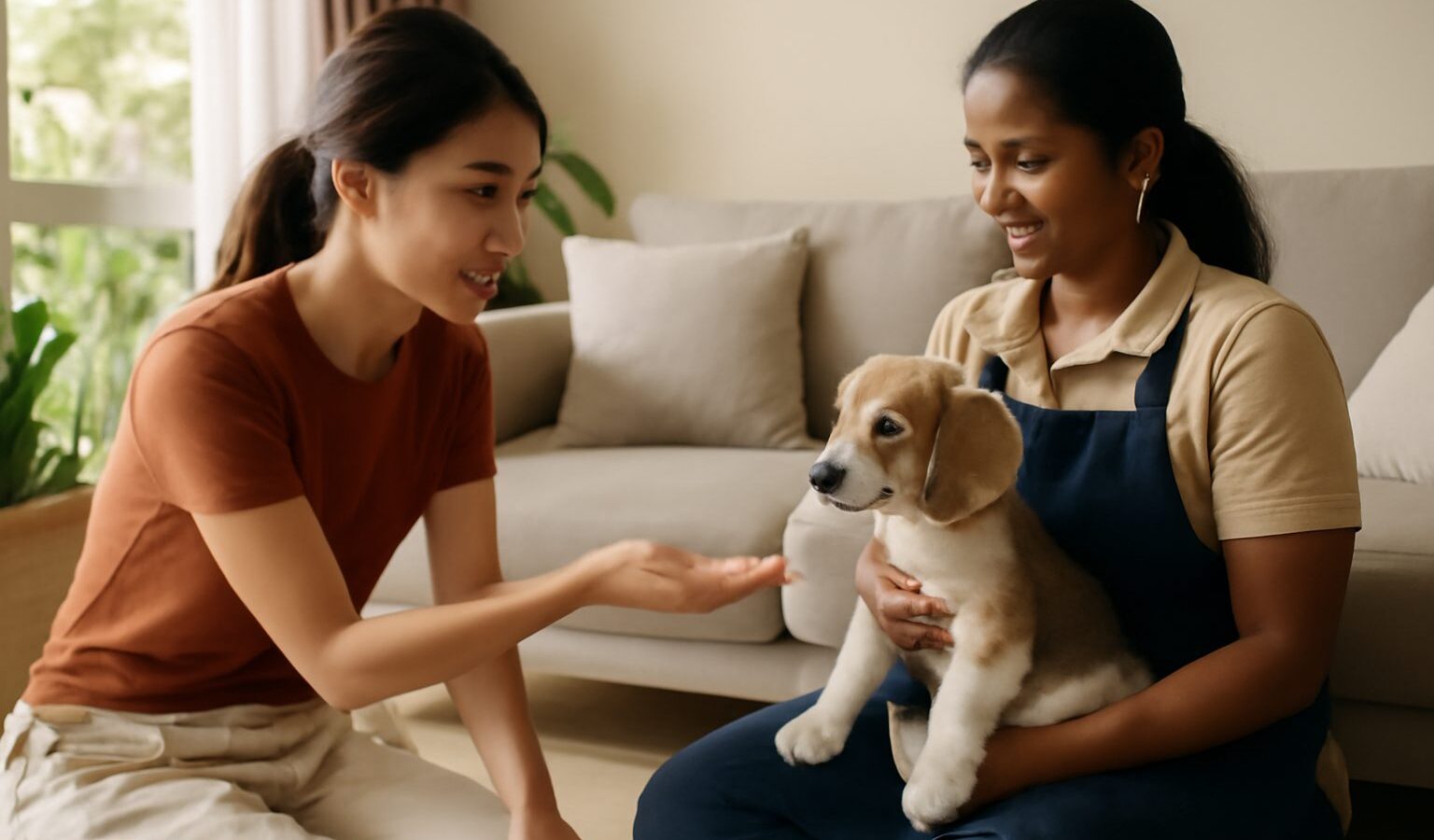
Many Singapore households have both a pet and a live-in domestic helper. A good pet and helper Singapore arrangement does not happen just because your helper is kind and your pet is friendly. Your helper may have never lived with an animal indoors, may come from a place where dogs are kept outside or seen as guard animals, or may simply be nervous. Your pet, meanwhile, has to accept a new person handling its food and walks.
This guide focuses on the practical side: the first meeting, the routines to hand over, the handling rules to agree on, and how to keep communication open so small problems do not become big ones.
Before Your Helper Arrives: Be Honest About the Pet
The introduction starts at the hiring stage. If you are still choosing someone, our guide to hiring a domestic helper in Singapore covers the general process, but for pet owners a few extra points matter.
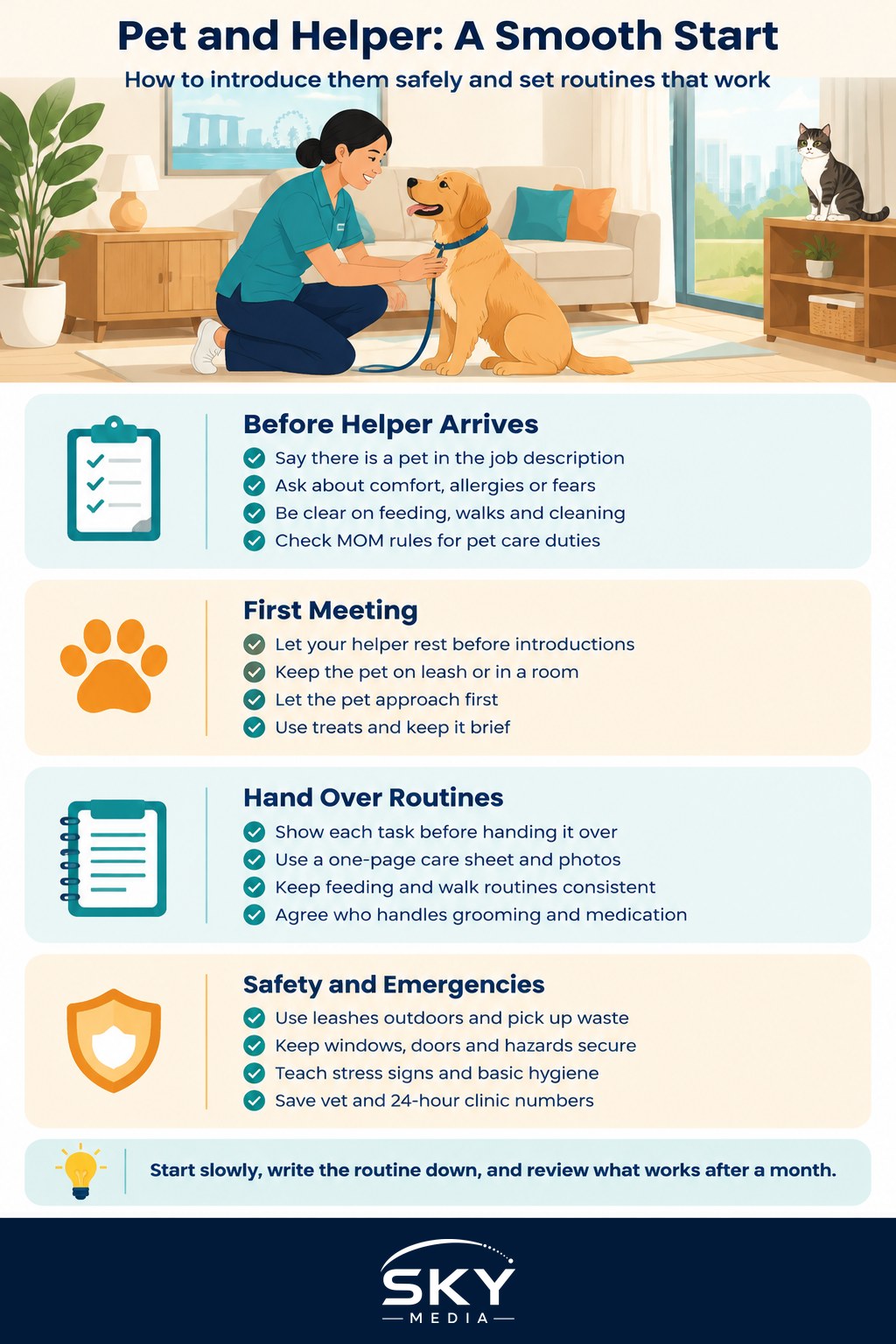
- Say clearly that there is a pet in your job description and interview, including species, size and temperament.
- Ask directly about comfort with animals. Some candidates are happy to help, some are willing but inexperienced, and some have allergies, a fear from a past bite, or religious or cultural reasons for not wanting close contact with dogs. None of these is a character flaw, but it is far better to know early.
- Be specific about the tasks you expect: feeding, cleaning litter, walking, bathing, giving medication, or only keeping an eye on the pet while you are out.
- Check what your employment terms say. Pet care is commonly treated as part of household duties, but the Ministry of Manpower (MOM) sets the rules on what a foreign domestic worker may be asked to do and where. Check current MOM guidance, especially if you are thinking of asking your helper to walk the dog far from home or care for someone else’s pet.
The First Meeting: Slow, Calm and Supervised
The aim of day one is simply a calm, positive first impression on both sides.
- Let your helper settle first. Give them time to unpack and rest before formal introductions. A tired, overwhelmed person and an excited dog are not a good mix.
- Keep the dog on a leash or the cat in its own room for the first meeting. This gives your helper confidence that the animal is under control.
- Let the pet approach, not the other way round. Ask your helper to stand or sit quietly, avoid eye contact with a nervous dog, and let the animal sniff.
- Use treats as a bridge. Hand your helper a few treats to offer on a flat palm. Pets quickly link a new person with good things.
- Keep it short. Five to ten minutes is enough. Repeat a few times over the first couple of days.
Cats usually need more time. Many will hide for a while. The same patience you would use when introducing a new cat to your home applies in reverse here: let the cat come out on its own terms and ask your helper not to pull it out from under furniture.
If your helper is genuinely afraid, do not force contact. Start with them simply being in the same room while you handle the pet, then progress to tossing treats, then feeding, then short supervised handling.
Handing Over Routines Step by Step
Do not hand over everything in the first week. Do each task together first, then let your helper do it while you watch, then let them do it alone.
| Task | Week 1: you lead | Week 2: helper leads, you watch | After that: helper alone |
|---|---|---|---|
| Feeding | Show portions, timings and where food is stored | Helper prepares and serves meals | Helper feeds; you check weight and appetite weekly |
| Litter or toilet cleaning | Show scooping, disposal and full changes | Helper cleans, you check method | Helper cleans daily; you review supplies |
| Dog walks | Walk together, show route and leash grip | Helper holds the leash, you walk alongside | Helper walks on agreed routes and times |
| Grooming and bathing | Demonstrate brushing and safe products | Helper brushes, you bathe | Agree which tasks stay with you or a groomer |
| Medication | You give all medication | Helper watches and learns | Only if you are both confident; follow the vet’s written instructions |
A few habits make the handover smoother:
- Write it down. A one-page care sheet on the fridge with feeding amounts, walk times, the vet’s name and number, and foods the pet must never eat. Translate it into your helper’s language if that helps.
- Use photos. A picture of the correct portion in the bowl is clearer than “one scoop”.
- Keep one routine per task. If you and your partner each feed differently, your helper will be confused and your pet may be double fed.
Handling Rules and Safety Basics
Clear rules protect your helper, your pet, and your family. Agree on them openly and explain the reason behind each one.
For dogs:
- Always use the leash outdoors. Explain how to hold it so a sudden pull does not cause a fall.
- Walk in the cooler early morning or evening. Pavements can get very hot in the Singapore afternoon.
- Know your estate’s rules and any rules from the Animal & Veterinary Service (AVS) on which dogs can be kept where, and how they must be handled in public.
- Pick up after the dog every time and bin it properly.
For cats:
- Keep windows and main doors closed or meshed. Explain that a cat slipping out of a high-rise flat is a real danger.
For everyone:
- Explain the warning signs that a pet is stressed: growling, flattened ears, hissing, a tucked tail.
- Agree that your helper never has to restrain a struggling pet alone.
- Keep human food, medicine, cleaning products and chocolate out of the pet’s reach.
- Teach basic hygiene: wash hands after handling pets, litter or waste, especially before preparing food or caring for a baby.
If your helper is also looking after children, read our guide on working with a helper to care for your child. Children, pets and a new caregiver together need extra thought, particularly around food bowls and toys, which some dogs guard.
Emergencies and Vet Visits
Your helper should know exactly what to do if something goes wrong while you are out.
- Save your vet’s number and the nearest 24-hour animal clinic’s number in their phone.
- Agree that they should call you immediately if the pet vomits repeatedly, stops eating, has trouble breathing, collapses, or is bitten.
- Keep a carrier ready and show them how to use it.
- Make clear they must never give human medicine to a pet.
Check that your insurance and household arrangements are in order too. The mandatory medical insurance for your domestic helper covers their own medical needs, so think through what would happen if they were scratched or bitten and needed a clinic visit.
Keeping Communication Open
The best pet and helper relationships are built on regular, relaxed check-ins rather than complaints.
- Ask open questions. “How was the walk today?” invites more than “Did you walk the dog?”
- Listen to their observations. Helpers often spot changes in appetite, behaviour or energy first, because they spend the most time with the pet.
- Revisit the plan. After a month, sit down and ask what is working and what is hard. Adjust tasks if needed.
- Respect boundaries. If your helper does not want the dog in their room, that is reasonable. Their rest area should be their own.
A Realistic Timeline
Most dogs accept a new household member within a few days to a few weeks. Cats can take longer, and a shy cat may stay cautious for months. Helpers who started out nervous often become confident within the first month or two if the process is gradual and they feel supported.
Done well, your pet keeps its routine when you work late or travel, and your helper feels respected rather than simply handed an extra chore.
Frequently Asked Questions
Can my helper refuse to handle my dog for religious reasons? Some helpers have genuine cultural or religious reasons for avoiding dogs, and it is better to discuss this before hiring. If pet care is a must, say so in the job description and interview. MOM sets the rules on what duties a domestic worker can be asked to do.
What if my helper is scared of my cat or dog? Do not force contact. Begin with your helper simply being in the same room while you handle the pet, then move to tossing treats, then feeding, then short supervised handling. Many nervous helpers grow confident within a month or two if the pace is gradual.
Is it safe to let my helper walk a large dog alone? Only if she can physically control the dog and has practised with you first. Walk together, show her how to hold the leash, and start with short routes at cooler times. If the dog pulls hard or reacts to other dogs, keep walks with you or hire a trainer.
Who pays if my helper is bitten or scratched by my pet? The mandatory medical insurance for your helper covers her own medical needs, but check the policy for exact limits. Clean the wound at once and see a clinic. Make sure your pet’s vaccinations are up to date, and ask your vet or insurer about any pet liability cover.
How do I stop my pet from being fed twice by different people? Keep one routine per task and put it in writing. A one-page care sheet on the fridge with portions and timings works well, and a photo of the correct portion is clearer than words. Agree that anyone who feeds the pet ticks it off on a simple chart.
Further reading: How to Introduce Your Pet to a Robot Vacuum