

Jaw Botox is one of the most requested non-surgical aesthetic treatments for people who want a softer, slimmer lower face. If you are researching jaw Botox in Singapore, you have probably seen terms like “masseter Botox”, “V-shape” and “face slimming jabs” used interchangeably. They usually refer to the same thing: small injections of botulinum toxin into the chewing muscles at the angle of the jaw.
This guide explains how it works, who tends to benefit, how often people repeat it, what affects the cost and the risks worth discussing. It is general information, not medical advice. Only a qualified doctor who has examined you can tell you whether it is suitable.
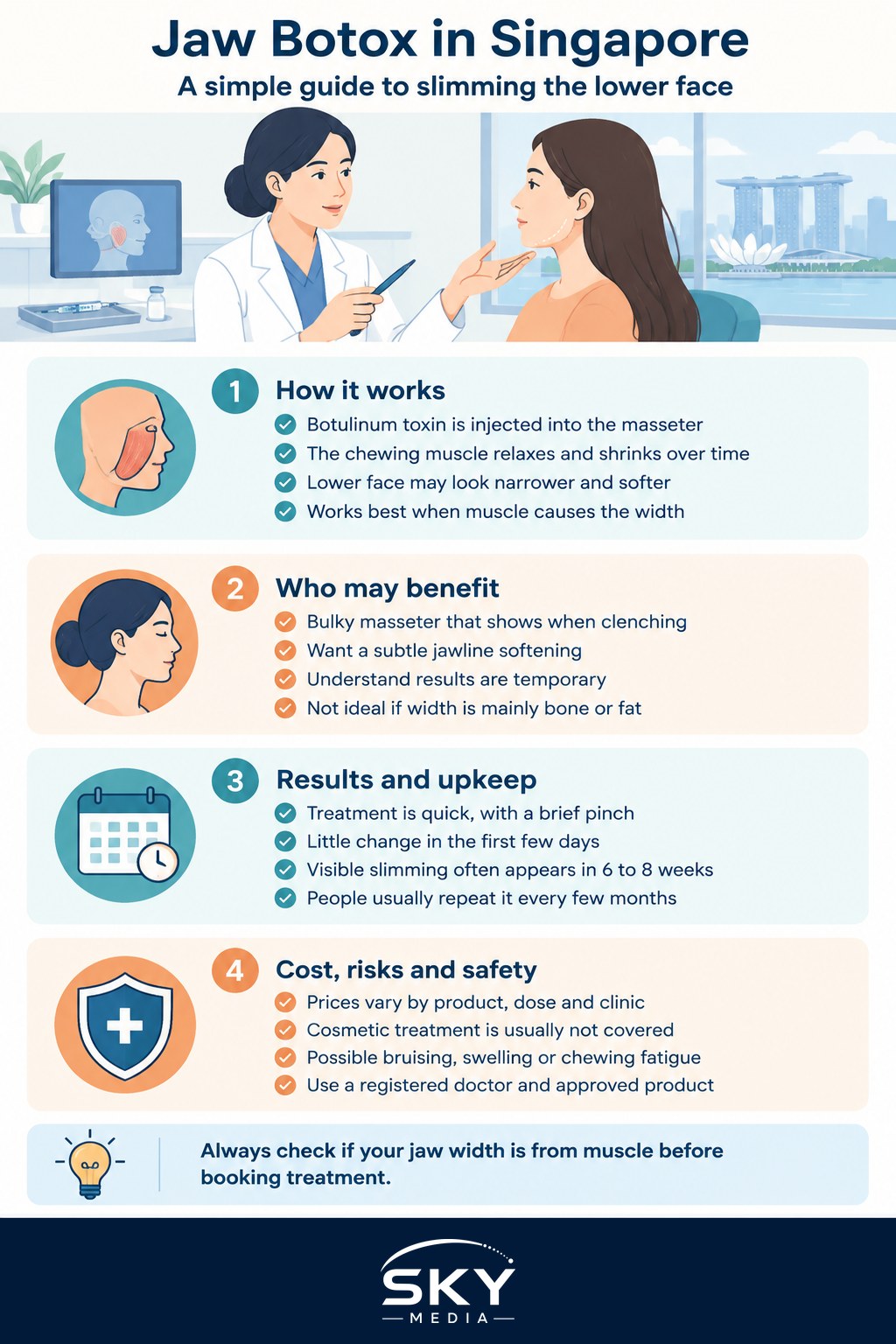
How Masseter Botox Slims the Face
The masseter is a thick muscle on each side of your jaw that you use for chewing and clenching. In some people it is naturally large, or it bulks up over time through habits like grinding, clenching or frequent gum chewing. A large masseter makes the lower face look wider and squarer.
Botulinum toxin temporarily reduces the signals from nerves to the muscle. When injected into the masseter:
- The muscle relaxes and is used less forcefully.
- Over the following weeks, it gradually shrinks from reduced use, a bit like any muscle that is exercised less.
- The lower face can look narrower and more tapered.
The key point is that jaw Botox only slims the face if muscle is the cause of the width. If your wide jaw comes mainly from bone structure, fat or skin laxity, Botox will do little, and a doctor may suggest other options or none at all.
Who Is a Suitable Candidate
A doctor will usually assess you by feeling your jaw as you clench, looking at your face shape and asking about your history. People who often do well:
- Have a visibly bulky masseter that firms up when they bite down.
- Want a subtle softening of the jawline rather than a dramatic change.
- Understand that results are temporary and need maintenance.
Treatment is often not recommended, or needs extra caution, for people who:
- Are pregnant or breastfeeding.
- Have certain neuromuscular conditions.
- Have had a reaction to botulinum toxin before.
- Are taking medications that may interact (tell the doctor everything you take).
If your main problem is jaw pain, clicking or clenching rather than appearance, that is a different conversation. Our guide to TMJ treatment for jaw pain and clenching covers the medical side, where Botox may be one of several options.
What to Expect: Results and How Often to Repeat
The procedure itself is quick. Typically, the doctor marks the injection points, may apply numbing cream or ice, and gives a few small injections into each masseter. Many people describe the sensation as a brief pinch.
Typical timeline (individual results vary):
- First few days: little visible change. Some people notice their bite feels slightly weaker.
- Around two to four weeks: chewing feels softer and the muscle begins to shrink.
- Around six to eight weeks: slimming effect is often most visible.
- Several months later: the muscle gradually regains strength and size.
Because the effect wears off, people usually repeat treatment every few months. Doctors often space sessions around four to six months apart at first, then adjust based on how you respond. Some people find the interval lengthens with repeated treatments, but this varies, and your doctor should guide timing rather than a fixed schedule.
| Aspect | Jaw (masseter) Botox | Dermal filler for jawline | Surgical jaw reduction |
|---|---|---|---|
| What it does | Relaxes and shrinks chewing muscle | Adds volume to define or contour | Reshapes bone permanently |
| Best suited to | Width caused by bulky masseters | Weak or undefined jaw contour | Width caused by bone structure |
| Downtime | Minimal | Usually minimal, possible swelling | Significant, with surgical recovery |
| How long it lasts | Temporary, repeated every few months | Temporary, varies by product | Permanent |
For a wider overview of how Botox differs from fillers, read Botox and fillers explained.
What Affects the Cost of Jaw Botox in Singapore
Prices vary widely between clinics, so be wary of any single “standard” figure you see online. Factors that affect what you pay include:
- The product used. Different brands of botulinum toxin are priced differently.
- The dose. Larger, stronger masseters often need more units.
- The doctor’s experience and the clinic’s location and overheads.
- Packages and top-ups. Some clinics include a review visit; others charge separately.
- Consultation fees, which may or may not be waived if you go ahead.
Ask for a clear, itemised quote before treatment. Cosmetic procedures are generally not covered by MediSave or standard health insurance, so plan for the full cost yourself, and remember it is an ongoing expense if you want to maintain the result.
Risks and Side Effects to Discuss With Your Doctor
Jaw Botox is widely performed, but no procedure is risk-free. Commonly discussed side effects include:
- Bruising, tenderness or swelling at the injection sites, usually short-lived.
- Chewing fatigue, especially with tough or chewy food, in the early weeks.
- Uneven results, where one side looks different from the other.
- Changes to your smile, if the product affects nearby muscles. This is one reason injection technique matters.
- A hollow or sagging look in some people, particularly if too much muscle volume is lost.
- Headache or flu-like symptoms in a small number of people.
Rarely, more serious reactions can occur. Seek medical attention promptly if you have difficulty swallowing, speaking or breathing after any Botox treatment.
How to Choose a Clinic Safely
In Singapore, injecting botulinum toxin is a medical procedure that should be done by a registered doctor. To protect yourself:
- Check the doctor on the Singapore Medical Council’s online register of doctors.
- Ask which product is used and confirm it is a product approved for use in Singapore by the Health Sciences Authority (HSA).
- Avoid unlicensed providers, “Botox parties” and offers from beauty salons or overseas sellers. Injectables bought online may be counterfeit or unsafe.
- Expect a proper consultation, including a discussion of risks, your medical history and whether Botox is even the right option for your face.
- Never feel rushed into treatment or a package on the day.
A good doctor will be honest if your jaw width is from bone or fat rather than muscle, and may advise against treatment. That honesty is a sign you are in the right place.
For general guidance on aesthetic treatments, the Ministry of Health and HealthHub are useful starting points, and your own GP can also advise.
Further reading: Face Laser Treatments in Singapore: Types and Differences