

Waking up with a sore jaw, a dull headache around the temples or teeth that feel tender is surprisingly common. Many people in high-pressure jobs clench their jaw during the day or grind their teeth at night without realising. When the discomfort keeps coming back, it is worth understanding how TMJ treatment in Singapore works and who to see. Searching for tmj treatment Singapore options brings up everything from dentists to beauty clinics, so knowing the differences matters.
This article explains what the temporomandibular joint is, the usual signs of trouble, and the main types of care available. It is general information, not medical advice. A dentist or doctor needs to examine you to work out what is going on and what suits you.
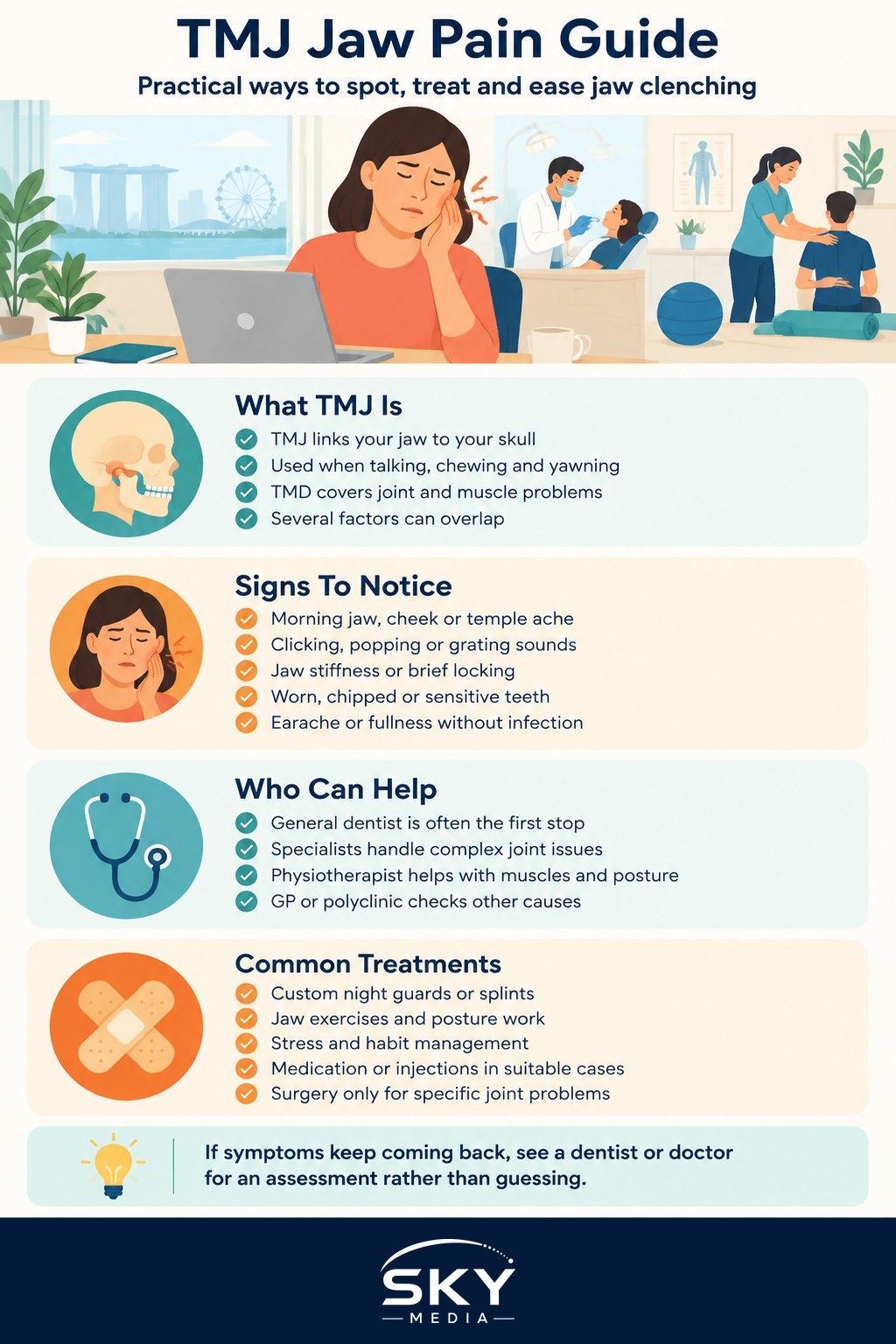
What the TMJ Is and Why It Hurts
The temporomandibular joint (TMJ) connects your lower jaw to your skull, just in front of each ear. You use it every time you talk, chew or yawn. Problems with the joint and the muscles that move it are often grouped under the term TMD (temporomandibular disorders), though many people simply say “TMJ”.
Common contributing factors include:
- Clenching and grinding (bruxism). Repeatedly pressing your teeth together, awake or asleep, overworks the jaw muscles, especially the masseter at the side of the face.
- Stress and posture. Long hours at a laptop with your head pushed forward can increase tension in the neck and jaw.
- Bite and dental factors. Some dental issues may play a part, which a dentist can assess.
- Joint changes or injury. Arthritis, past injury or displacement of the small disc inside the joint can cause pain or clicking.
Often more than one factor is involved, which is why care usually combines several approaches.
Signs That Point to Jaw Clenching or TMJ Trouble
You might notice:
- Aching in the jaw, cheeks or temples, especially in the morning.
- Clicking, popping or grating sounds when you open your mouth.
- A jaw that feels stiff, locks briefly or does not open fully.
- Worn, chipped or sensitive teeth, sometimes spotted by your dentist first.
- Earache or a feeling of fullness without an ear infection.
- A partner mentioning that you grind your teeth at night.
Some of these symptoms overlap with other conditions, such as dental infections, ear problems or nerve pain. See a doctor or dentist promptly if you have sudden severe pain, swelling, fever, difficulty opening your mouth, or symptoms after a fall or accident.
Who Treats TMJ Problems in Singapore
Different professionals look after different aspects of jaw pain, and you may see more than one.
| Professional | What they typically do | When to consider them |
|---|---|---|
| General dentist | Examines teeth, bite and jaw; checks for grinding wear; may make a custom night guard | First stop for most people with jaw pain or suspected grinding |
| Dental specialist (such as an oral and maxillofacial surgeon or orofacial pain specialist) | Assesses more complex joint problems, imaging and advanced treatment | If symptoms persist, the joint locks, or your dentist refers you |
| Physiotherapist | Guides jaw exercises, posture work and manual therapy for muscles | When muscle tension, stiffness or posture seems to drive the pain |
| GP or polyclinic doctor | Checks for other causes, discusses pain relief and stress, refers onwards | When symptoms are unclear or linked to headaches, sleep or stress |
Public dental services are available at polyclinics and public hospitals, and private dental clinics are widespread. Referral routes, waiting times and subsidies vary, so check with your polyclinic, the clinic itself or HealthHub for current information. If you have insurance, read your policy wording or ask your insurer or HR whether dental or physiotherapy visits are covered.
Common Treatment Approaches
Your dentist or doctor will suggest options based on your examination. Typical approaches include the following.
Night guards and splints
A custom-fitted guard or splint, usually worn at night, places a protective layer between your teeth. It can reduce wear from grinding and, for some people, ease muscle strain. Dentists generally recommend a professionally fitted device over generic boil-and-bite guards, but ask your dentist which is suitable for you.
Physiotherapy and jaw exercises
A physiotherapist can teach gentle stretching, controlled opening exercises and posture correction. Manual therapy on the jaw and neck muscles may also be used. Only do exercises you have been shown; forcing the jaw open can make things worse.
Managing stress and habits
Because clenching is often linked to stress, many people benefit from habit awareness. A common tip is the resting position: lips together, teeth apart, tongue resting lightly on the roof of the mouth. Setting reminders during work, improving sleep habits and finding ways to unwind can all help. If stress or anxiety feels overwhelming, speaking with a counsellor or doctor is worthwhile.
Medication
A doctor or dentist may discuss short-term pain relief or other medication depending on your situation. Do not start or combine medicines without professional advice.
Injections and aesthetic crossovers
Some clinics offer injections into the masseter muscle, which you may see advertised both for jaw clenching and for facial slimming. This is a medical procedure, and in Singapore it should only be done by registered doctors in appropriate clinical settings. If a beauty salon offers injections, that is a red flag. Our guide to regulated vs unregulated aesthetic treatments in Singapore explains how to tell the difference and what questions to ask. Discuss whether injections are appropriate for jaw pain with a doctor or dental specialist, who can explain benefits, risks and alternatives.
Surgery
For most people, conservative care is tried first. Surgical options are generally reserved for specific joint problems assessed by a specialist.
Everyday Habits That Support Your Jaw
Alongside professional care, these simple habits are commonly suggested:
- Eat softer foods during flare-ups and cut food into smaller pieces. Very chewy or hard foods can strain the joint.
- Avoid chewing gum and biting nails or pens.
- Use warmth or a cold pack on the jaw for short periods if your professional advises it.
- Watch your desk posture. Raise your screen to eye level and take regular breaks.
- Gentle facial relaxation. Light self-massage of the cheeks and temples can feel soothing, but avoid hard pressure and stop if pain increases.
- Limit very wide yawns by supporting your chin with your hand.
If you are exploring the wider topic of muscle and joint pain, our guide to tennis elbow and elbow pain follows a similar pattern of rest, physiotherapy and habit change for overuse problems elsewhere in the body.
What to Ask at Your First Appointment
Bringing a few questions helps you make the most of a consultation:
- What do you think is causing my jaw pain or clenching?
- Do I need any imaging or further tests?
- Would a night guard or splint help, and how should I care for it?
- Should I see a physiotherapist or specialist as well?
- What signs mean I should come back sooner?
- What will treatment cost, and is any of it claimable through my insurance?
With the right assessment, most people find a combination of care that eases their symptoms. The key is to stop ignoring morning jaw ache and get it checked, rather than relying on guesswork or unregulated quick fixes.
Frequently Asked Questions
Is jaw clicking without pain something to worry about? Painless clicking is common and often harmless, particularly if your jaw opens fully and you can eat normally. It deserves a dentist’s check if it becomes painful, the jaw locks or catches, or opening is limited. Avoid forcing the jaw or repeatedly popping it on purpose.
Can jaw pain from clenching go away on its own? Mild symptoms can settle once stress eases or you stop the clenching habit, especially with softer food and rest. If pain lasts, keeps returning or disturbs sleep, get it assessed rather than waiting. A dentist can check for wear and recommend suitable care.
Can children grind their teeth, and should I worry? Teeth grinding is fairly common in children and often passes with time. Mention it to your child’s dentist or doctor, particularly if you notice worn teeth, jaw complaints, morning headaches or disturbed sleep. They can check for causes and advise whether any treatment is needed.
Does my sleeping position affect jaw pain? It can. Sleeping on your stomach or with your face pressed into a pillow may strain the jaw and neck, while sleeping on your back with good neck support is often suggested. If pain persists despite changes, see a dentist or doctor to find the cause.
Can braces or wisdom teeth cause jaw pain? They can contribute in some people, as changes to the bite or pressure from erupting teeth may affect the jaw. Many people with braces have no problems, so do not assume the cause. A dentist can examine your teeth and joint and explain whether dental work is involved.
Official sources: HealthHub
Further reading: Jaw Botox for Face Slimming in Singapore