
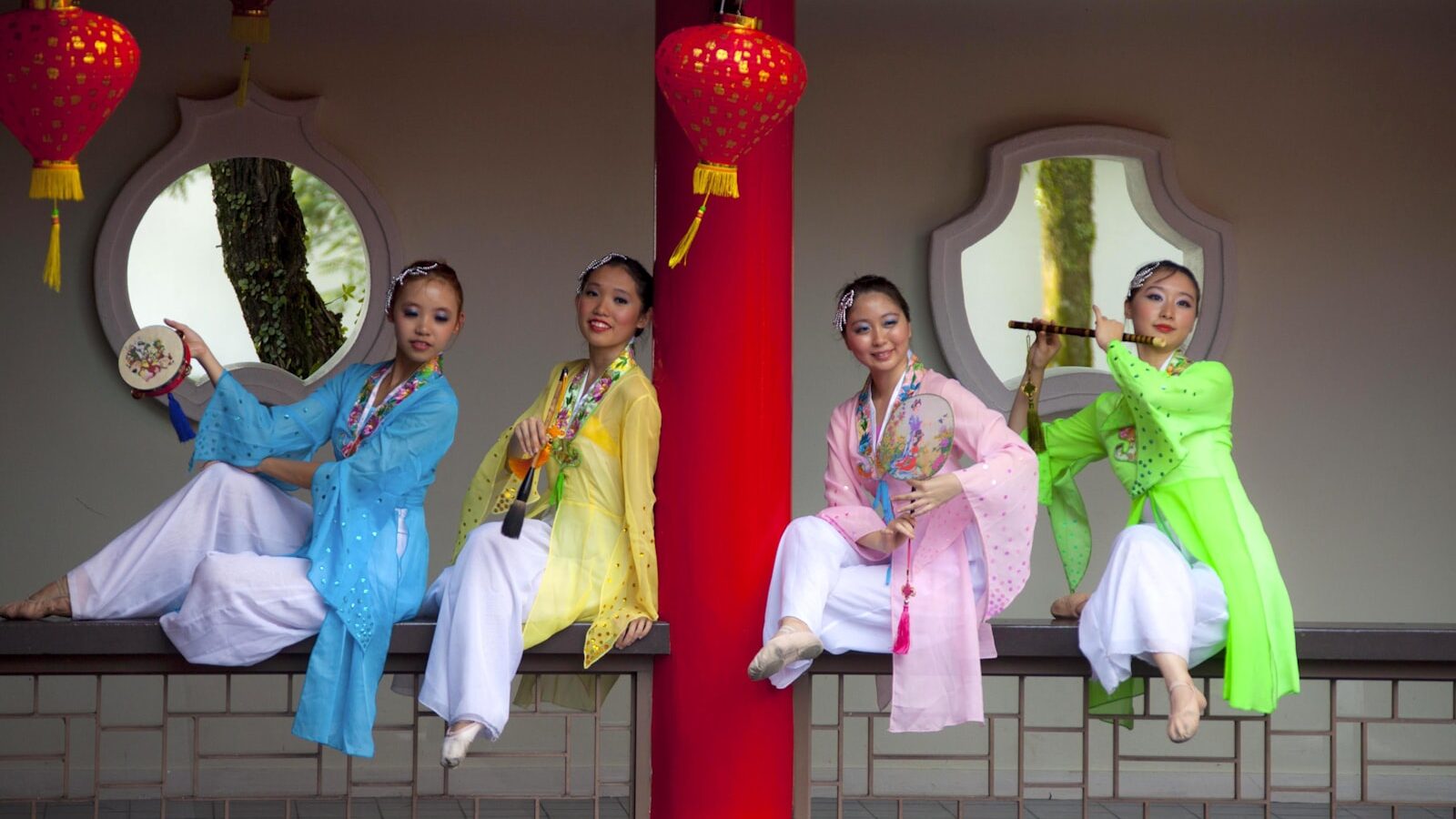
The sweet, singing voice of the erhu, the ripple of a pipa, and the bright surge of a full ensemble in flight are among the most beloved sounds of Chinese music. In Singapore, they come alive in two very different settings: the grand modern Chinese orchestra, and the ancient, meditative art of nanyin. Both are cherished here, performed by professionals, community groups and countless school ensembles. This guide explains what a Chinese orchestra is, what nanyin is, how each is performed, and where a curious newcomer can hear or learn them today.
Chinese musical traditions are wonderfully varied, shaped by region, dialect and each group’s style, so treat what follows as a warm introduction rather than a fixed account.
What a Chinese Orchestra Is and Where It Comes From
A Chinese orchestra, known in Mandarin as huayue or minyue, is a large ensemble of traditional Chinese instruments organised much like a Western symphony orchestra, with distinct sections that blend into a full, powerful sound. The modern form took shape over the twentieth century, as musicians standardised instruments and arranged them into sections so they could perform both traditional pieces and newly composed works.
A Chinese orchestra is usually built from four families of instruments:
- Bowed strings, most famously the erhu, a two stringed fiddle with a haunting, vocal tone, along with its lower pitched relatives.
- Plucked strings, including the pipa, a pear shaped lute, the hammered yangqin, the ruan and the guzheng zither.
- Wind instruments, such as the dizi bamboo flute, the reedy suona and the mouth organ known as the sheng.
- Percussion, a wide range of drums, gongs, cymbals and blocks that drive the rhythm and colour of the music.
Singapore has a professional national Chinese orchestra as well as many amateur and school ensembles, so the tradition is visible at every level. Chinese orchestra is one of the most popular co-curricular activities in local schools, which means large numbers of young Singaporeans learn these instruments and perform each year.
What Nanyin Is and How It Sounds
Nanyin, whose name means “southern music,” is one of the oldest surviving forms of Chinese music, associated with the southern Fujian region around Quanzhou. It is a refined chamber tradition, slow, graceful and intimate, and it has been recognised internationally as a treasured piece of intangible cultural heritage. Where a Chinese orchestra can be grand and sweeping, nanyin is gentle and contemplative, often performed by a small group.
A nanyin ensemble is typically small, and its sound centres on a few instruments played with great delicacy:
- A pipa held in a distinctive near horizontal position, different from the upright hold common elsewhere.
- A vertical bamboo flute known as the dongxiao, which weaves a soft, breathy melody.
- Bowed and plucked strings such as the erxian and sanxian, which add texture.
- A singer, whose vocal lines are traditionally sung in the southern Fujian dialect, carrying old poems and songs.
Listening to nanyin is a calming experience, closer to a quiet conversation among friends than a concert spectacle. Its survival across many centuries makes hearing it feel like a living link to a very old world.
Where to Hear or Learn Chinese Music in Singapore
Singapore is a rich place to encounter both traditions, and newcomers have many options:
- Concerts and performances, where the national orchestra and community ensembles present traditional and new works throughout the year.
- School and community ensembles, since Chinese orchestra is a widespread co-curricular activity and many community groups perform publicly.
- Cultural festivals and temple events, especially around Chinese New Year and other celebrations, where traditional music is part of the occasion.
- Nanyin community associations, long standing groups that preserve and teach nanyin and welcome those keen to listen or learn.
- Arts venues, which programme Chinese music as part of Singapore’s diverse performing arts calendar.
If you would like to learn, school and community ensembles are the friendliest entry points for orchestral instruments, while dedicated associations are the place to discover nanyin. Many welcome beginners of any background, and you do not need Chinese heritage to study the music with respect and enjoyment.
How Chinese Orchestra and Nanyin Compare
The two traditions share instruments and roots but feel very different in practice. A short comparison helps a newcomer appreciate each on its own terms.
| Feature | Chinese orchestra | Nanyin |
|---|---|---|
| Size | Large ensemble with sections | Small chamber group |
| Mood | Grand, dynamic, sweeping | Slow, gentle, meditative |
| Age of form | Modern twentieth century form | One of the oldest surviving traditions |
| Voice | Usually instrumental | Often features solo singing |
| Typical setting | Concert halls, schools | Association halls, intimate settings |
The table simplifies a rich musical world, so treat it as a friendly guide. If Chinese music draws you in, our companion guides to bharatanatyam and Indian dance and dikir barat show how Singapore’s communities each keep their own sound alive.
Why These Traditions Still Matter Here
Chinese orchestra and nanyin matter in Singapore because they preserve a musical heritage while proving it can grow and reach new audiences. The orchestra shows how tradition can be reshaped into something ambitious and contemporary, inspiring generations of young players. Nanyin, by contrast, safeguards an ancient art almost unchanged, offering a rare thread back to a distant past.
For a newcomer, both are welcoming windows into Chinese culture in Singapore. You do not need to read music or speak any Chinese dialect to be stirred by the erhu’s song or soothed by a nanyin melody. Attending a concert, or hearing music during Chinese New Year, gives you a felt sense of how deeply these sounds run through the community.
The traditions stay strong thanks to professional musicians, the many schools that run Chinese orchestra, devoted community associations that keep nanyin alive, and heritage bodies such as the National Heritage Board that support Chinese arts. Every rehearsal, recital and quiet nanyin gathering keeps this music breathing. For anyone hoping to understand the sound of Chinese Singapore, time spent with both the grand orchestra and the gentle art of nanyin is richly rewarding.
Explore More
Chinese orchestra and nanyin are two voices in Singapore’s multicultural soundscape. To hear how the island’s communities each keep their traditions alive, read our guides to bharatanatyam and Indian dance and gamelan and kompang music, part of the same shared heritage.