
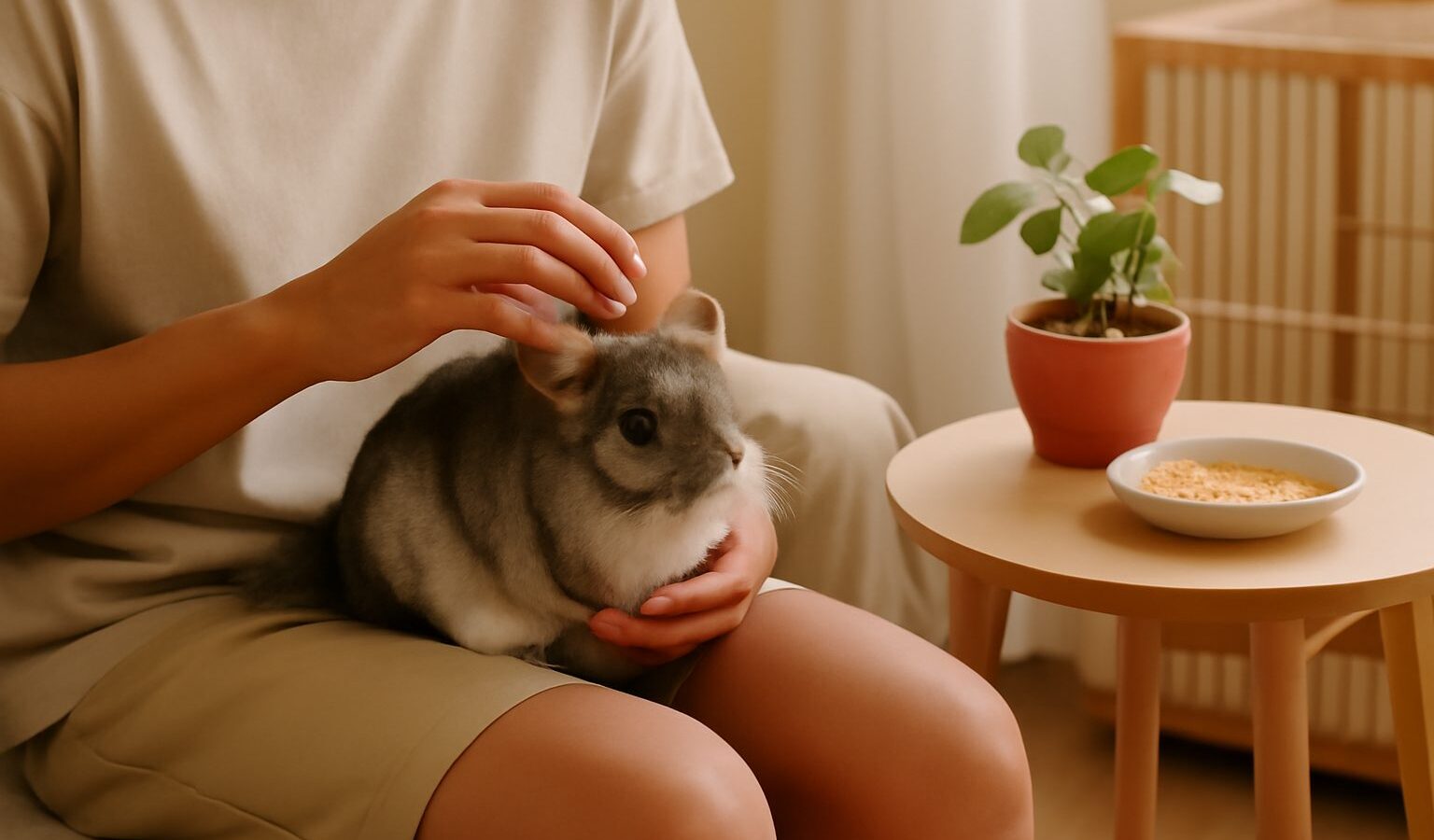
Soft, curious and undeniably charming, chinchillas have won plenty of admirers. But keeping a chinchilla in Singapore comes with one very serious challenge that every would-be owner must understand before anything else: these are cool-climate animals that do not cope with heat and humidity. In their native high Andes they live in cold, dry mountains, and their dense fur, the softest of any land mammal, traps heat easily. Our hot, humid climate is the opposite of what their bodies are built for, so this is not a pet to take on lightly.
Before you commit, check the current Animal and Veterinary Service (AVS, under NParks) rules and approved species list, and only ever source a chinchilla from a responsible, licensed seller. As always, it is worth asking small-animal rescues whether one needs rehoming, as adoption should be your first thought.
The Singapore Heat Challenge
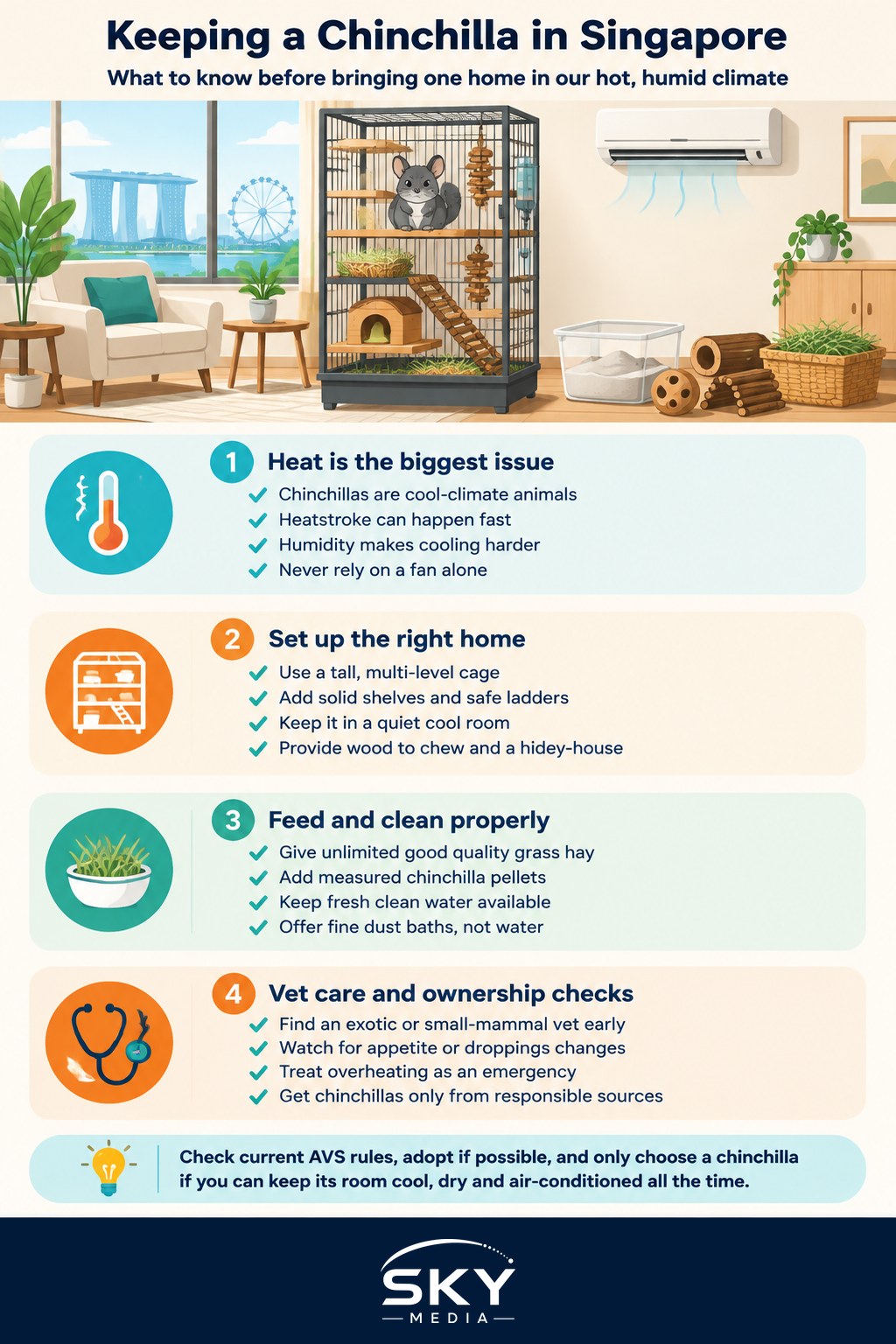
This point deserves its own section because it is the single biggest reason chinchilla care goes wrong here. Chinchillas can suffer heatstroke, which is life-threatening, at temperatures that feel perfectly comfortable to us. As a general rule they need to be kept cool, and warm, humid conditions put them at real risk. Signs of overheating include lying stretched out, bright red ears, drooling, lethargy and laboured breathing. Overheating is an emergency.
Realistically, keeping a chinchilla in Singapore means committing to reliable air conditioning in the room where the chinchilla lives, kept running consistently, not just when you are home. That has cost and practicality implications you must be honest with yourself about, including what happens during a power cut or when you travel. Never rely on a fan alone, as chinchillas do not lose heat effectively by sweating. Our guide to keeping pets cool in Singapore’s heat is worth reading, though a chinchilla needs far stricter temperature control than most pets.
If you cannot guarantee a consistently cool, dry environment, a chinchilla is not the right pet for you, and choosing a species better suited to our climate is the kinder decision.
Housing Your Chinchilla
Chinchillas are athletic and love to jump and climb, so they need a tall, multi-level cage with solid shelves and safe ladders. Place it in the coolest, quietest, air-conditioned room, away from direct sun and windows. Provide plenty of safe wooden items to gnaw on, as their teeth grow continuously, along with a hidey-house where they can retreat and rest during the day, since they are most active at dawn and dusk.
A dust bath is essential rather than optional. Chinchillas clean their fur by rolling in special fine chinchilla dust a few times a week, not with water, which can lead to fur and skin problems if the coat gets damp. Offer the dust bath for short sessions and then remove it to keep the coat and eyes healthy.
Diet and Daily Care
A chinchilla’s digestive system is sensitive and built for a high-fibre, low-fat diet. The foundation should be unlimited good quality grass hay, supplemented with a measured amount of appropriate chinchilla pellets, plus constant access to fresh, clean water. Hay is not a nice-to-have, it is central to both gut and dental health.
Go very easy on treats. Sugary or fatty foods, including many fruits and commercial treats, can cause serious digestive upset, so keep them rare and tiny if you offer them at all. If you are new to small pets, our guides to keeping hamsters and small pets and guinea pig care give useful general grounding, though a chinchilla’s temperature and dietary needs are more demanding.
Health and Exotic Vet Care
Chinchillas are prey animals and hide illness well, so subtle changes are important. Reduced appetite, fewer or smaller droppings, drooling, weight loss, or a change in behaviour all warrant prompt attention, as does any sign of overheating. This article is general information and not veterinary advice, and it must not be used for self-diagnosis.
Crucially, not every vet treats chinchillas, so before you bring one home, find an exotic or small-mammal vet who does, and arrange a check-up early. If your chinchilla shows signs of heatstroke, digestive trouble, or any sudden change, treat it as urgent and contact a vet or an emergency, 24-hour clinic straight away. Never give any human medicine or over-the-counter product to a chinchilla, as many are toxic, and only ever give medication a vet has prescribed and shown you how to administer.
A Caring Wrap-Up
A chinchilla can be a delightful, long-lived companion, often living well over a decade, but keeping a chinchilla in Singapore only works if you can genuinely provide a consistently cool, dry, air-conditioned home and are ready for the cost and commitment that involves. Add a tall cage, unlimited hay, regular dust baths and an exotic vet you trust, and be honest with yourself before you commit. Buy responsibly or adopt, check current AVS rules, and put your chinchilla’s comfort first. If you cannot meet the heat requirement, the most caring choice is to choose a different pet.
Frequently Asked Questions
What room temperature does a chinchilla need? Chinchillas need cool, dry conditions, and an air-conditioned room kept consistently at a comfortable cool level is the usual approach here. Ask an exotic or small-mammal vet for the safe range, and use a thermometer in the room to monitor it.
What happens to a chinchilla during a power cut or when I travel? Without cooling, a chinchilla can overheat quickly, so you need a backup plan before you buy. Think about who can check on the room, how cooling would continue and where the animal could be moved. If you cannot cover this, choose another pet.
How do I give a chinchilla a dust bath safely? Use fine dust made for chinchillas in a container deep enough to roll in, offered a few times a week for short sessions. Remove it afterwards so the coat and eyes stay healthy. Never bathe a chinchilla in water.
Can chinchillas live together or should I keep just one? Some chinchillas live in compatible pairs, but they can be territorial, so introductions need care and a spare cage. Many keepers manage a single animal well with daily interaction. Ask an exotic vet or experienced keeper for advice.
Are chinchillas good pets for children? Generally not ideal for young children. They are delicate, nocturnal or crepuscular, and dislike being held tightly or startled. Heat safety and diet need adult responsibility every day. Older, calm children with adult supervision are a better match.
Official sources: Animal & Veterinary Service