
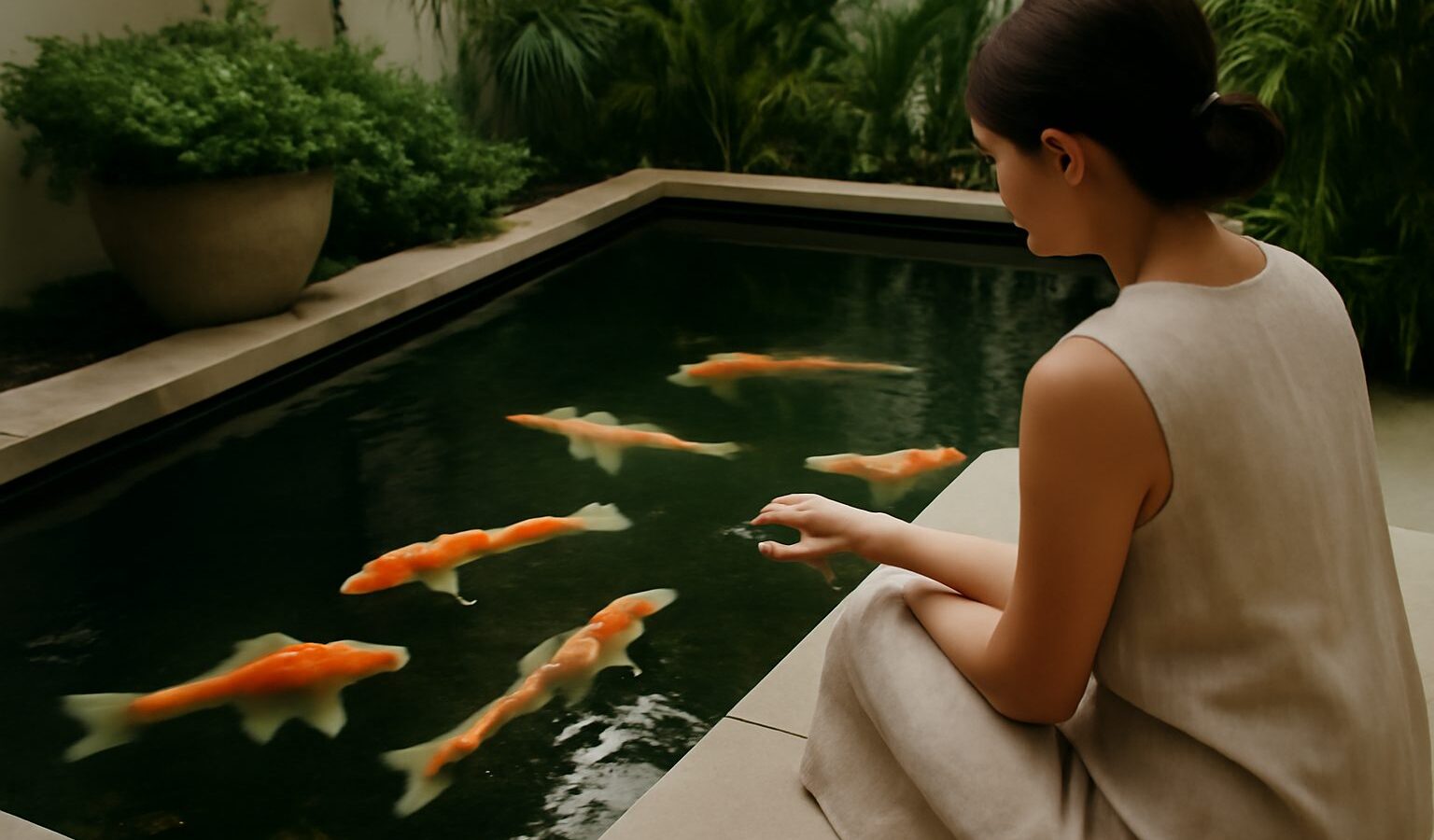
Few backyard features are as calming as a koi pond, with its graceful fish gliding beneath the surface. Keeping koi in a pond Singapore-style is very achievable thanks to our warm climate, but it is also a serious commitment. Koi are long lived, grow large, and depend entirely on you for clean, stable water. This guide covers pond basics, water quality, keeping mosquitoes at bay, and the responsibilities that come with these beautiful fish, so you can enjoy your pond for years to come.
Planning and Building the Pond
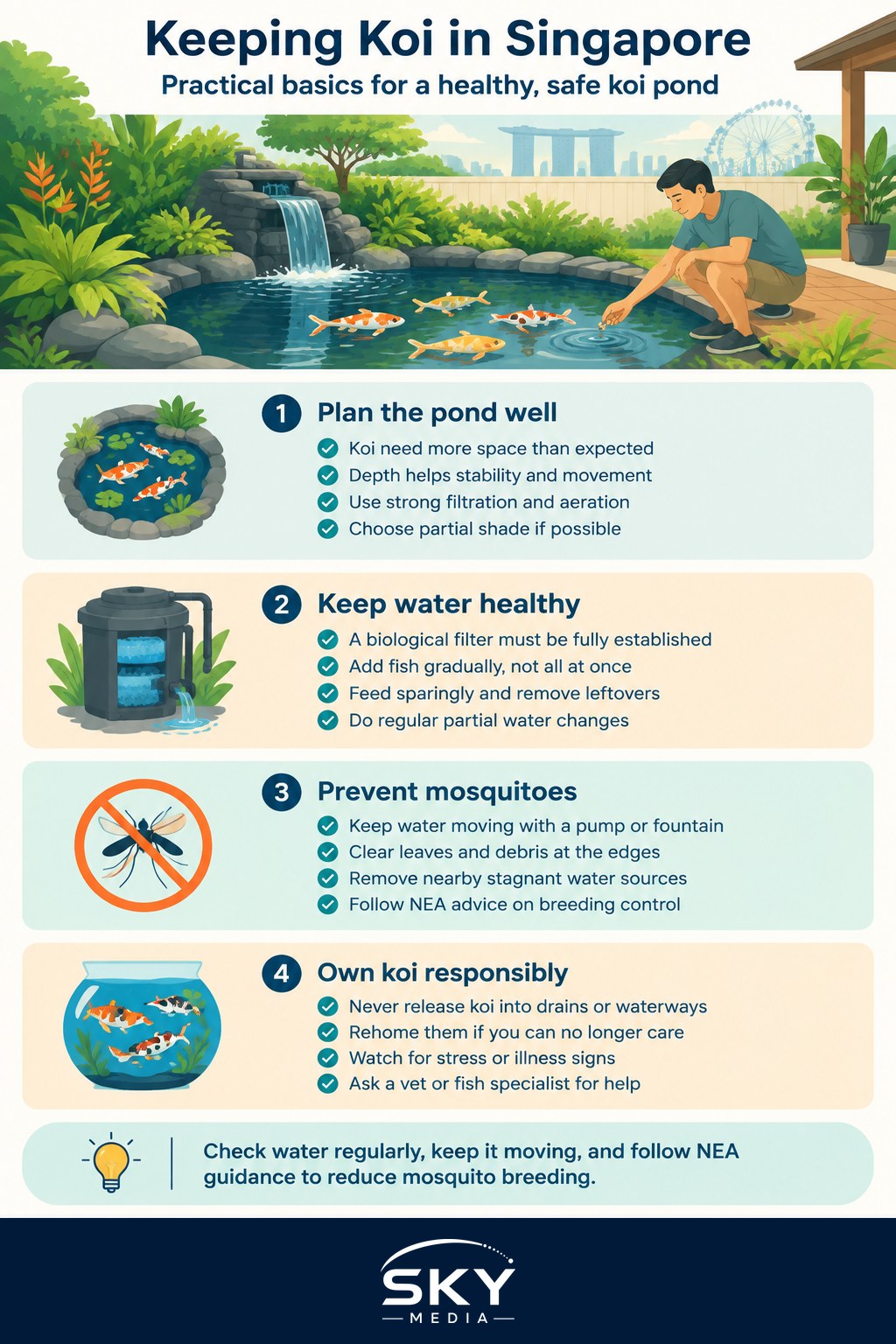
Koi need far more space than people expect. They can grow large over their lifetime and produce a lot of waste, so a pond that is too small quickly becomes hard to keep healthy. Depth matters as much as surface area, giving fish room to move and helping keep water conditions stable.
Before you dig or install anything, think through:
- Filtration. A strong biological and mechanical filter is essential, not optional. It processes fish waste and keeps water clear and safe.
- Aeration. Good oxygen levels are vital, especially in our warm weather, so a pump or aerator helps keep water moving.
- Location. Partial shade helps control algae and temperature, while some sunlight is fine. Avoid spots where heavy debris or runoff enters the pond.
- Safety and containment. Ensure the pond is secure and cannot overflow into public drains, and plan how you will do water changes responsibly.
If you are weighing up fish as pets more broadly, our guide to goldfish care and common myths in Singapore is a useful companion read, since many water quality principles overlap.
Water Quality Is Everything
With fish, you are really keeping water, and the fish live in it. Poor water quality is the leading cause of illness and loss, so a steady routine matters more than any gadget.
Establish the biological filter fully before adding many fish, and add stock gradually rather than all at once. Feed sparingly, since uneaten food fouls the water fast, and remove leaves and debris regularly. Carry out partial water changes on a schedule to keep conditions fresh. A simple water testing routine helps you spot problems early, and consistency beats sudden large corrections.
When you change or top up water, dispose of the old water responsibly through your household drainage, not into public waterways, and never in a way that could cause overflow or nuisance.
Preventing Mosquitoes and Protecting Public Health
Any body of standing water can become a breeding ground for mosquitoes, and that is a real concern here given the risk of dengue. A well run koi pond actually helps, because moving, filtered water with active fish is far less attractive to mosquitoes than stagnant water, and koi may eat some larvae. Even so, you must stay vigilant.
To keep your pond from contributing to mosquito breeding:
- Keep the water moving with a pump, filter, or fountain so the surface is not still.
- Remove any nearby containers, saucers, or blocked gutters that collect stagnant water.
- Clear leaves and debris that create sheltered still spots at the edges.
- Maintain filtration and aeration so the pond stays healthy and active.
Follow the National Environment Agency (NEA) guidance on preventing mosquito breeding, and act on any advice or notices in your area. Managing standing water responsibly is part of being a good neighbour as well as a good fishkeeper.
A Quick Pond Care Overview
| Area | What to do | Why it matters |
|---|---|---|
| Filtration | Run strong bio and mechanical filters | Processes waste, keeps water safe |
| Feeding | Feed small amounts, remove leftovers | Prevents fouling and poor water |
| Water changes | Regular partial changes | Keeps conditions stable and fresh |
| Mosquito control | Keep water moving, clear standing water | Reduces dengue and breeding risk, per NEA |
Never Release Koi Into the Wild
This point cannot be overstated. Never release koi or any other fish into drains, canals, reservoirs, or any public waterway. It is illegal, and it causes real ecological harm by disrupting local habitats and introducing disease or competition to native species. Koi are not part of Singapore’s natural ecosystem and do not belong in shared waters.
If you can no longer care for your koi, look for a responsible rehoming option instead, such as passing them to another experienced hobbyist or a suitable buyer. Plan for their full lifespan before you start, because these fish can live a very long time and rehoming a large koi is not always easy. Responsible ownership means committing for the long haul.
Keeping Your Koi Healthy
Healthy koi are active, feed well, and have clear eyes and clean fins. Watch for warning signs such as gasping at the surface, clamped fins, unusual spots or growths, loss of appetite, or listless behaviour. Many of these trace back to water quality, so check your water first when something seems off.
Fish health is a specialised field. For diagnosis or treatment, consult a vet or aquatic specialist experienced with fish rather than guessing or reaching for random remedies. This article is general information and not veterinary advice, and it does not include any specific medicines, doses, or figures.
Enjoying Your Pond Responsibly
A koi pond rewards patience and steady care. Build it big enough, filter and aerate it well, keep the water clean and moving, and stay on top of mosquito prevention in line with NEA guidance. Above all, commit to your fish for life and never release them into the wild.
If you are still exploring whether fishkeeping suits your household, our guides on getting a pet in Singapore and budgeting for a pet in Singapore will help you plan the time and cost involved. Done thoughtfully, a koi pond becomes a peaceful centrepiece you will enjoy for many years.
Frequently Asked Questions
How big does a pond need to be for koi? As big and deep as you can manage, because koi grow large and produce plenty of waste. A small pond turns bad quickly and is hard to keep healthy. Get advice from an experienced koi hobbyist or a pond specialist on the size that suits the number of fish you plan to keep.
How many koi can I keep in one pond? Fewer than most beginners expect. The right number depends on pond size, filtration and how large the fish will grow, so start with a few and add stock gradually. Overcrowding is a common cause of poor water and illness.
What do I feed koi and how often? Feed a good-quality koi food in small amounts and remove anything left uneaten. Overfeeding fouls the water fast, which is worse for the fish than a lighter feed. Ask a koi supplier or aquatic vet for a routine that suits your fish and the water temperature.
Is a koi pond expensive to set up and maintain in Singapore? It can be, because of filtration, pumps, electricity, water changes and the fish themselves. Prices vary a lot, so get several quotes and ask about running costs, not just the build. Budget for equipment replacement and for a specialist if fish become ill.
Do I need approval to build a pond at home? It depends on your home type and where the pond goes, so check before building. Landed owners should confirm with the relevant authorities, and HDB or condo residents with their management. Ask about drainage, structural weight and any rules on water features.