

Booking a Kenya safari from Singapore delivers one of the greatest wildlife experiences on earth, from the plains of the Maasai Mara to the elephants of Amboseli beneath Mount Kilimanjaro. This guide covers the essentials of planning the trip. It is a general overview only, so please confirm current visa rules, flight options and prices yourself before you book.
Getting there from Singapore
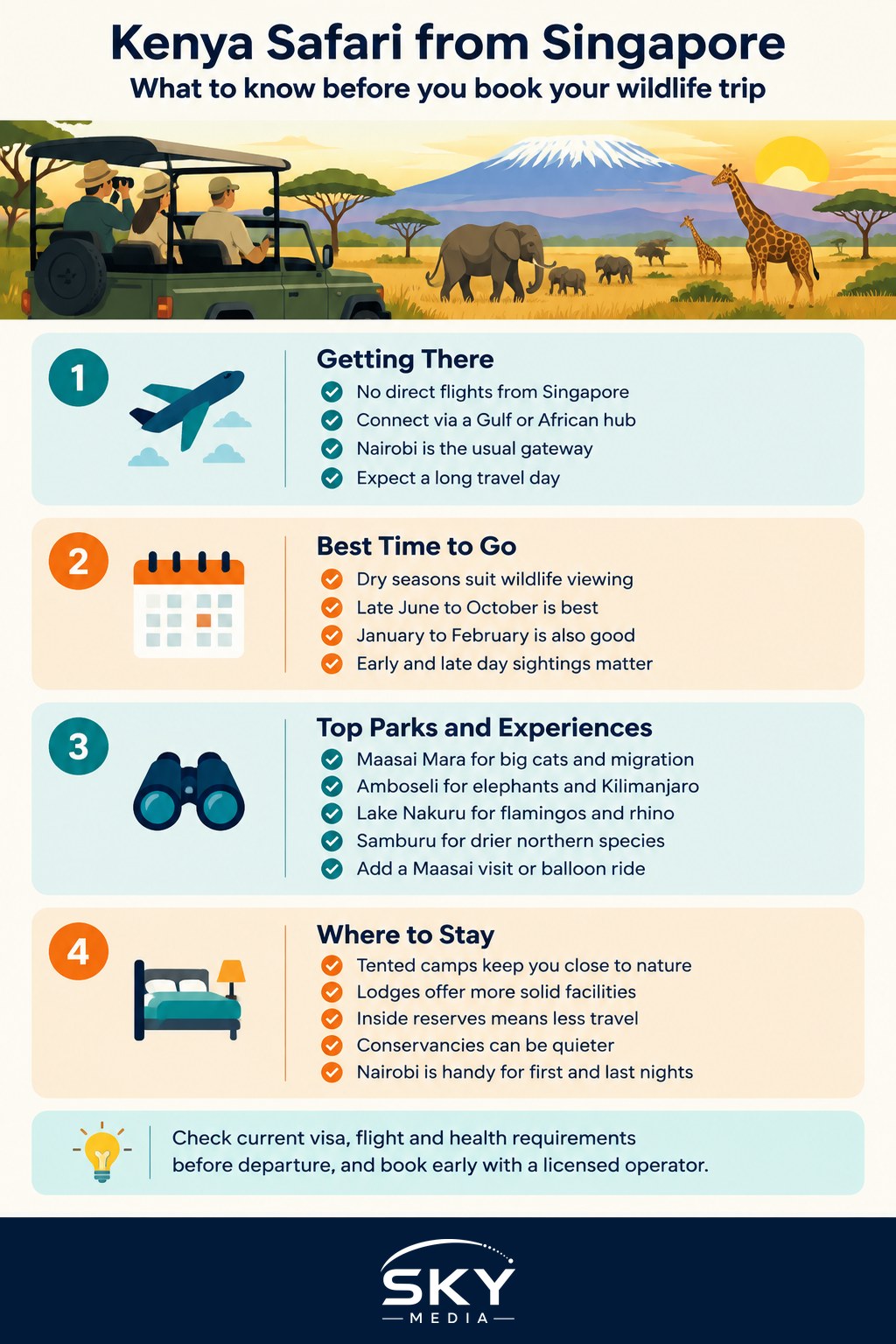
There are no direct flights, so you will connect through a Gulf or African hub before landing at Jomo Kenyatta International Airport in Nairobi, the usual gateway. With one change of plane, the trip is normally a long travel day once you include the layover.
Most safaris begin with a night in or near Nairobi, followed by a road transfer or a short domestic flight to your chosen reserve. Small aircraft flights save many hours and are popular for reaching the Maasai Mara, while road transfers are cheaper and let you see the countryside. Inside the parks, game drives run in sturdy vehicles with an experienced driver guide, which is the heart of the experience.
Best time to visit
The dry seasons, from around late June to October and again from January to February, are generally best for wildlife viewing, as animals gather near water and the bush is less dense. The famous Great Migration of wildebeest and zebra typically reaches the Maasai Mara between roughly July and October, though nature keeps its own timetable.
The wetter months bring lush scenery, newborn animals and fewer crowds, but some tracks can be muddy. Whenever you go, early mornings and late afternoons are the prime hours for sightings, so a well planned day matters more than the exact month.
Top things to see and do
The Maasai Mara is the centrepiece, a rolling grassland famous for lions, elephants, buffalo, giraffe and, in season, the dramatic river crossings of the migration. Amboseli is prized for large elephant herds framed by Kilimanjaro, while Lake Nakuru is known for flamingos and rhino. Samburu in the north offers drier landscapes and species you will not see further south.
Beyond the game drives, a respectful visit to a Maasai community can add cultural depth, and hot air balloon flights over the plains are a memorable splurge. Many travellers pair a safari with a few relaxing days afterwards on the coast or a neighbouring island.
The classic goal for many is to see the so called big five of lion, leopard, elephant, buffalo and rhino, though a good safari is about far more than a checklist. Cheetahs sprinting across open ground, giraffes browsing at eye level from a raised camp, and vast flocks of birds all leave a lasting impression. A knowledgeable guide makes the difference, reading tracks, explaining behaviour and positioning the vehicle patiently rather than racing between sightings. Give yourself at least three or four nights in the reserves so you are not rushing, and consider combining two contrasting parks for variety, such as the cats of the Maasai Mara followed by the elephants of Amboseli.
How Kenya’s parks compare
| Park or reserve | Best for | Highlight season | Terrain |
|---|---|---|---|
| Maasai Mara | Big cats and migration | Jul to Oct | Open grassland |
| Amboseli | Elephants and Kilimanjaro views | Dry months | Flat plains |
| Lake Nakuru | Flamingos and rhino | Year round | Lake and woodland |
| Samburu | Northern species | Dry months | Semi arid scrub |
Where to stay
Safari accommodation is usually described by type rather than city district. Tented camps place you close to the action with canvas comfort and open air atmosphere, while safari lodges offer solid buildings, pools and wider facilities. Both come in a range from simple to very plush.
Camps and lodges sit either inside the reserves or in the private conservancies that border them. Staying inside means less travel to reach the animals, while conservancies often allow quieter drives, night drives and walking safaris away from the busiest areas. In Nairobi, the districts near the national park and the airport are convenient for the first and last nights.
Practical tips
For entry, Singapore passport holders should check the latest requirements on the ICA website and with the Kenyan authorities or the official electronic travel authorisation portal before departure, as systems can change. Apply in good time rather than at the last minute.
On health, consult a travel clinic well ahead, as malaria precautions and certain vaccinations are commonly advised for safari regions. See our travel health and vaccinations guide for general guidance and always seek professional medical advice. The currency is the Kenyan shilling, with US dollars often accepted for park fees and tips, and cards used at lodges. Safaris sit in a higher budget band once flights, park fees and quality camps are included.
Choose licensed, reputable operators and guides, follow their safety instructions closely and never leave the vehicle unless told it is safe. Respect the wildlife by keeping a proper distance, staying quiet and never feeding or crowding animals, as this protects both you and them. Pack neutral coloured clothing, a warm layer for chilly morning drives, sun protection, binoculars and a good camera with a zoom lens. Soft luggage is preferred on small aircraft, which also enforce strict weight limits, so pack light and check the allowance in advance. Ask permission before photographing people and support community run initiatives where you can. Tipping guides and camp staff is customary, so set aside some small notes, and carry any essential medication in your hand luggage given the remote settings.
An unforgettable adventure
A Kenya safari combines raw wildlife spectacle with wide, beautiful landscapes and warm hospitality. Book with licensed operators, travel in a suitable season, respect the animals and take sensible health precautions, and the long journey from Singapore becomes the trip of a lifetime.
Explore more: Nature and adventure travel from Singapore · Travel health and vaccinations · Cape Town from Singapore
Frequently Asked Questions
Do I need malaria tablets or vaccinations for a Kenya safari? Malaria precautions and some vaccinations are commonly advised for safari regions. See a travel clinic well ahead of departure, as a doctor can advise based on your health and itinerary. Do not rely on general guidance alone.
Should I fly or drive to the Maasai Mara? Small aircraft save many hours and are popular for reaching the Maasai Mara, while road transfers are cheaper and show you the countryside. Small planes enforce strict weight limits, so soft luggage and light packing are important.
How many nights do I need on safari? Give yourself at least three or four nights in the reserves so you are not rushing. Consider two contrasting parks, such as the Maasai Mara followed by Amboseli, for variety. A good safari is more than a checklist of animals.
Is it better to stay in a park or a private conservancy? Staying inside a reserve means less travel to reach the animals. Private conservancies often allow quieter drives, night drives and walking safaris away from the busiest areas. Both come in a range from simple to plush.
What should I pack and how much should I tip on safari? Pack neutral coloured clothing, a warm layer for chilly mornings, sun protection, binoculars and a zoom lens. Tipping guides and camp staff is customary, so carry small notes; ask your operator what is appropriate.
Further reading: Madagascar From Singapore · Namibia From Singapore · Victoria Falls from Singapore: A Travel Guide