
Kick scooters are one of the most popular ways for children to burn energy around the estate, especially during the school holidays. They are cheap, light and easy to learn. They are also fast enough to cause real injuries to the rider or to a pedestrian. Knowing the kids scooter rules Singapore applies to footpaths and shared paths helps you set sensible limits before your child zooms off.
This guide covers the non-motorised, push-along kick scooters that children use. It does not cover e-scooters or mobility aids, which have separate rules. Regulations are set by the Land Transport Authority (LTA) and can be updated, so check LTA’s active mobility pages for the current position.
How Kick Scooters Are Treated Under the Rules
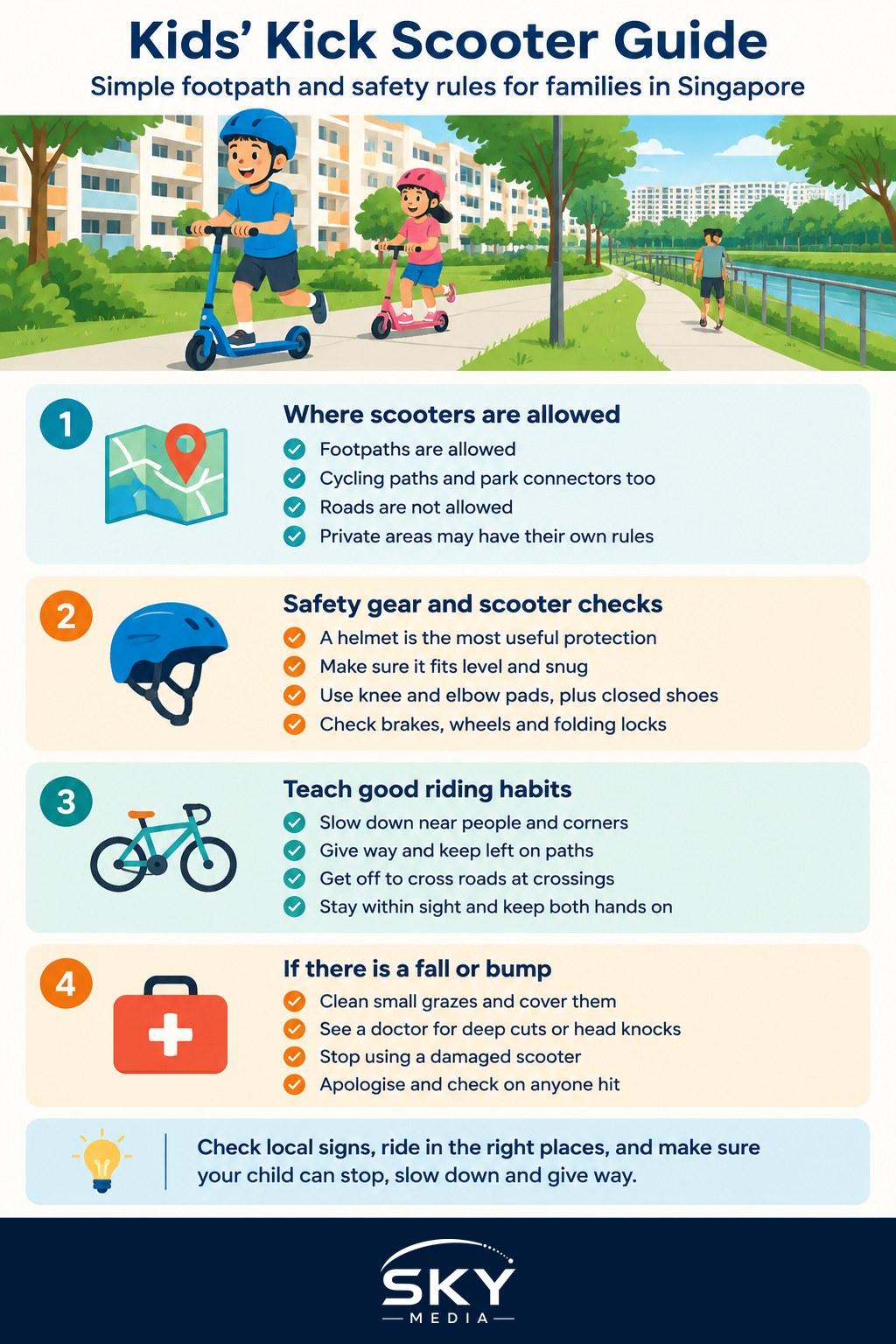
In Singapore, a kick scooter is generally treated as a non-motorised personal mobility device (PMD) under the Active Mobility framework. In practical terms for parents, that means:
- Footpaths are allowed. Kick scooters may be used on footpaths, but riders must give way to pedestrians and keep to the footpath speed limit set by LTA.
- Cycling paths and park connectors are allowed, subject to the speed limits and signs on each path.
- Roads are not allowed. PMDs, including kick scooters, may not be ridden on roads. Children should never scoot on the road, even quiet estate roads or car park lanes.
- Device limits exist. LTA sets size and weight limits for PMDs used on public paths. Children’s scooters normally fall well within them, but adult-sized or modified scooters should be checked.
Speed limits on footpaths are lower than on cycling paths. A child on a scooter can reach footpath speed limits quickly on a slope, so teaching them to control speed is part of following the rules, not just a safety tip.
Private spaces such as condo grounds, malls and some void decks may have their own rules or ban scooters entirely. Look for signs and ask the management office or town council if unsure.
Where Kids Can and Cannot Ride
The table below summarises common places families go. Always follow local signs, which take priority.
| Place | Kick scooter allowed? | What to keep in mind |
|---|---|---|
| Footpaths in HDB estates | Yes | Keep to the footpath speed limit, give way to pedestrians, slow down at blind corners and lift lobbies |
| Park connectors and cycling paths | Yes, subject to signs | Keep left, watch for faster cyclists, stop to the side rather than in the middle |
| Roads, including estate roads and car parks | No | Walk the scooter across, holding your child’s hand at crossings |
| Malls, MRT stations and buses | Riding no; carrying may be allowed if folded | Fold and carry; check LTA and operator rules on size and folding |
| Condo grounds and void decks | Depends on management | Check house rules and signs |
When crossing a road, it is good practice for children to get off and push the scooter across at a pedestrian crossing, following LTA’s code of conduct. Pair this with general road habits from our guide to teaching your child road and traffic safety.
Helmets and Protective Gear
Even where a helmet is not a legal requirement on footpaths, it is the single most useful piece of gear for a child on a scooter. Falls often happen forward, over the handlebar, and heads hit the ground first.
What to look for:
- A proper fit. The helmet should sit level on the forehead, not tilted back, with the strap snug enough that only a finger or two fits under the chin.
- A recognised safety standard marked on the label. Ask the shop which standard it meets.
- Bright colours or reflective strips so drivers and cyclists notice your child, especially at dusk.
- Replacement after a hard fall, since the protective foam may be damaged even if it looks fine.
Knee and elbow pads and gloves are worth it for younger or new riders. Closed shoes with grip are a must; slippers slide off the deck and leave toes exposed.
Singapore’s heat is part of safety too. Ride in the cooler morning or late afternoon, bring water, and use sun protection. Our guide on sun safety for kids in Singapore has practical tips. Head indoors if a thunderstorm approaches, because open paths and parks are exposed.
Choosing a Safe Scooter for Your Child
The right scooter makes riding easier to control. When buying:
- Match the size to the child. The handlebar should sit around waist height. Adjustable stems let the scooter grow with your child.
- Three wheels for toddlers, two for older kids. Three-wheel designs with lean-to-steer are more stable for preschoolers. Two-wheel scooters suit children who have good balance.
- Check the brake. Most kick scooters have a rear foot brake. Make sure your child can press it firmly with their foot.
- Inspect the folding lock. A latch that pops open mid-ride is dangerous. Test it before each outing.
- Look at the wheels. Larger, softer wheels handle uneven paving and drain covers better than small hard ones.
Do a quick check every few weeks: tighten loose bolts, check the wheels spin smoothly, and replace worn grips or brakes.
Teaching Footpath Etiquette
Rules only work if children understand them. Short, repeated lessons work best:
- Slow down near people. Teach your child to slow to walking pace when passing elderly neighbours, prams and other children.
- Ring or call out politely. A bell or a friendly “excuse me” before passing helps. Children should never squeeze past at speed.
- Stop before corners and lift lobbies. Blind corners at void decks are where most collisions with pedestrians happen.
- Keep left and stop to the side. If they need a rest, they should move off the path.
- Never ride while holding a phone or snack. Both hands stay on the handlebar.
- Stay within sight. Agree on a “stop point,” such as the next lamp post, where your child waits for you.
Make these into simple family rules your child can repeat back. Our guide on setting house rules kids can remember has ideas for keeping rules short and consistent.
When Things Go Wrong
Minor scrapes are part of learning, but take falls seriously:
- Clean grazes with clean water and cover them. Seek medical attention for deep cuts, suspected fractures or any head knock followed by vomiting, drowsiness, confusion or a severe headache.
- If your child bumps into a pedestrian, stop, apologise and check that the person is all right. Model calm, responsible behaviour.
- If a scooter is damaged, stop using it until it is repaired or replaced.
Children learn quickly when the rules are clear and practised together. Ride with them in the early weeks, explain why each rule matters, and gradually give more freedom as their skills and judgement grow.
Official sources: Land Transport Authority (LTA)
Further reading: Riding a Mobility Scooter Safely on Singapore Footpaths