
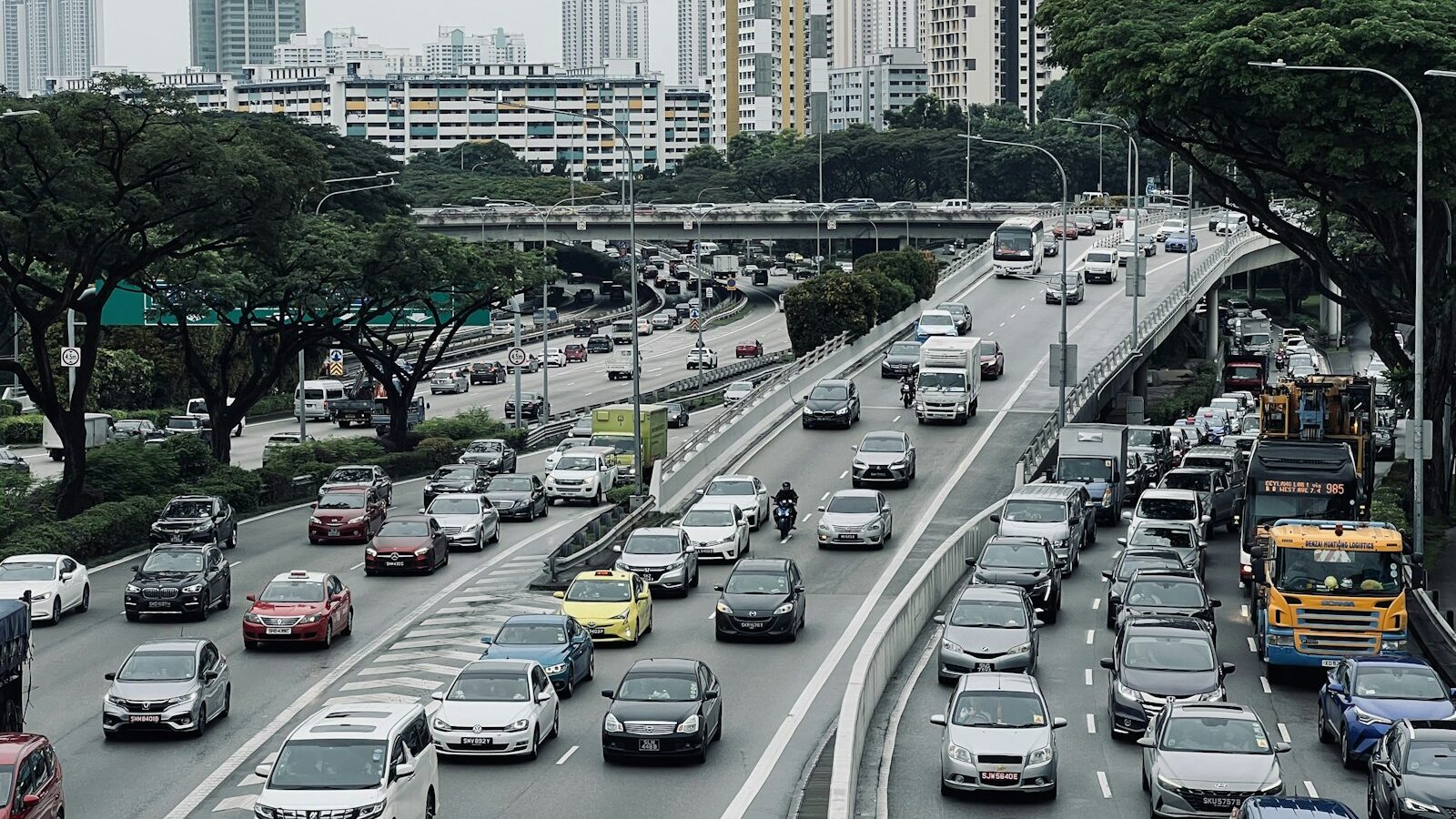
Between the void deck and the bus stop, the walk to school and the dash to the hawker centre, our children spend a lot of their day near traffic. Teaching road and traffic safety for kids is not about a single serious talk. It is a slow, repeated set of habits, built on ordinary walks you already take together, until stopping at the kerb and looking both ways feels as natural as putting on their shoes.
This is general guidance for Singapore families, not a substitute for your own judgement or professional advice. Children develop at their own pace, and only you can read your own child on a given day. When in doubt, keep hold of a small hand and slow everything down.
Why Young Children See Roads Differently
It helps to remember that a young child is not a small adult near traffic. Their eyes are lower, so parked cars and taller people block their view. Their hearing tells them a lorry is close but not always from which direction. They find it genuinely hard to judge how fast a car is moving or how long it will take to reach them, and a ball or a friend across the road can pull their whole attention away in an instant.
This is why we do not simply hand road safety to a child and expect it to stick. Younger children need an adult holding their hand near any road, full stop. As they grow, we let them lead the thinking while we stay close, so they practise the decisions with a safety net still in place. The goal is a child who has crossed a hundred roads with you narrating out loud, so the routine is already in their bones by the time they walk part of the way alone.
Singapore adds its own quirks. Turning vehicles at a green man, cyclists and devices on shared paths, silent electric cars in the carpark, and buses that pull in fast. Heavy afternoon rain cuts everyone’s visibility. Naming these out loud as you go is part of the teaching.
Building Safe Habits On Everyday Walks
The most powerful lessons are the boring, repeated ones. Turn your daily errands into gentle practice.
- Hold hands near every road, and be clear that this is a rule, not a punishment. For a wriggly toddler, holding the pram, your bag strap or your wrist can work when hands are full.
- Stop at every kerb, every time, even a quiet lane. The pause itself is the habit you are building.
- Say it out loud: “We stop. We look right, look left, look right again. We listen. When it is clear and cars have stopped, we walk, we do not run.” Children learn the script by hearing you use it.
- Cross at the crossing. Use the green man, overhead bridges and underpasses even when jaywalking looks quicker. Point out that a green man means look before you go, not go without looking, because vehicles may still be turning.
- Put devices and toys away while crossing, and model this yourself. A parent scrolling at the kerb teaches more than any lecture.
- Wear bright colours in dim light or rain, and carry a small torch or use your phone light on a dark evening walk.
Let your child take turns being the one who decides when it is safe, while you keep a hand ready. Praise the good decision, the full stop and the second look, more than you warn about the danger. Confidence and caution grow together when the mood stays calm.
Crossing Roads By Age And Stage
Children are ready for different amounts of responsibility at different ages, and readiness is about the individual child, not just the number. Use this as a rough guide for what to expect and keep, not as a fixed timetable. When your child is ready to walk part of a route alone is a judgement only you can make, ideally after walking it together many times.
| Stage | What they can usually manage | What you still do |
|---|---|---|
| Toddler and preschool | Hold your hand, stop at the kerb, learn the words | Hold on firmly, make every decision, narrate each step |
| Lower primary | Say the routine aloud, spot the green man, look and listen | Stay within arm’s reach, quietly check their judgement |
| Upper primary | Choose safe crossings, judge simple gaps, walk a known route | Walk it with them first, agree the exact route, review it |
| Early teens | Handle busier roads and unfamiliar routes with growing skill | Talk through new routes, junctions and distractions |
The pattern is the same at every stage. You hand over a little more only after they have shown you, many times, that they can handle what they have now. Growing this kind of steady confidence is part of the wider work of helping your child build independence at a pace that suits them.
The School Run, Carparks And Car Seats
Some of the highest-risk moments are the ones we do half-asleep: the morning drop-off and the busy pick-up.
- In HDB and mall carparks, hold hands the entire time. Reversing cars and quiet electric vehicles are easy to miss, and a small child is below a driver’s mirror line. Teach children never to walk behind a parked car that might move.
- At the school gate, cross only at the marked crossing and follow the school warden or teacher. Agree a fixed meeting spot so nobody darts across the road looking for you.
- Getting out of a car, use the kerb-side door, never the door facing traffic, and wait for the adult’s signal.
- In the car, use an approved child restraint or seat suitable for your child’s height and weight, fitted correctly, on every single trip, including the short hop to Grandma’s. Follow the current rules and the manufacturer’s instructions, and check the official guidance if you are unsure which seat is right.
If your child is starting formal school, road habits are one more thing settling alongside everything else. It can help to fold them into your preparation for settling into Primary One, practising the actual walk or drop-off route together before term begins.
Bikes, Scooters, Paths And Play
Wheels bring their own rules. On park connectors and shared paths, teach children to keep left, to slow and give way to people on foot, and to ring a bell or call out kindly when passing. A properly fitted helmet is non-negotiable for cycling and scooting, and bright clothing helps others see them.
Keep young children well away from the road when they are playing, chasing a ball or riding a scooter, and set clear boundaries about where wheels are allowed. A quiet-looking street is still a road. Much of this sits comfortably alongside encouraging outdoor play and nature, where active supervision near water, roads and open spaces is the constant thread. The same principle runs through other safety skills too, from the pool to the pavement, much as it does when you are helping your child learn to swim: supervise closely, teach steadily, and never assume a young child is ready to be left alone near real risk.
Keeping The Message Calm, Not Frightening
Fear is a poor long-term teacher. A child who is terrified of roads may freeze at the worst moment, and one who is nagged tunes out. Aim instead for calm competence. Explain the why in simple terms, keep your own tone matter-of-fact, and celebrate the good habits you see. If your family has had a near miss or your child is anxious, acknowledge the feeling gently and rebuild confidence with easy, successful crossings rather than warnings.
Above all, you are the model they copy. When you stop at the kerb, put your phone away and wait for the green man, you teach more than any words can. Road and traffic safety for kids is really just a set of small, repeated choices, made together until they become the child’s own. This article offers general information only; for specific concerns about your child’s safety, speak to a qualified professional.