
When the March school holidays arrive, many parents look for activities that are fun, hands-on and a little bit useful. A kids cooking class in Singapore ticks all three boxes. Children get to measure, mix, knead and decorate, then proudly bring home something they made themselves. Along the way they practise maths, reading, patience and teamwork without even noticing.
This guide explains the types of cooking and baking classes available for children, which ages suit which formats, what affects the cost, and the questions to ask before you sign up. It focuses on organised classes and holiday programmes, rather than cooking together at home.
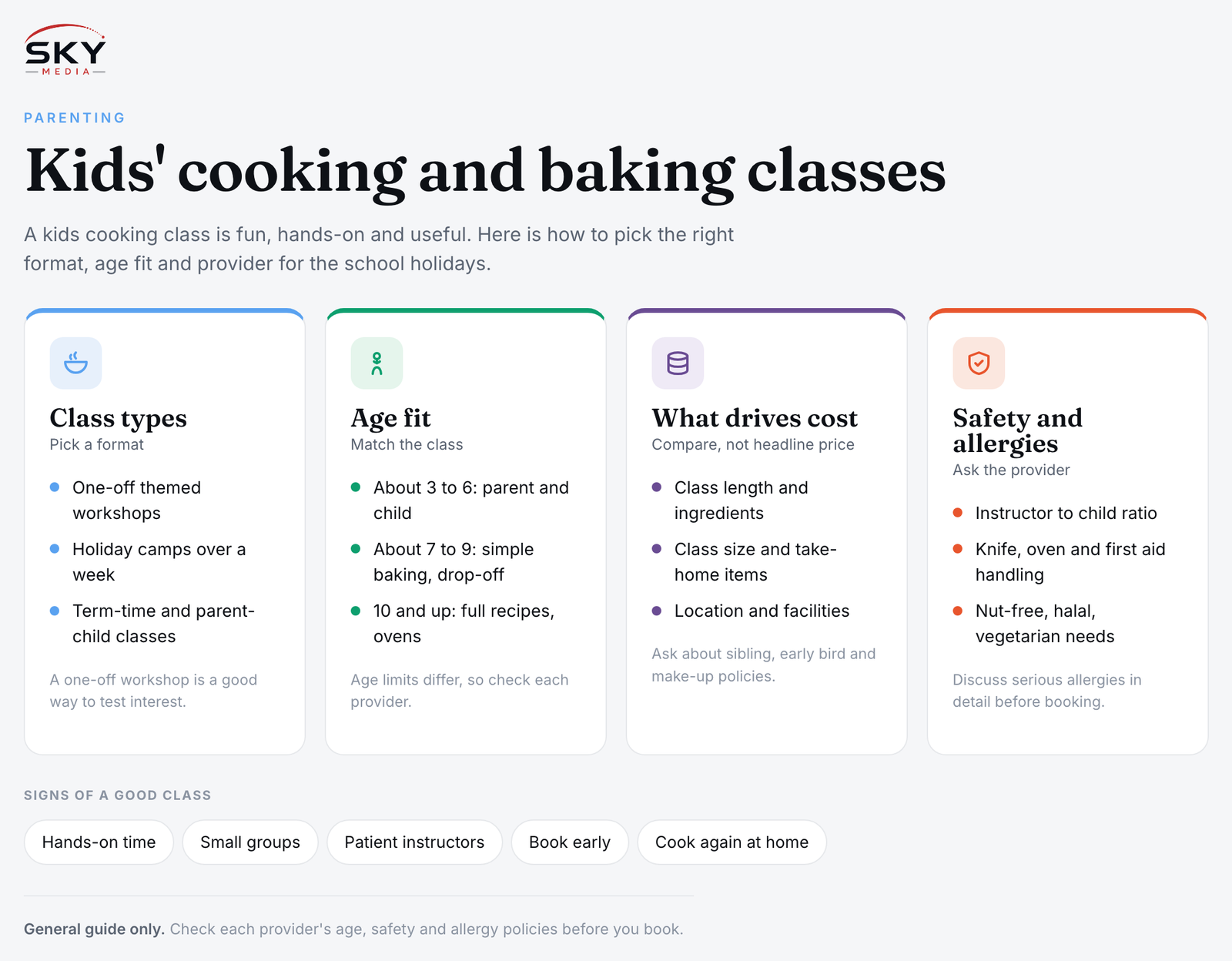
Types of Kids’ Cooking and Baking Classes
Classes for children in Singapore come in several formats, and the right one depends on your child’s age, interest and your holiday plans.
- One-off workshops. A single session of a couple of hours, often themed, such as cupcake decorating, pizza making or festive cookies. Good for testing interest.
- Holiday camps. Several half-day or full-day sessions over a week, usually during school holidays. Children may cook a different dish each day and sometimes learn basic food safety and nutrition.
- Term-time courses. Weekly classes over a school term, building skills step by step.
- Parent and child classes. Designed for younger children, with a parent cooking alongside. A good bonding activity and a gentle start for preschoolers.
- Cuisine-themed classes. Some studios run sessions focused on local dishes, such as kueh or simple Peranakan treats, or international food like sushi rolls or pasta.
- Birthday parties. Some cooking studios host party packages where guests bake or decorate together.
Classes are run by cooking studios, baking schools, enrichment centres and community organisations. Community clubs and some libraries also hold occasional food-related activities during the holidays, so check the PA (People’s Association) onePA portal for programmes near you.
Matching the Class to Your Child’s Age
Most providers set a minimum age, and some split classes by age group. As a rough guide:
| Age group | Typical format | What children usually do | Parent involvement |
|---|---|---|---|
| About 3 to 6 | Parent and child sessions, short workshops | Mixing, pouring, decorating, no-bake recipes | Usually required to stay and help |
| About 7 to 9 | Drop-off workshops and holiday camps | Simple baking, measuring, using child-safe tools | Drop-off in many classes |
| About 10 to 12 | Holiday camps and term courses | Following full recipes, basic knife skills under supervision, oven use with guidance | Drop-off |
| Teens | Skills courses, sometimes mixed with adults | More advanced baking, cooking full meals, plating | Drop-off |
Age limits differ between providers, so always check the exact policy. If your child is younger than the stated minimum, ask whether a parent and child option is available instead.
What Affects the Cost
Prices vary widely, so it is better to understand what drives them than to rely on a single figure. Things that usually affect the fee:
- Length of the class. A two-hour workshop costs less than a five-day camp.
- Ingredients. Classes using premium ingredients, such as good chocolate or fresh seafood, usually cost more.
- Class size and ratio. Smaller groups with more instructors per child tend to be priced higher.
- Take-home items. Some classes include boxes, aprons or chef hats, which add to the cost.
- Location and facilities. Purpose-built kitchens in central areas may charge more than community-based classes.
- Parent and child pairs. These may be charged per pair or per person.
Compare what is included, such as ingredients, packaging and take-home portions, rather than just the headline price. Ask about sibling discounts, early bird rates and cancellation or make-up policies, especially if your child falls sick during the holidays.
Safety, Allergies and Dietary Needs
Kitchens have hot ovens, sharp tools and many ingredients that can trigger allergies, so safety should be part of your choice.
Questions to ask the provider:
- What is the ratio of instructors to children?
- How are knives, ovens and hot liquids handled? Do children use child-safe tools?
- Are instructors trained in first aid?
- How do they manage food allergies, such as nuts, eggs, dairy, gluten or shellfish?
- Is the kitchen nut-free, or are nuts used in other classes in the same space?
- Can they cater to halal, vegetarian or other dietary needs? Note that a halal-certified kitchen is different from simply avoiding pork, so ask clearly if this matters to your family.
If your child has a serious food allergy, speak to the provider in detail before booking, inform the instructor on the day, and make sure your child carries any medication prescribed by their doctor. For medical questions about allergies, follow advice from your child’s doctor.
At home, prepare your child by:
- Reminding them to wash hands before cooking and after handling raw food.
- Explaining that they should listen to the instructor before touching ovens or knives.
- Dressing them in comfortable clothes and closed-toe shoes, and tying back long hair.
What to Look for in a Good Class
Beyond safety, a few signs suggest a class will be enjoyable and worthwhile:
- Hands-on time. Children should be doing most of the work, not watching a demonstration.
- Age-appropriate recipes. Simple enough to succeed, interesting enough to be proud of.
- Small groups. More attention means more learning and fewer accidents.
- Clear take-home plan. Find out whether your child brings home food, a recipe card or both, and pack a cooler bag if needed in Singapore’s heat.
- Friendly, patient instructors. Recent reviews from other parents help here.
- Flexible policies. Clear terms for cancellation, rescheduling and sickness.
If your child is older or a teenager with a growing interest, look at more structured options. Our guides to baking and cake decorating classes in Singapore and sushi-making classes cover formats that sometimes accept older children with parents. For other holiday activities that build skills, see choosing a gymnastics class for your child.
Making the Most of the Holidays
- Book early. Popular holiday camps fill up before the school holidays begin.
- Mix it up. Combine a cooking workshop with outdoor or sports activities so the week feels balanced.
- Cook again at home. Ask for the recipe and let your child repeat it for the family. Repetition builds confidence.
- Celebrate effort. Lopsided cupcakes still count. The goal is fun and confidence, not perfection.
A well-chosen kids cooking class in Singapore can turn a school holiday into a week of new skills and proud moments. Check the age fit, safety and what is included, and your child may come home with a new hobby, and something delicious for everyone to try.
Further reading: Chess Classes for Kids in Singapore: Are They Worth It? · Taking a Chinese Cooking Class in Singapore