

In Singapore, chilli is part of the table. Sambal sits beside the nasi lemak, cut chilli comes with the chicken rice and curry gravy is ladled over rice at the mixed economy stall. So it is natural for parents to wonder about kids spicy food: when is it okay to start, and how do you help a child enjoy the flavours the rest of the family loves without tears at dinner?
The short answer is that there is no single “right” age. Many families offer gentle spice once a child is eating a good range of solid foods, and build up slowly from there. This guide explains how to do that with the dishes you already eat. It is general information, not medical advice. If your child has a medical condition, reflux, food allergies or digestive issues, talk to your paediatrician or polyclinic doctor before adding spice, and follow HealthHub guidance on feeding young children.
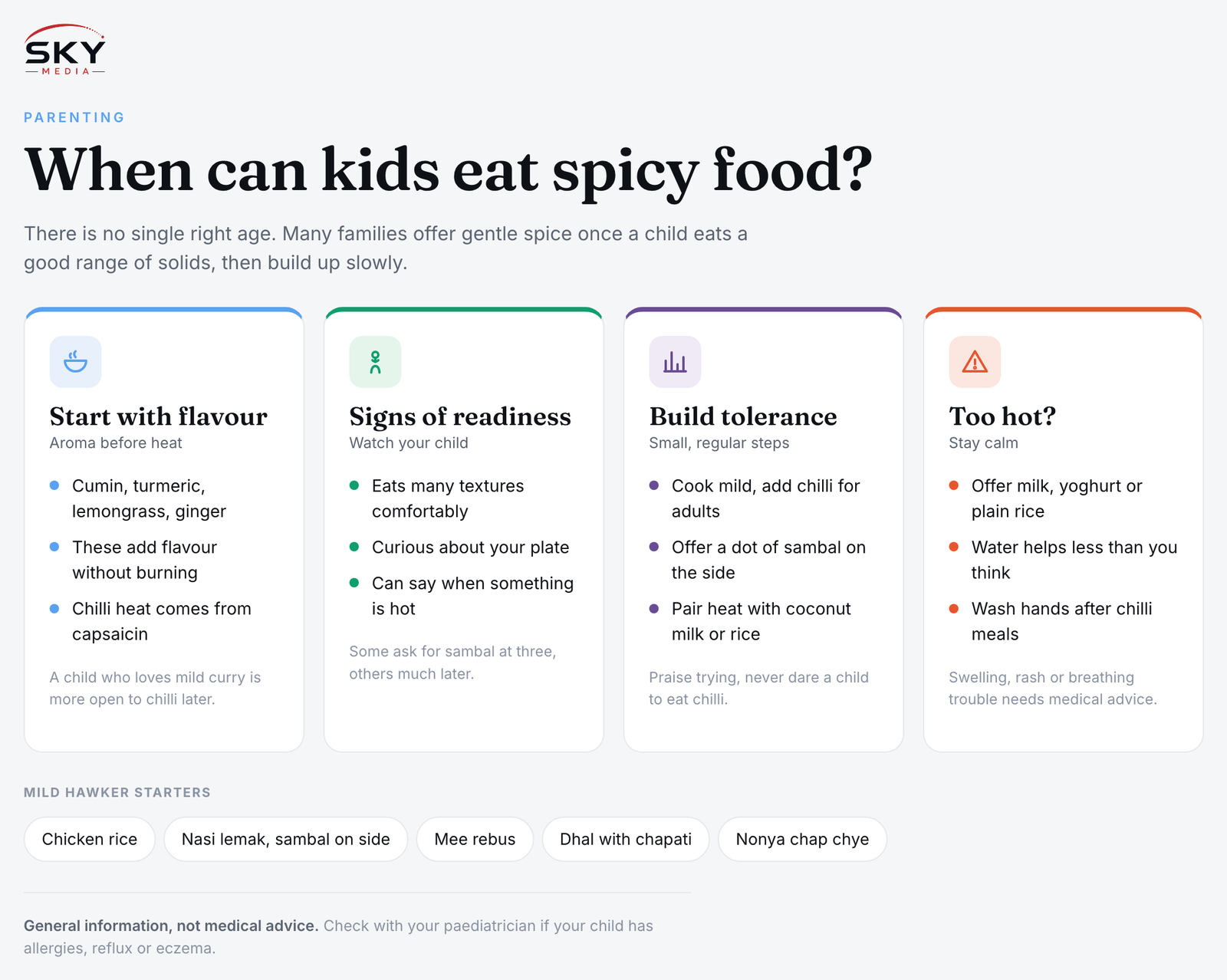
What “Spicy” Actually Means for a Child
It helps to separate two things that parents often lump together:
- Flavourful spices such as cumin, coriander, turmeric, cinnamon, star anise, lemongrass, ginger and garlic. These give curry, rendang and soup their aroma but are not hot. Many babies and toddlers take to them happily, and they are a good first step.
- Chilli heat, which comes from capsaicin in fresh chillies, dried chillies, chilli paste and chilli powder. This is the burning sensation. It is not a taste but a feeling of heat in the mouth, and children feel it just as adults do.
Starting with aromatic, non-hot spices gets your child used to bold flavours before you introduce real heat. A child who already loves a fragrant chicken curry made without chilli is much more open to a version with a little chilli later.
Signs Your Child May Be Ready
Rather than watching the calendar, watch your child:
- They eat a wide variety of textures and foods comfortably.
- They are curious about what is on your plate and want to try it.
- They can tell you, in words or clear signals, when something is “hot” or they do not like it.
- They are generally well, without an upset stomach, mouth ulcers or a recent illness.
Toddlers and preschoolers vary hugely. Some ask for sambal at three; others avoid anything red until primary school. Both are normal. Taste preference is shaped by repeated, relaxed exposure, not pressure.
Building Chilli Tolerance Step by Step
Think of chilli tolerance like learning to swim: small, regular steps in a safe setting.
- Cook the base dish without chilli. Make the curry, sambal-style stir-fry or soup mild, then add chilli to the adults’ portions at the end. This one habit solves most family-meal tension.
- Offer a “dot” on the side. Put a tiny amount of sambal or chilli sauce on the edge of your child’s plate. Let them dip a grain of rice or a piece of chicken if they want. Being in control makes children braver.
- Pair heat with cooling foods. Coconut milk, yoghurt, rice, cucumber, plain bread and milk all soften the burn. A mild curry made with plenty of coconut milk is a classic starter.
- Increase slowly. Once a level feels comfortable over several meals, add a little more. If your child reacts strongly, step back for a while and try again later.
- Keep it positive. Praise trying, not finishing. Never dare a child to eat something hot or tease them for refusing. Fear of chilli is easy to create and slow to undo.
- Eat it together. Children copy. Seeing parents and siblings enjoy mild chilli with obvious pleasure is powerful encouragement.
Hawker Dishes From Mild to Hot
Hawker centres are the easiest place to practise because you can control the heat. Ask the stall for “no chilli” or “chilli on the side”, which most stallholders understand well. The table below groups familiar dishes by how easy they are to tone down.
| Dish | Usual heat | How to make it child-friendly |
|---|---|---|
| Chicken rice | Mild, chilli served separately | Skip the chilli sauce at first; later offer a dot of it |
| Nasi lemak | Heat mostly in the sambal | Ask for sambal on the side; the coconut rice itself is mild |
| Mee rebus or mee siam | Mild to medium | Mee rebus gravy is usually gentle; ask for less chilli in mee siam |
| Laksa | Medium | Ask for less chilli paste, add extra gravy and noodles |
| Fish head curry or sambal stingray | Hot | Better for older children who already handle spice |
Other good stepping stones include satay with a little peanut sauce (which sometimes contains chilli, so taste it first), dhal with rice or chapati, mild chicken curry with roti prata, and nonya chap chye. If you are trying to keep hawker meals balanced as well as gentle, our guide to eating healthily at hawker centres has useful swaps.
What to Do When It Is Too Hot
Even with care, a child will sometimes take a bigger bite than intended. Stay calm, because your reaction sets the tone.
- Offer milk, yoghurt or plain rice. Dairy and starch help ease the burn better than water.
- Water helps less than you think. It can spread the heat around the mouth, though a few sips are fine if that is all you have.
- Wipe hands and face. Chilli on fingers can sting if it reaches the eyes. Wash hands with soap after meals with chilli, and keep cut chilli and chilli padi out of reach of small children.
- Comfort, then move on. A hug and a calm “that one was too hot, let’s try the rice” helps more than a big fuss.
Seek medical advice if your child has trouble breathing, swelling of the lips or face, a rash, or ongoing vomiting after eating, since these can be signs of an allergic reaction to an ingredient rather than simple chilli heat. Many sambals and sauces contain shrimp paste (belacan), peanuts or other allergens; our article on introducing allergenic foods safely explains how to approach these.
Spice, Tummies and Common Concerns
- Upset stomach. Some children get a sore tummy or loose stools after a lot of chilli. If so, cut back and build up more slowly.
- Nappy rash. Very spicy meals can occasionally irritate a baby’s or toddler’s skin at nappy changes. Keep early spice mild.
- Reflux and eczema. If your child has these, ask your doctor whether chilli is a trigger for them before experimenting.
- Salt and sugar. Chilli sauces and bottled sambals can be high in salt and sugar. A homemade, milder sambal lets you control both.
Keeping the Family Table Happy
The goal is not a child who can eat the hottest dish on the menu. It is a child who feels relaxed about trying new foods and enjoys eating with the family. Some practical habits help:
- Keep a small jar of mild homemade sambal or chilli oil just for the children.
- Let kids “season” their own plate with a measured spoon.
- When eating out, order one mild dish everyone can share.
- Let grandparents and helpers know how much chilli your child currently eats, so meals are consistent.
Over time, most children raised around Singapore food come to enjoy at least some chilli. Go gently, follow your child’s lead, and let them discover the heat at their own pace. For more on building a positive attitude to meals, see mindful eating and your relationship with food.
Frequently Asked Questions
Can toddlers eat curry if it is made without chilli? Yes, curries built on aromatic spices such as turmeric, coriander and cumin are not hot, and many toddlers enjoy them. Cooking the base dish mild, with plenty of coconut milk, and adding chilli to adult portions at the end is a common family approach.
My child refuses anything spicy. Should I be worried? No, many children avoid red or hot foods well into primary school and still grow up to enjoy them. Taste preference grows with repeated, relaxed exposure, not pressure. Keep offering a tiny dot on the side and let your child decide whether to try it.
What should I do if my child gets chilli in their eyes? Rinse the eyes gently with clean water, then wash hands with soap to remove chilli oil. Chilli on fingers can sting if it reaches the eyes, so keep cut chilli and chilli padi out of small children’s reach. See a doctor if the irritation does not settle.
Does spicy food cause tummy aches or loose stools in kids? It can for some children, especially after a large amount of chilli. If this happens, cut back and build up more slowly. If your child has reflux, eczema or other digestive issues, ask a paediatrician or polyclinic doctor whether chilli is a trigger.
Are bottled sambal and chilli sauce suitable for children? Occasionally in small amounts, but check the label because bottled sauces and sambals can be high in salt and sugar, and some contain shrimp paste or peanuts. Making a mild homemade sambal lets you control the heat, salt and ingredients for your child.
Further reading: Can Kids Eat Half-Boiled Eggs, Sashimi and Raw Oysters? Age Guidelines · Heaty Foods and Kids: TCM Beliefs vs Paediatric Advice