
A backsplash is the wall panel between your countertop and upper cabinets, and in a Singapore kitchen it works harder than most. High-heat wok frying throws oil mist onto the wall, steam from soups and rice cookers condenses on it, and our humid air means anything that stays damp can grow mould. Choosing a kitchen backsplash in Singapore is less about looks than about how quickly you can wipe it clean after a plate of sambal kangkong.
This guide compares the four materials you will see most often in HDB, condo and landed renovations: ceramic or porcelain tiles, tempered glass, quartz, and stainless steel. It focuses on the wall only, not your worktop.
Why Backsplash Choice Matters More in Local Kitchens
High-heat cooking produces fine oil droplets that settle as a sticky film, which collects dust and darkens over weeks. A backsplash that is smooth, non-porous and has few joints lets you remove that film with a damp cloth and mild detergent. One with deep grout lines or a porous surface holds onto it.
A few local factors to keep in mind:
- Humidity encourages mould in joints. Grout and silicone seams are the usual places where black spots appear, especially near the sink.
- Open kitchens show everything. If your kitchen opens to the living room, as many newer flats and condos do, the backsplash is part of your living space. A layout decision covered in Dry Kitchen vs Wet Kitchen Layouts for Singapore Homes will shape how much grease reaches the wall.
- Renovation rules apply. HDB has rules on what renovation work is allowed and when, and condos have their own MCST (Management Corporation Strata Title, the body that runs the estate) by-laws. Your contractor should check, but it helps to know before you plan hacking works.
Comparing the Four Main Backsplash Materials
Here is how the common options stack up for a grease-heavy kitchen. Costs vary widely with brand, size and workmanship, so treat the cost column as relative only and get itemised quotations.
| Material | Grease cleaning | Heat near hob | Joints and grout | Relative cost | Look |
|---|---|---|---|---|---|
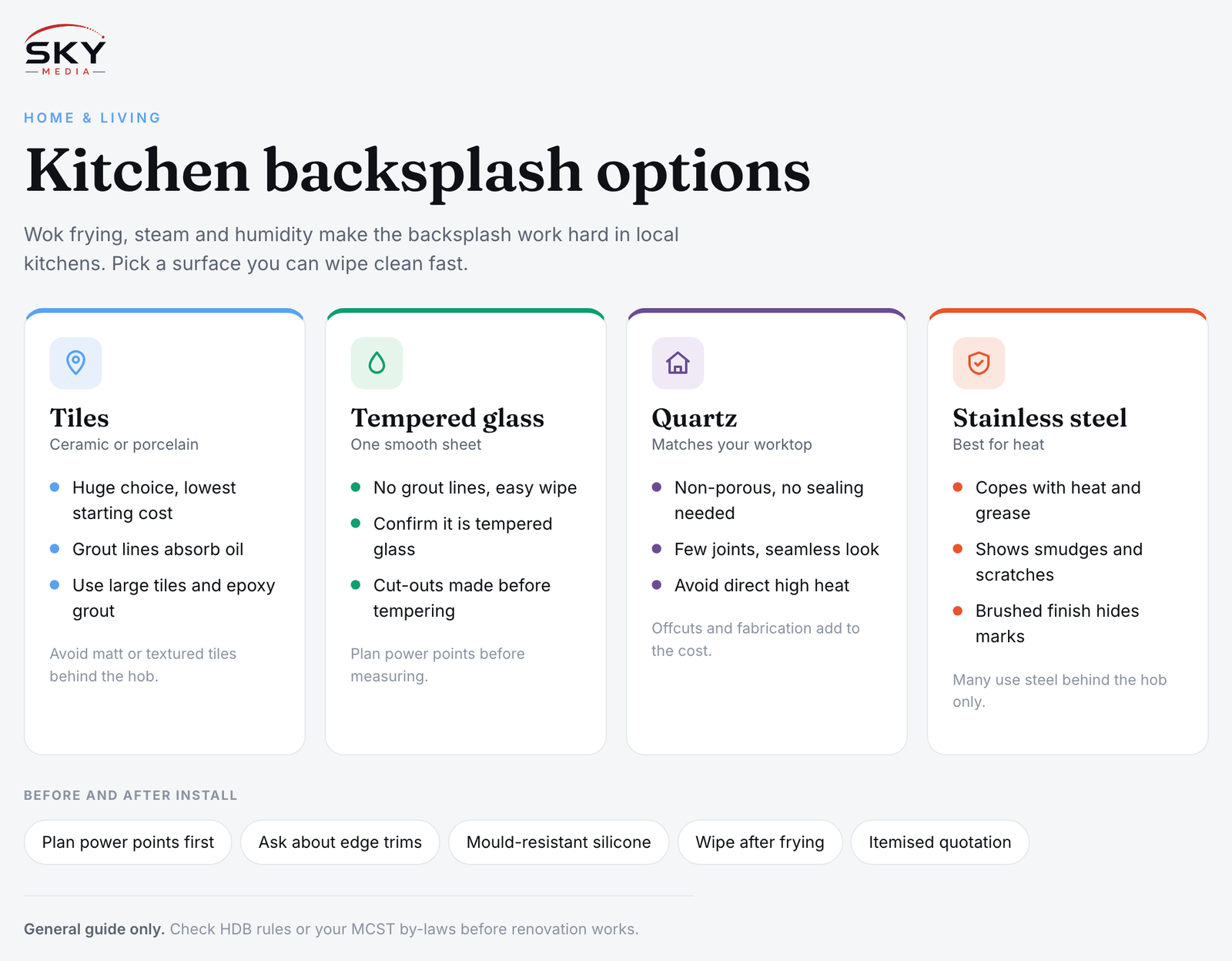
| Ceramic or porcelain tiles | Easy on glazed tile, harder on grout lines | Good | Many grout lines | Lowest to moderate | Huge choice of colours and patterns |
| Tempered glass | Very easy, one smooth sheet | Good if specified as tempered and correctly installed | Few, usually at edges and sockets | Moderate | Glossy, can be back-painted any colour |
| Quartz (engineered stone) | Easy, non-porous | Moderate, avoid direct high heat | Few, can match countertop | Moderate to high | Seamless with a quartz worktop |
| Stainless steel | Easy but shows smudges and streaks | Excellent | Very few | Moderate | Industrial, commercial-kitchen feel |
Ceramic and Porcelain Tiles
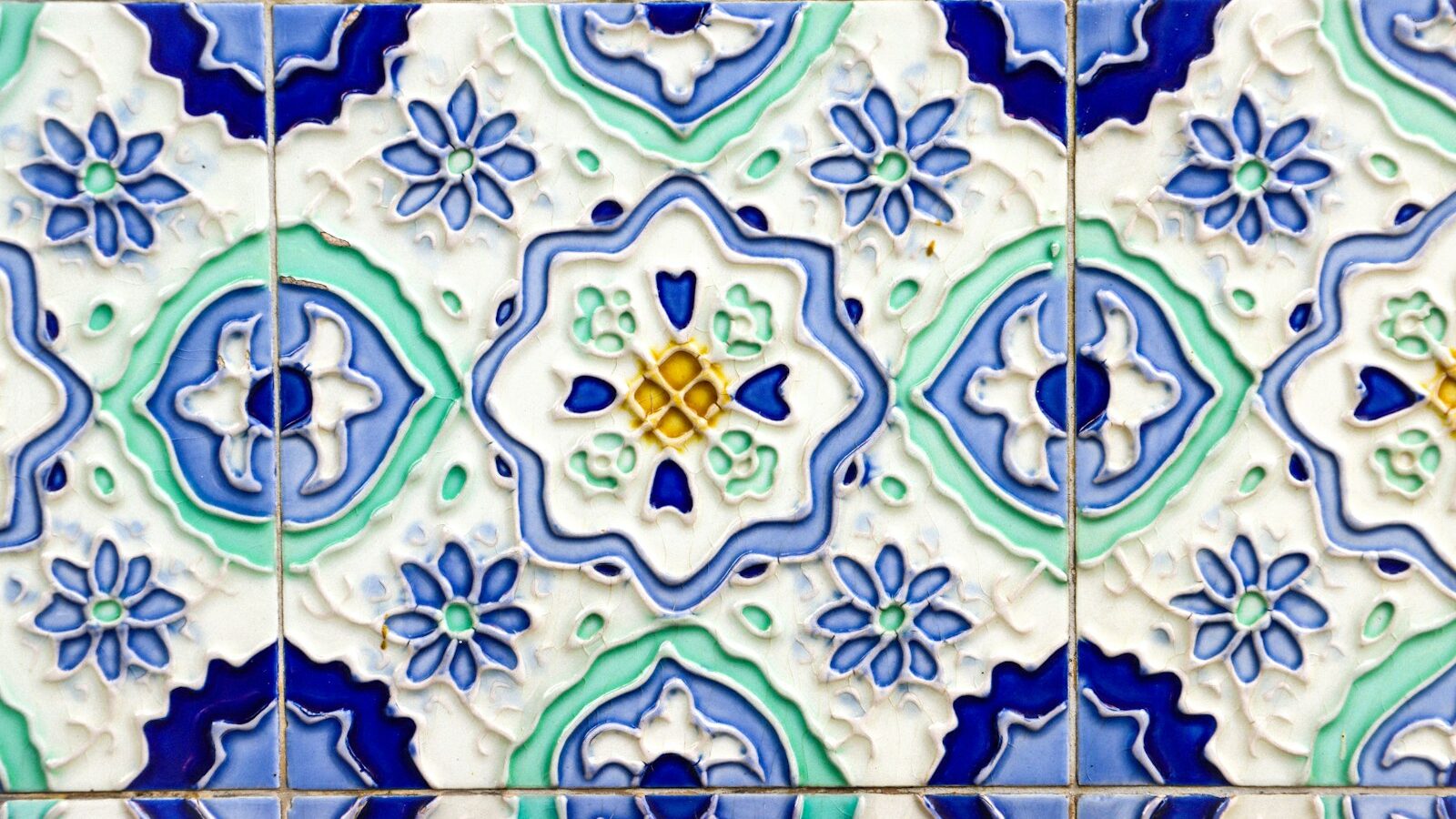
Tiles remain the most common choice because they are familiar to every contractor and come in endless styles, from plain white subway tiles to patterned Peranakan-inspired designs. Glazed tiles themselves resist stains well. The weak point is the grout between them. Cementitious grout is porous and absorbs oil and moisture, which is why tiled backsplashes behind a busy hob often turn yellow-brown along the lines.
To reduce the problem, choose larger format tiles for fewer joints, ask about epoxy grout (far less porous than cement grout, though pricier and needing a skilled installer), and avoid heavily textured or matt tiles behind the hob, where grease clings to the surface.
Tempered Glass
A single sheet of tempered glass, usually back-painted in a colour of your choice, is popular in Singapore for good reason. With no grout lines, a quick spray and wipe removes most oil. Tempered glass is heat-treated so it is stronger than ordinary glass and breaks into small granules rather than sharp shards if it fails.
Points to check with your supplier:
- Confirm the glass is tempered, not ordinary float glass, especially behind a hob.
- Ask how they handle cut-outs for power points. These must be measured and cut before tempering, so accurate site measurement matters.
- Leave the recommended gap from the hob and follow the hob manufacturer’s clearance guidance.
Quartz
If your countertop is quartz, extending the same slab up the wall gives a clean, continuous look with almost no joints. Quartz is non-porous, so it does not absorb oil or need sealing. The caution is heat. Quartz contains resins that can discolour or crack under very high direct heat, so keep pots and woks from resting against it and check the manufacturer’s guidance on clearance behind gas burners. Slab offcuts and fabrication add to the cost; our kitchen renovation guide covers how this ties in with your countertop.
Stainless Steel
Stainless steel is what commercial kitchens use, and it copes with heat and grease better than anything else here. The trade-offs are aesthetic: it scratches, shows fingerprints and can feel clinical. A brushed finish hides marks better than mirror polish. Some households use a stainless panel just behind the hob and tiles or glass for the rest of the wall, which gets the practical benefit without the full industrial look.
Mixing Materials and Planning the Layout
You do not need one material for the whole wall. A common local combination is glass or stainless steel behind the hob and tiles elsewhere: practical where it matters, decorative where it does not.
Plan these details before installation:
- Power points and switches. Decide their final positions first. Moving them after glass is cut is costly.
- Edges and trims. Ask how exposed edges will be finished so there are no sharp corners or dust traps.
- Silicone seams. The joint between countertop and backsplash is usually sealed with silicone. Ask for a mould-resistant type, and know that it will eventually need replacing.
- Fixtures. Wall-mounted taps, rails and shelves need holes drilled. Drilling glass after installation is risky, so plan fittings early. See How to Choose a Kitchen Tap or Mixer if you are considering a wall-mounted model.
Cleaning and Maintaining Your Backsplash
Even the easiest surface needs regular care in a busy kitchen. A simple routine prevents the sticky build-up that becomes hard to shift.
- Wipe after high-heat cooking. Warm water with a little dishwashing liquid removes fresh oil easily. Old, hardened grease takes much more effort.
- Use soft cloths. Scouring pads scratch glass, quartz and stainless steel.
- Treat grout gently. Use a soft brush with mild cleaner, and avoid frequent strong bleach, which can weaken and discolour grout.
- Watch the silicone seams. Black spots in silicone near the sink often mean mould has grown into it. Surface cleaning may not remove it, and resealing is the lasting fix.
- Run your hood. A properly working cooker hood, with clean filters, reduces how much grease reaches the wall in the first place.
For broader hygiene habits around food prep surfaces, see Kitchen Cleaning and Food Safety Basics at Home.
Getting Quotations and Choosing a Contractor
Backsplash work is usually part of a wider renovation package, so it can be hard to see what you are paying for it. When comparing quotations:
- Ask for the backsplash to be listed as a separate line with material, thickness, finish and area.
- Confirm what is included: grout type and hacking for tiles, tempering and cut-outs for glass, and how offcuts are charged for quartz.
- Check the warranty on workmanship, and what happens if glass cracks or tiles debond.
- For HDB flats, choose a contractor listed under the HDB Directory of Renovation Contractors, and check the current rules on HDB’s website. Condo owners should check their MCST’s renovation by-laws and working hours.
Which Backsplash Suits Your Cooking Style
If you fry often and want the least scrubbing, tempered glass or stainless steel behind the hob is hard to beat. If you have a quartz worktop and cook moderately, a matching quartz backsplash gives the cleanest look. If you want character and the lowest starting cost, tiles work well, provided you choose large formats and better grout. Whatever you pick, plan power points and fittings first and wipe the wall regularly, and your backsplash will stay looking new for years.