
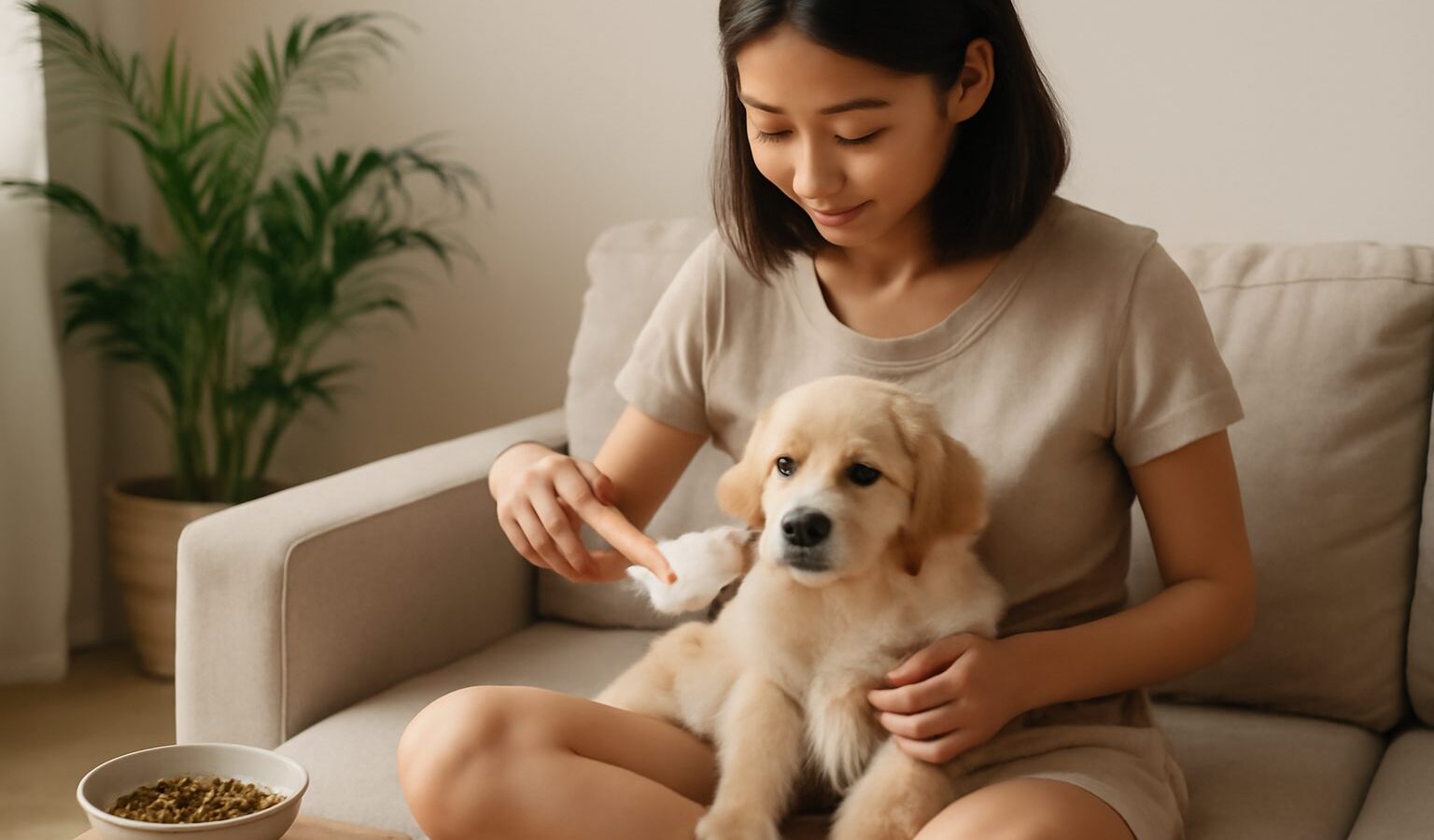
Those first weeks with a new puppy are joyful, tiring and a little overwhelming all at once. Good puppy care in Singapore starts before the puppy even arrives, with a safe home, a plan and realistic expectations. A puppy is a baby animal learning everything for the first time, so patience and gentle consistency matter far more than getting every detail perfect. This guide covers the practical basics, from puppy-proofing and the first vet visit to feeding, toilet training, sleep, socialising and coping with our heat.
One important note throughout: this is general information, not veterinary advice. Vaccination, deworming, feeding amounts and health decisions vary by puppy, so let a licensed vet guide the specifics for your dog. We have deliberately avoided listing schedules or doses, because your vet’s plan is the one to follow.
Puppy-Proofing and Bringing a Puppy Home
Before your puppy comes home, walk through your flat at their eye level and remove hazards. Puppies explore with their mouths, so anything chewable, swallowable or toxic needs to go up and away.
- Tuck away electrical cords, chargers and dangling wires.
- Store cleaning products, medicines and rubbish bins out of reach.
- Move houseplants that may be toxic to dogs, and check before buying new ones.
- Pick up small objects, shoes and children’s toys.
- Set up a calm, defined space with water, a bed and safe chew toys.
Arrival day should be low-key. Let the puppy explore one area quietly, introduce family members calmly and gently, and keep visitors to a minimum at first. A predictable routine of meals, naps, toilet trips and quiet time helps a nervous puppy settle faster than a house full of excitement.
The First Vet Visit and Preventive Care
Booking an early check-up with a licensed vet is one of the most important steps in puppy care. The first visit is a chance for a full health check and for the vet to set out a preventive care plan tailored to your puppy, covering vaccinations, deworming and parasite prevention on a schedule they recommend. These timelines vary between puppies and change over time, so follow your vet’s guidance rather than any fixed template you read online.
Your vet can also advise on microchipping and, when the time is right, sterilisation, both of which are responsible, welfare-positive choices. Ask about licensing your dog with the Animal & Veterinary Service (AVS) as required. It helps to write down questions in advance, and to bring any paperwork from the breeder or shelter.
Learn the red-flag signs that need prompt veterinary attention, including persistent vomiting or diarrhoea, refusing food or water, lethargy, difficulty breathing, or any sudden change in behaviour. When in doubt, call your vet. Puppies can go downhill quickly, so it is always better to check early.
Feeding, Toilet Training and Sleep
Feeding a puppy is not the same as feeding an adult dog. Puppies need appropriate nutrition for growth, usually spread across several small meals a day, with the type and amount best confirmed by your vet based on your puppy’s age, size and breed. Keep fresh water available at all times, especially in our climate, and introduce any diet changes gradually to avoid upsetting the stomach.
Toilet training rewards routine and patience. Take your puppy to the same spot after waking, after meals, after play and before bed, and praise calmly the moment they get it right. Accidents are part of learning, so clean them without scolding, since punishment tends to create fear rather than understanding.
Sleep is when growing puppies recharge, and they need a lot of it. A crate or a cosy, enclosed space, introduced gently and never used as punishment, can become a safe den that also supports toilet training and calmer nights. Expect some broken sleep in the early weeks as your puppy adjusts to a new home.
Socialising, Training, Teething and the Heat
Early, positive socialisation shapes a confident adult dog. During the sensitive early period, gently expose your puppy to different people, gentle dogs, sounds, surfaces and everyday sights, always at the puppy’s pace and paired with good experiences. Ask your vet when it is safe for your puppy to meet other dogs and go to public places, since this depends on their vaccination progress.
Keep early training short, kind and reward-based. Puppies have tiny attention spans, so a few minutes of teaching a name, a sit or a settle, several times a day, works better than long sessions. Teething is normal and can last for months, so offer suitable chew toys to soothe sore gums and protect your furniture, and redirect gently when little teeth find your hands.
Our heat and humidity deserve special care with a young dog. Walk during cooler morning or evening hours, avoid hot pavements that can burn paw pads, carry water, and watch for signs of overheating such as heavy panting, drooling or weakness. Never leave a puppy in a parked car, even briefly.
A General Guide to Puppy Stages
The table below is a broad, general overview to help you anticipate what each stage tends to focus on. Ages overlap and every puppy develops differently, so treat this as orientation, not a rulebook, and let your vet guide health timing.
| Stage (general) | Typical care focus | Keep in mind |
|---|---|---|
| Settling-in weeks | Puppy-proofing, routine, first vet visit | Follow the vet’s preventive care plan |
| Early puppyhood | Socialising, gentle training, toilet training | Positive, short and reward-based sessions |
| Teething months | Safe chew toys, redirecting biting | Protect furniture and hands calmly |
| Growing puppy | Balanced feeding for growth, exercise to suit age | Confirm food and amounts with your vet |
| Approaching adulthood | Sterilisation and ongoing preventive care talks | Ask your vet about timing |
Growing Together With Patience
The habits you build now, calm routines, gentle handling, positive training and regular vet care, set your dog up for a steady, happy adulthood. There will be chewed slippers and a few sleepless nights, but the payoff is a well-adjusted companion who trusts you. Go at your puppy’s pace, celebrate small wins, and lean on your vet for anything health-related. Responsible, committed ownership from day one is the greatest kindness you can offer a new puppy.
Explore More
Ready to build good habits early? Our guide to dog training and obedience in Singapore goes deeper on gentle, reward-based methods. For mealtime guidance as your puppy grows, see feeding your dog in Singapore, and to understand the health side, read pet vaccinations and preventive care in Singapore.