
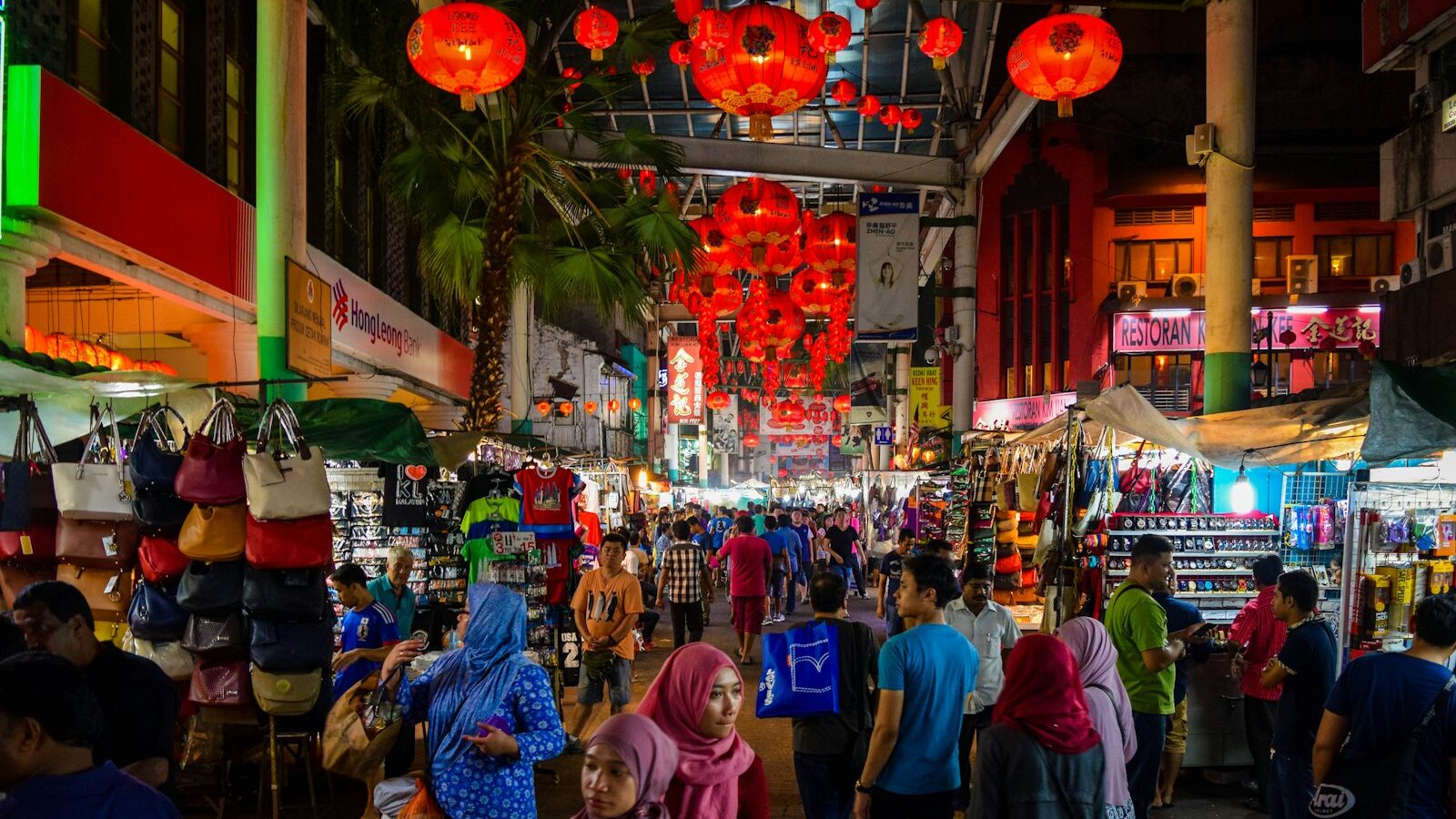
Kelantan sits in the far north-east corner of Peninsular Malaysia, right on the Thai border, and it feels quite different from the Malaysia most Singaporeans know from weekend trips to Johor, Melaka or Kuala Lumpur. Its capital, Kota Bharu, is often called the cradle of Malay culture: a place where traditional crafts, shadow puppetry, kite making and a distinctive regional cuisine are still part of daily life. A trip to Kota Bharu from Singapore takes more planning than a hop across the Causeway, but it rewards travellers who enjoy markets, food and slow, unpolished towns.
This guide covers how to get there, what to eat, the famous central market, the crafts worth seeking out, and the etiquette that helps visitors fit in.
Getting to Kota Bharu From Singapore
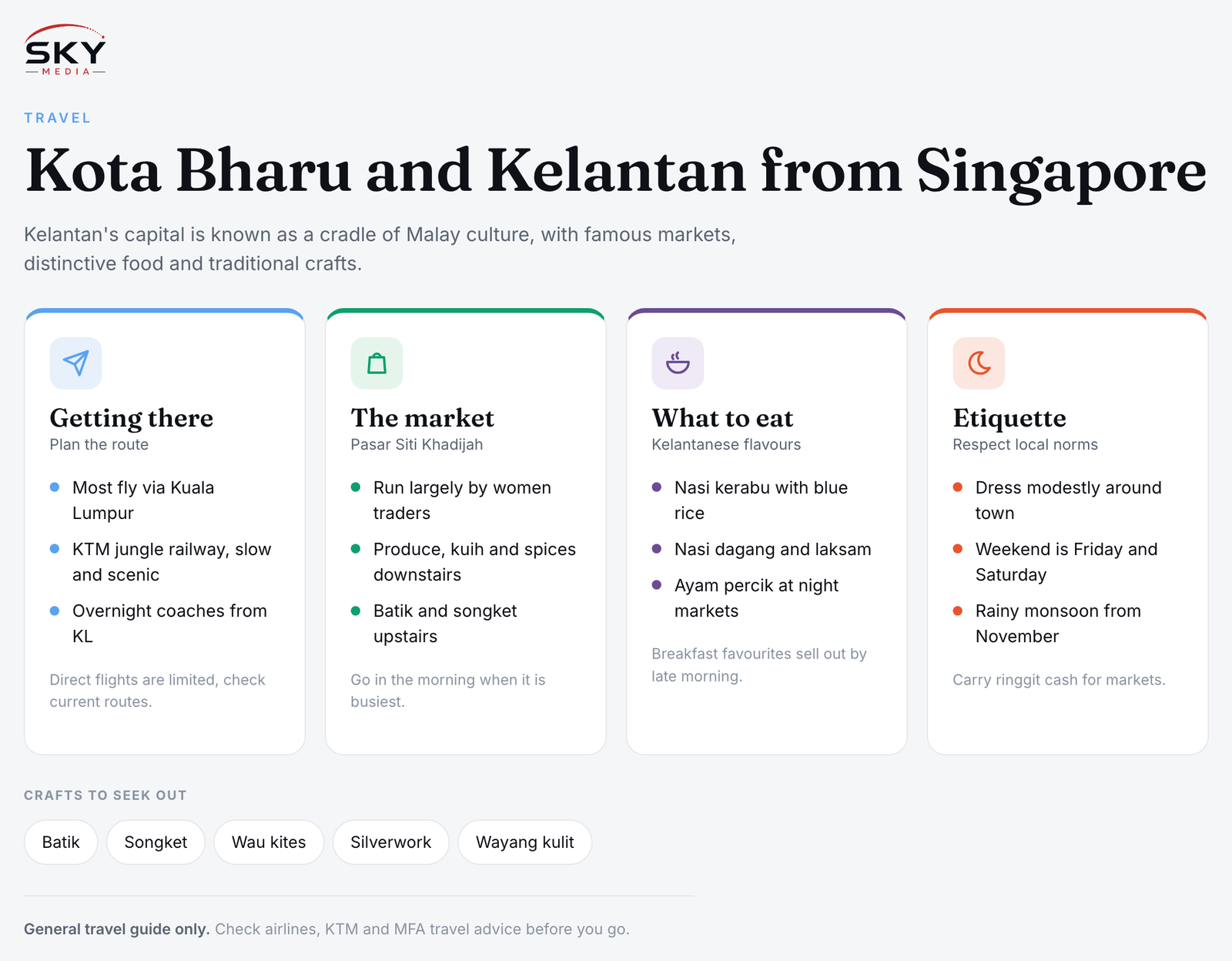
Kota Bharu is served by Sultan Ismail Petra Airport, a short drive from the town centre. Direct flights from Singapore have been limited or intermittent over the years, so most travellers connect through Kuala Lumpur, where several domestic carriers fly to Kota Bharu throughout the day. Routes and schedules change often, so check current options with the airlines or a flight search site before you plan your dates.
Other options suit travellers with more time:
- Train: Malaysia’s KTM East Coast Line, sometimes called the jungle railway, runs through the interior to the Kota Bharu area, ending near Tumpat. It is slow but scenic. Check KTM’s official site for the current timetable and how to connect from the south.
- Road: Driving from Singapore is a very long journey, usually split over two days with a stop on the east coast or in the interior. It makes sense mainly if you are combining several east coast states.
- Overland bus: Long-distance coaches link Kota Bharu with Kuala Lumpur and other cities, typically overnight.
Once in town, ride-hailing apps and taxis cover most trips. Hiring a car helps if you want to reach the beaches, villages and temples outside the centre.
Pasar Siti Khadijah and the Market Scene
Kota Bharu’s central market, Pasar Siti Khadijah, is the heart of the town and the reason many visitors come. It is named after the Prophet Muhammad’s first wife, a successful trader, and it is famous for being run largely by women traders, a tradition that reflects Kelantanese women’s long-standing role in commerce.
The building is a multi-storey hall around an open central space. The ground floor is packed with fresh produce, fish, spices, herbs and colourful kuih (traditional cakes and sweets). The upper levels sell dried goods, batik, songket and household items, and the balconies give the classic photograph looking down on the bright stalls below. Go in the morning, when it is busiest and the produce is freshest.
Nearby, you will find other markets and shopping streets selling textiles, snacks and crafts. Visitors who like browsing will also enjoy reading about the story of Singapore’s old market and food hall buildings, which shows how the region’s traditional wet markets evolved.
Kelantanese Food to Try
Kelantanese cooking tends to be sweeter and richer than Malay food elsewhere, with plenty of coconut, palm sugar, fresh herbs and grilled meats. Some dishes Singaporeans will half recognise, while others are hard to find outside the state.
| Dish | What it is | When people eat it |
|---|---|---|
| Nasi kerabu | Rice tinted blue with butterfly pea flower, served with herbs, fish crackers, salted egg and sambal | Breakfast or lunch |
| Nasi dagang | Rice steamed with coconut milk and fenugreek, eaten with fish curry | Mainly breakfast |
| Ayam percik | Chicken grilled over charcoal and basted with a spiced coconut sauce | Evenings and at night markets |
| Laksam | Rolled flat rice noodles in a creamy fish and coconut gravy with fresh herbs | Breakfast or tea time |
| Solok lada | Green chillies stuffed with a fish and coconut paste, then steamed | As a side or snack |
| Akok and other kuih | Small sweet cakes, often made with egg, palm sugar and coconut | Tea time and as souvenirs |
A few tips for eating well:
- Breakfast is a big meal here, and many favourite dishes are sold early and run out by late morning.
- Night markets are a good way to sample grilled meats, drinks and desserts in one go.
- Food is overwhelmingly halal, which makes Kota Bharu easy for Muslim travellers. Alcohol is very rarely available, so do not plan around it.
- If you are used to hawker centres, the experience will feel familiar in spirit, though less standardised. Our guide to adjusting to hawker and food court culture covers the basics of ordering and sharing tables that also apply here.
Crafts and Culture Worth Seeking Out
Kelantan has a strong reputation for traditional arts, and much of it is still made by hand in workshops and villages around Kota Bharu.
- Batik and songket: Hand-drawn and block-printed batik is sold across town, and you can often watch it being made. Songket, a woven fabric with metallic threads, is more expensive and traditionally worn for weddings and formal events.
- Wau (kites): Kelantan is known for the wau bulan, a large decorated kite with a crescent-shaped tail. Small decorative versions make good souvenirs, and kite-flying competitions are held in some seasons.
- Silverwork and woodcarving: Kelantanese silversmiths and carvers produce detailed pieces, from jewellery to panels for traditional houses.
- Wayang kulit: The traditional shadow puppet theatre has deep roots in Kelantan. Performances are not daily events, so ask locally or check with the state tourism office about what is on.
- Museums and palaces: The historic area around the old royal palaces houses several museums covering royal history, Islamic heritage and traditional customs. Opening days can vary, so check before going.
Outside town, the Tumpat district near the Thai border has a number of Thai-style Buddhist temples, reflecting the area’s long Siamese links. The coastline also has quiet beaches, though swimming conditions vary with the monsoon.
Etiquette, Weekends and When to Go
Kelantan is one of Malaysia’s more religiously conservative states, and visitors are warmly welcomed when they show respect for local norms.
- Dress modestly: Cover shoulders and knees around town, and more fully at mosques and religious sites. Women may be asked to cover their hair at mosques.
- Know the weekend: Kelantan observes a Friday and Saturday weekend, so offices and some shops close on Friday, especially around midday prayers, while Sunday is a working day.
- Ramadan: During the fasting month, many eateries close in the day, while evening bazaars come alive before the breaking of the fast. Eat discreetly in public during daylight.
- Weather: The north-east monsoon, roughly from November to early in the year, brings heavy rain and occasional flooding to the east coast. The drier months are usually easier for travel, but check forecasts before you go.
- Money: Carry some ringgit in cash for markets and small stalls, although cards and e-wallets are increasingly accepted in town.
Before travelling, check entry requirements with the Malaysian authorities and Singapore’s Ministry of Foreign Affairs travel page, and consider travel insurance that covers weather disruption.
Kota Bharu Compared With Other Malaysian Trips
Kota Bharu is not a resort destination. It suits travellers who are curious about Malay heritage and food rather than those looking for nightlife or big shopping malls. Three or four days is usually enough to cover the market, the food, a craft village and a day trip outside town.
It also pairs well with other places in the region. Some travellers combine it with the neighbouring east coast state of Terengganu, or with a crossing towards southern Thailand. If you prefer somewhere with mountains and diving, Kota Kinabalu from Singapore offers a very different side of Malaysia. For culture, food and a glimpse of traditions that have faded elsewhere, though, Kelantan is hard to beat.