
Bingka ubi is the kueh you recognise by its top: a deep golden, almost burnished crust, sometimes dotted with dark caramelised spots, over a dense, chewy, fragrant interior. Made mainly from grated tapioca (cassava) and coconut milk, then baked rather than steamed, it sits a little apart from most of the kueh you see at the kueh counter. This guide covers what makes bingka ubi distinct, the ingredients that matter, and a simple recipe you can bake in a home oven.
What Bingka Ubi Is and Where It Comes From
“Ubi” is the Malay word for tuber, and in this context it means tapioca, also called cassava or ubi kayu. “Bingka” refers to a family of baked kueh found across Malaysia, Singapore and Indonesia, with versions made from tapioca, sweet potato, pumpkin and other bases.
Traditionally, bingka was baked in brass moulds over charcoal, with more embers placed on a lid so heat came from above as well as below. That top heat is what created the signature browned crust. Home cooks now use a regular oven, often finishing under the grill element to get the same effect.
You will find bingka ubi in Malay, Peranakan and Eurasian kitchens, at kueh stalls in hawker centres, and on festive tables. Families each have their own preferences, some sweeter, some richer in coconut, some fragrant with pandan.
Texture and Taste: How It Compares to Other Kueh
Bingka ubi is dense, moist and pleasantly chewy, with a slightly springy bite from the tapioca. It is not light or airy like a sponge cake. The edges and top are firmer and toasty, while the middle stays soft and almost custardy.
| Kueh | Main base | Cooking method | Typical texture |
|---|---|---|---|
| Bingka ubi | Grated tapioca and coconut milk | Baked | Dense, chewy, with a browned crust |
| Kueh lapis (steamed layer kueh) | Rice flour, tapioca flour and coconut milk | Steamed in layers | Soft, bouncy, peels into layers |
| Kueh ubi kayu (steamed tapioca) | Grated tapioca | Steamed, rolled in grated coconut | Soft, sticky, fresh coconut coating |
| Yam cake (or kueh) | Yam and rice flour | Steamed, savoury | Firm, sliceable, topped with crispy shallots |
If you enjoy savoury steamed kueh, our guide to yam cake covers that very different cousin.
Key Ingredients and Why They Matter
Bingka ubi uses only a handful of ingredients, so each one shows.
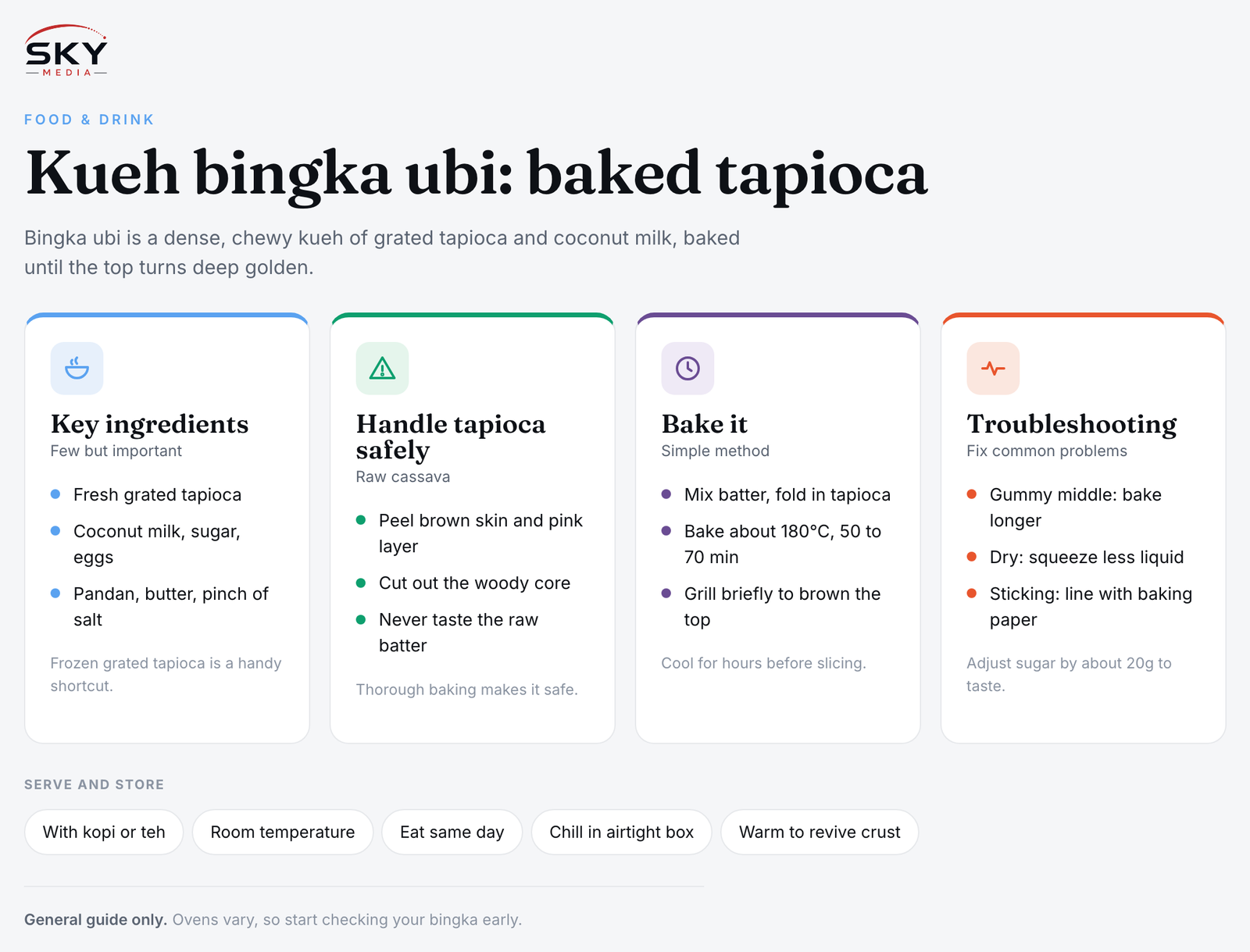
- Fresh tapioca. Fresh roots give the best flavour and chew. Wet markets and supermarkets usually sell them. Frozen grated tapioca, found in some Asian grocery freezers, is a convenient shortcut.
- Coconut milk. Fresh santan (coconut milk squeezed from grated coconut) gives the richest taste. Packet or canned coconut milk works well too.
- Sugar. Plain white sugar is common. Some cooks add a little gula melaka (palm sugar) for a darker, caramel note.
- Eggs. These help the cake set and give it a slightly custardy texture.
- Butter or margarine. Optional, but adds richness and helps the top brown.
- Pandan. Juice from blended pandan leaves, or a knotted leaf infused in the coconut milk, adds the classic fragrance and a pale green tint.
- Salt. A small pinch balances the sweetness.
A note on handling raw tapioca
Raw cassava naturally contains compounds that release toxins if eaten uncooked, which is why it must always be peeled and fully cooked. The tapioca sold for cooking in Singapore is the type commonly used in kueh, and thorough baking makes it safe. Peel away both the brown outer skin and the pinkish inner layer, cut out the woody central core, and never taste the raw batter.
A Simple Home Recipe
This makes one 20cm square or round tin. Treat the quantities as a starting point and adjust sweetness to taste.
Ingredients
- About 1kg fresh tapioca (to give roughly 700g to 800g grated)
- 200ml coconut milk
- 150g to 180g sugar
- 2 eggs
- 40g melted butter
- 3 tablespoons pandan juice (or 2 knotted pandan leaves)
- A pinch of salt
Method
- Prepare the tapioca. Peel, remove the inner pink skin and central core, then rinse. Grate finely using a box grater or a food processor with a grating disc.
- Optional squeeze. If the grated tapioca looks very wet, squeeze out a little liquid through a muslin cloth. Do not squeeze it dry, as some moisture keeps the cake soft.
- Warm the coconut milk. If using pandan leaves, warm the coconut milk gently with the leaves for a few minutes, then cool and remove them. Stir in the sugar and salt until dissolved.
- Mix the batter. Beat the eggs lightly, then combine with the coconut milk mixture, melted butter and pandan juice. Fold in the grated tapioca until evenly mixed.
- Prepare the tin. Grease and line the tin with baking paper, then pour in the batter and level the top.
- Bake. Bake at around 180°C for roughly 50 to 70 minutes, until the cake is set and a skewer inserted in the centre comes out mostly clean. Ovens vary, so start checking earlier.
- Brown the top. For the classic crust, switch to the top grill for the last few minutes and watch closely, as it can go from golden to burnt quickly.
- Cool completely. This is important. Warm bingka ubi is too soft to slice cleanly. Let it cool fully in the tin, ideally a few hours, before cutting with an oiled knife.
Troubleshooting Common Problems
- Gummy, wet middle. It needs more time in the oven, or the tapioca was too wet. Bake a little longer at a slightly lower temperature, and squeeze the tapioca lightly next time.
- Dry or crumbly. Too much liquid was squeezed out, or it overbaked. Add a splash more coconut milk next time.
- Pale top. Use the grill for the final minutes, or brush the top with a little extra coconut cream before baking.
- Too sweet or bland. Adjust sugar by about 20g either way, and do not skip the salt.
- Sticking to the tin. Line the tin with baking paper rather than relying on grease alone.
If you are newer to baking, our guide to baking a simple cake from scratch explains oven basics that help here too.
Serving and Storing Bingka Ubi
Cut into squares or diamonds and serve at room temperature with kopi or teh. It is also a thoughtful homemade contribution to festive gatherings and potlucks.
Because it contains coconut milk, bingka ubi does not keep long at room temperature in Singapore’s heat. Eat it the same day, or refrigerate in an airtight container and finish within a couple of days. Chilled bingka firms up, so let slices come back to room temperature, or warm them briefly in a pan or oven to revive the crust.
Growing and Choosing Your Own Tapioca
Tapioca grows well in Singapore’s climate, and some home gardeners and community garden plots harvest their own roots. If you want to try, our guide to growing taro and tapioca covers the basics. Whether home-grown or bought, choose roots that are firm, heavy and free of soft spots or dark streaks inside, and use them within a few days, since cassava spoils quickly after harvest.
Explore more: How to Make Pandan Chiffon Cake at Home
Further reading: Nian Gao (Kueh Bakul): How to Cook and Eat It