
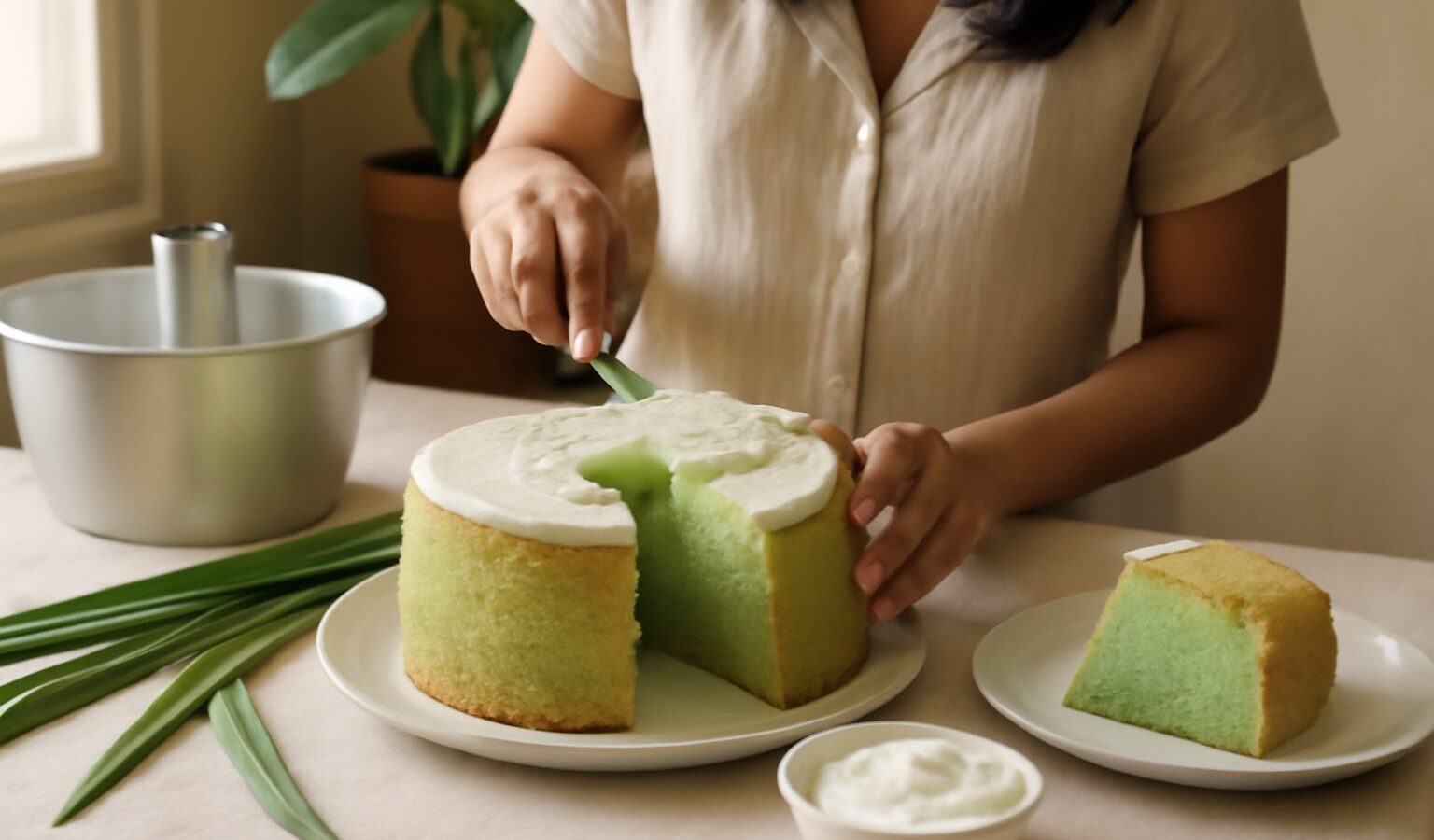
Tall, green and impossibly soft, pandan chiffon cake is one of the most beloved local bakes. That cloud like texture and gentle coconut and pandan fragrance make it a firm favourite for tea time and celebrations alike. Making a good pandan chiffon cake in Singapore at home is very achievable once you understand the technique, and this guide will walk you through it in a way that works for everyday home bakers rather than trained pastry chefs.
Chiffon cake sits somewhere between a sponge and a foam cake. Its lift comes mostly from whipped egg whites rather than a heavy dose of raising agent, which is exactly what gives it that light, bouncy crumb. Get the egg whites right and you are most of the way there.
Ingredients You Will Need
You do not need anything exotic beyond the pandan itself. The core ingredients are eggs separated into yolks and whites, cake flour or plain flour, sugar, a neutral oil, a pinch of salt, and a raising agent such as baking powder. For flavour and that signature colour you need pandan, ideally as fresh juice blended from pandan leaves, and coconut milk for richness.
Think in proportions rather than exact grams. A typical chiffon uses a modest amount of flour, a similar volume of liquid made up of coconut milk and pandan juice, a moderate amount of sugar split between the yolk and white mixtures, and enough oil to keep the crumb tender. The eggs do the heavy lifting, so quality and freshness matter.
A note on allergens before you start. This cake contains egg, gluten and coconut, and often dairy if you brush anything on top, so keep that in mind if you are baking for others. Handle eggs safely by keeping them chilled until use and washing your hands and bowls well. For deeper flavour ideas, our guide to baking with pandan and gula melaka in Singapore is a lovely companion, and complete newcomers may want to start with baking basics for complete beginners.
The Method Step by Step
Begin by preparing your pandan liquid. If using fresh leaves, blend them with a little water and strain to get a fragrant green juice. Combine this with coconut milk so your total liquid is ready.
Next, make the yolk batter. Whisk the egg yolks with a portion of the sugar, then stir in the oil, followed by the pandan and coconut liquid. Sift the flour, baking powder and salt over the top and fold gently until smooth. This mixture should be loose and pourable. Set it aside.
Now the crucial part, the egg whites. In a spotlessly clean, grease free bowl, whip the whites until frothy, then add the remaining sugar gradually while beating. You are aiming for soft to medium peaks that hold their shape but still look glossy and slightly bendy at the tip. Overbeaten whites turn grainy and stiff, which makes them hard to fold and can cause an uneven crumb, so stop as soon as you reach that glossy stage.
Folding is where many bakes are won or lost. Add about a third of the whites to the yolk batter and stir to loosen it. Then tip the batter into the rest of the whites and fold gently with a spatula, cutting down through the middle and lifting up and over. Work steadily but do not stir hard, because you want to keep as much air as possible.
Pour the batter into an ungreased tube tin. This is important. A chiffon cake needs to grip the sides of the tin to climb as it bakes, so do not grease or line it. Give the tin a light tap to release large bubbles, then bake in a moderate oven until the top springs back when pressed and a skewer comes out clean. Baking it through fully is essential for both texture and food safety, since underbaked cake will be gummy and eggy.
Cooling, Common Pitfalls and Storage
The single most famous chiffon problem is collapsing or shrinking after baking. The classic fix is to invert the tin immediately once it comes out of the oven, resting it upside down on a bottle neck or a raised rack. Cooling it upside down stops the delicate structure from sinking under its own weight while it sets. Leave it until completely cool before you unmould.
If your cake still collapses or turns dense, the usual culprits are underbaking, deflated egg whites from overfolding, or opening the oven door too early. A wet, sunken centre often means it needed a little longer in the oven. A tight, short cake usually means the whites were underwhipped or knocked back during folding. Each bake teaches you something, so do not be discouraged.
To unmould, run a thin knife or offset spatula gently around the edges and the central tube, then ease the cake out. Because the crumb is so airy, a gentle hand keeps it neat.
For storage, let the cake cool completely first, as wrapping a warm cake traps steam and makes it soggy. Keep it in an airtight container at room temperature for a day or two, or refrigerate for a few days, bringing it back to room temperature before serving so the crumb softens again. If you are keen to keep practising your technique, how to bake a simple cake from scratch covers the wider basics that make every future bake easier.
With patience and a gentle touch, a home made pandan chiffon cake is well within reach, and the fragrance filling your kitchen makes every attempt worthwhile.