
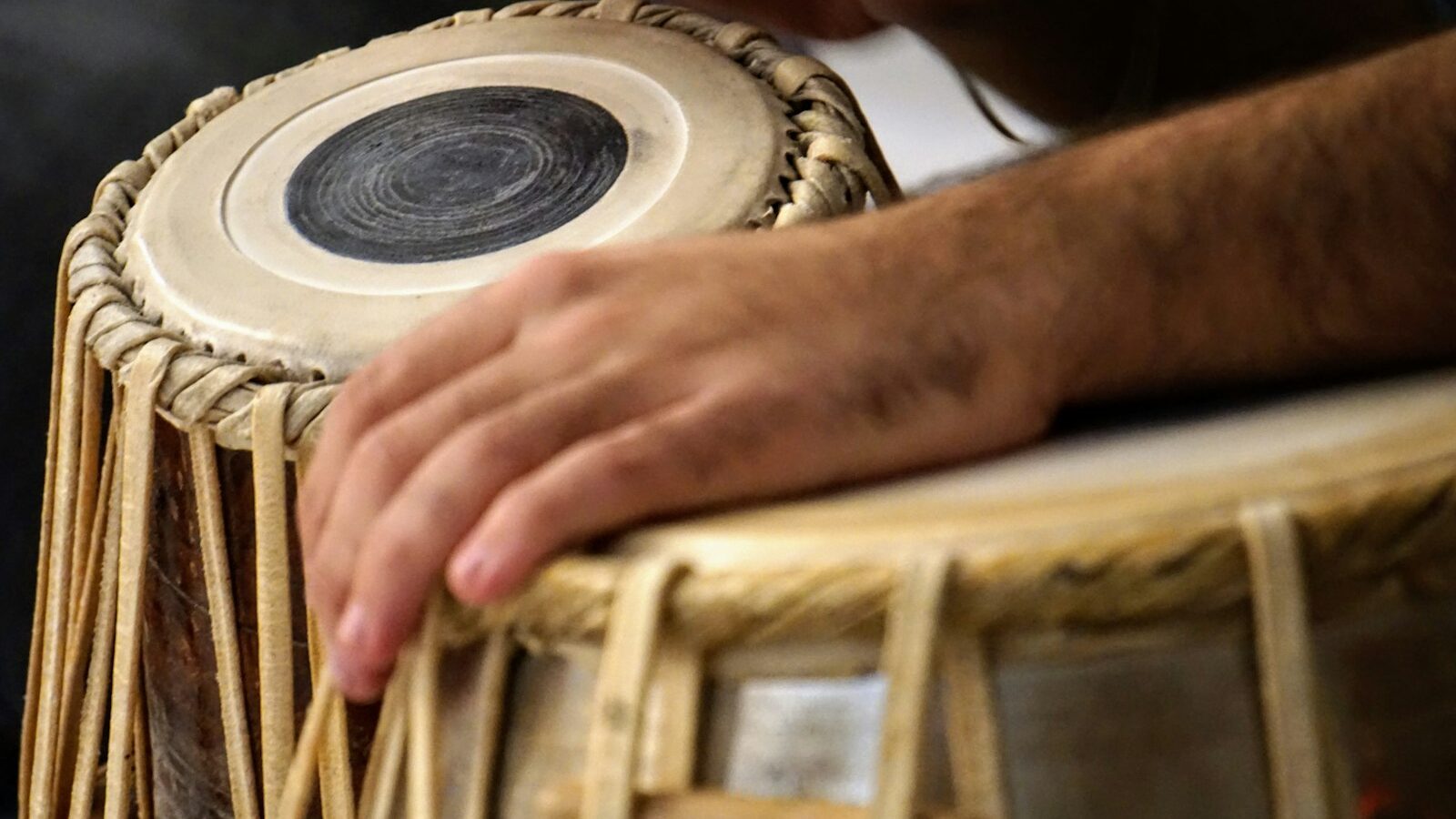
Learning tabla opens a door into one of the world’s richest rhythmic traditions, and it is a deeply rewarding path for anyone drawn to the language of the drum. The tabla, a pair of North Indian hand drums, can whisper, sing, and thunder, and it carries centuries of music and craft. This guide welcomes you as a learner and walks you gently through what tabla is, how to begin, and how to keep growing with respect for the tradition and patience with yourself.
What tabla and Indian percussion are
The tabla is a pair of hand drums played together. The smaller wooden drum, played with your dominant hand, is the dayan, and it produces clear, tuned, ringing tones. The larger metal or clay drum, played with your other hand, is the bayan, and it gives deep bass sounds that you shape with the heel of your hand.
Each drum has a dark central circle called the syahi, a tuning paste that gives tabla its distinctive bell-like clarity. Players learn a spoken language of drum syllables called bols, such as na, tin, ge, and dha, where each syllable names a specific stroke. This makes tabla as much a language as an instrument.
Tabla is central to North Indian classical music and appears across devotional, folk, and popular styles too. It is a living tradition passed from teacher to student, and styles vary between the schools known as gharanas. Coming to it as a welcomed, respectful student is the right and rewarding spirit.
First steps for a complete beginner
Begin by sitting comfortably, traditionally cross-legged on the floor with the drums resting on cushioned rings so they sit at a slight angle towards you. Relax your shoulders and let your hands hover lightly over the drum heads.
Your first task is to learn a few clean strokes and their spoken names:
- Na: strike the rim of the dayan with a relaxed finger, letting it bounce so the drum rings clearly.
- Tin: a ringing tone nearer the centre of the dayan.
- Ge: a deep bass on the bayan, pressing and releasing with the heel of your hand to bend the pitch.
- Dha: na and ge played together, a foundational combined stroke.
Say each bol aloud as you play it. Speaking the rhythm before and while you drum is a core part of the tradition and it genuinely speeds up learning.
How to practise so it sticks
Tabla rewards short, regular, mindful practice far more than long, tiring sessions. Fifteen to twenty focused minutes most days will build clean strokes and steady timing better than an occasional marathon.
A dependable routine:
- Warm up with slow, single strokes, checking that each one rings cleanly and rebounds freely.
- Recite then play. Speak a bol pattern out loud, then play it slowly, matching your hands to your voice.
- Learn one short pattern at a time. Master a simple phrase before adding to it.
- Keep a steady pulse. Count the beats aloud or tap a foot so your timing stays honest.
End each session with something you can already play well, so you finish feeling encouraged rather than frustrated.
Choosing your first tabla
Tabla come tuned to different pitches, and the dayan’s size affects both its pitch and the spacing under your fingers. Beginners are often guided towards a middle pitch that balances comfort and a pleasing tone. Here is a simple comparison to help.
| Consideration | Smaller, higher dayan | Larger, lower dayan |
|---|---|---|
| Pitch | Bright and high | Warmer and lower |
| Finger spacing | Closer together | More spread out |
| Tone | Crisp and ringing | Round and full |
| Tuning stability | Sensitive to tapping | A touch more forgiving |
| Beginner comfort | Easy for smaller hands | Popular general choice |
Tabla need regular tuning, so a teacher or shop can show you how to tap the tuning block to bring the drum to pitch. If you can, try a pair before buying and let a clear, pleasing tone guide your choice.
Common mistakes and how to avoid them
Most beginners meet the same few hurdles, and knowing them early keeps your journey smooth.
- Muffling the drum. Pressing into the head instead of bouncing off it kills the ring. Let your fingers rebound.
- Skipping the bols. The spoken syllables are not optional decoration, they are how the music is learned and remembered.
- Tension in the hands. Loose, relaxed fingers produce both clearer and louder tones than stiff ones.
- Chasing speed. Clean and slow always beats fast and messy, and speed follows naturally once strokes are comfortable.
- Neglecting tuning. An out-of-tune dayan sounds dull, so learn to tune little and often.
Warm up gently and rest before your hands ache. Sore or reddened fingers are a signal to pause, not to push harder.
Learning with respect and community
Tabla is traditionally taught face to face, in a close relationship between teacher and student, and there is real value in that. A good teacher guides your hand position, your tone, and your understanding of the rhythmic cycles, and shares the culture that gives the music meaning. In Singapore, Indian classical music schools, cultural associations, and community classes often welcome beginners of every background.
Approach the tradition with gratitude, honour the school and style you are taught, and remember that every master once fumbled their very first stroke.
A gentle send-off
Tabla teaches you to think, speak, and feel in rhythm, and it offers a lifetime of depth in return. Take it slowly, keep your hands relaxed, recite your bols, and celebrate each clean stroke and steady pattern. Warm up, go at your own pace, and step into this beautiful, living tradition as the welcomed learner you are.
Explore more: Learning an instrument as an adult · How to practise music effectively · Finding a music teacher in Singapore