

There is a common myth that you must start the violin as a small child to ever play well. It simply is not true. Plenty of adults take up the instrument and find real joy in it, and learning violin in Singapore as an adult brings advantages that young beginners do not have, from patience and focus to a clear sense of why you want to play. If the sound of the violin has always moved you, this is your encouragement to begin.
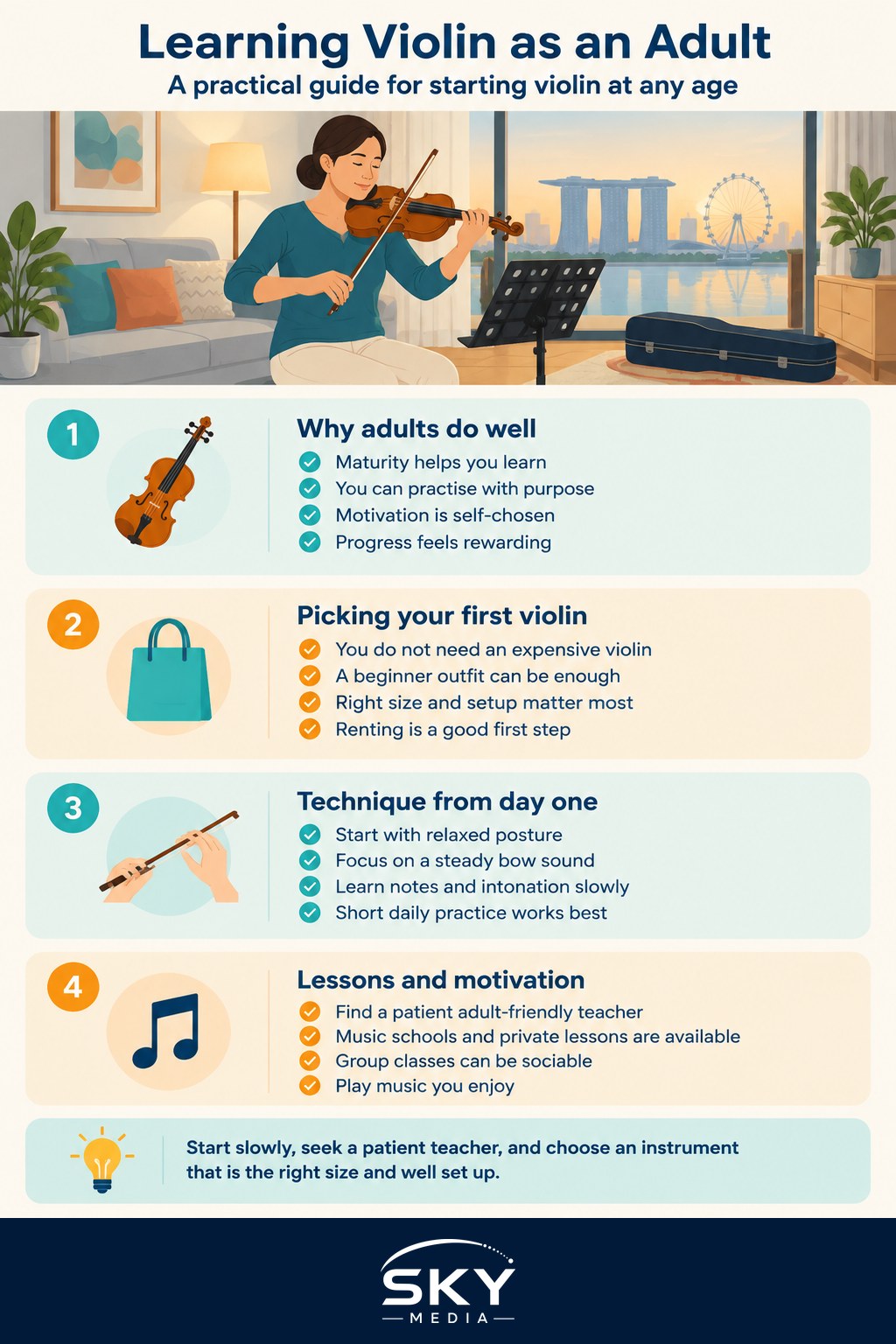
Why Adults Make Great Violin Students
Adults often worry that they have missed their window, but maturity is a genuine strength. You can understand explanations, analyse your own playing, and structure your practice in ways a young child cannot. You also chose this for yourself, which means your motivation tends to be steady and personal.
The violin is a deeply expressive instrument with a warm, singing voice, and it appears across an enormous range of music, from classical and folk to film scores and contemporary songs. Learning it opens a door to all of that. Yes, the early stages ask for patience, because unlike a piano you must find the notes yourself and shape each one by hand and bow. But that same challenge is what makes progress feel so rewarding.
Choosing Your First Violin
You do not need an expensive instrument to start. A sensible beginner violin, often sold as an outfit that includes a case and bow, is perfectly good for your first year or two. The most important thing is that the violin is the correct size and properly set up, meaning the strings sit at a comfortable height and it plays in tune. A poorly adjusted instrument makes learning much harder, so it is worth buying from a reputable music shop where staff can help.
Renting is another excellent option, especially at the beginning. Many music shops in Singapore offer rental schemes, which let you start playing without committing to a purchase while you decide how far you want to go. You will also need a few basics such as rosin, which is applied to the bow so it grips the strings, a shoulder rest for comfort, and a tuner to keep your strings at the right pitch.
Building Good Technique From Day One
The violin rewards careful, patient technique, and the habits you build early will shape everything that follows. Two things matter most at the start. The first is posture, meaning how you hold the violin and the bow, since a relaxed and balanced hold prevents tension and strain. The second is producing a clean, steady sound with the bow before worrying about fast or fancy playing.
Expect the first weeks to feel unfamiliar. Your fingers will need to learn where the notes live, and your ear will gradually sharpen to tell you when you are in tune. This is completely normal. Practise slowly, listen closely, and celebrate small wins. Short daily sessions of focused practice will take you much further than occasional long ones.
Learning to read music alongside your playing helps enormously, and it need not be daunting. Our guide on how to read music for beginners breaks it down gently and can support your lessons.
Finding Lessons in Singapore
A good teacher is close to essential for the violin, because so much depends on physical technique that is hard to correct on your own. Singapore has a healthy community of music schools and private instructors who welcome adult beginners, and many offer flexible timings that suit working schedules. When choosing a teacher, look for someone patient and encouraging who is used to teaching adults, since the approach differs from teaching children.
Group classes and community music programmes can be a warm, sociable way to learn as well, and playing alongside others keeps motivation high. As you grow more confident, you might explore ensembles or community groups where you can make music with people at a similar level.
Staying Motivated
Every learner hits moments of frustration, and the violin is honest about your progress in a way that can feel exposing. The key is to keep your love of the music in view. Play pieces you actually enjoy, listen widely to remind yourself why you started, and be gentle with yourself on the harder days. Understanding the bigger musical picture helps too, and reading about learning a musical instrument as an adult offers reassurance and practical mindset tips.
If you ever want to hear where dedicated study can lead, attending a live performance is inspiring. Our overview of classical music and the SSO is a lovely way to connect your practice to the wider world of live music in Singapore.
Begin Where You Are
The best time to start the violin is now, exactly as you are. You do not need natural talent, a fancy instrument, or a childhood of training. You need curiosity, a little patience, and a willingness to squeak a bit before you sing. Give yourself that grace, find a good teacher, and enjoy the slow, beautiful process of finding your voice on the violin.
Frequently Asked Questions
How long does it take an adult to sound decent on the violin? It varies, but expect the first weeks to feel awkward while your fingers find the notes and your ear learns to hear pitch. A clean, steady bow sound comes first, then in-tune melodies. Short daily practice with a good teacher usually brings progress faster than occasional long sessions.
Should I rent or buy a violin when starting out? Renting is a sensible start, since it lets you play without committing while you decide how far to go. If you buy, a beginner outfit with case and bow from a reputable music shop is enough. Either way, the size and set-up must be right.
What accessories does a beginner violinist need besides the violin? You will need rosin for the bow, a shoulder rest for comfort, and a tuner to keep the strings at the right pitch. A case and bow usually come with a beginner outfit. Ask your teacher or the shop to check that everything suits your size.
Can I teach myself the violin from videos instead of lessons? You can pick up some basics from videos, but a teacher is close to essential because posture, bow hold and intonation are physical habits that are hard to correct alone. Bad tension set early can be hard to undo, so at least book a few lessons.
Is a group class or private lessons better for an adult beginner? Private lessons give personal feedback on technique, which matters a lot on the violin, while group classes are sociable and keep motivation high. Many adults start with private lessons and add a group or community ensemble once they are more confident.
Further reading: Learning the Drums as a Beginner