
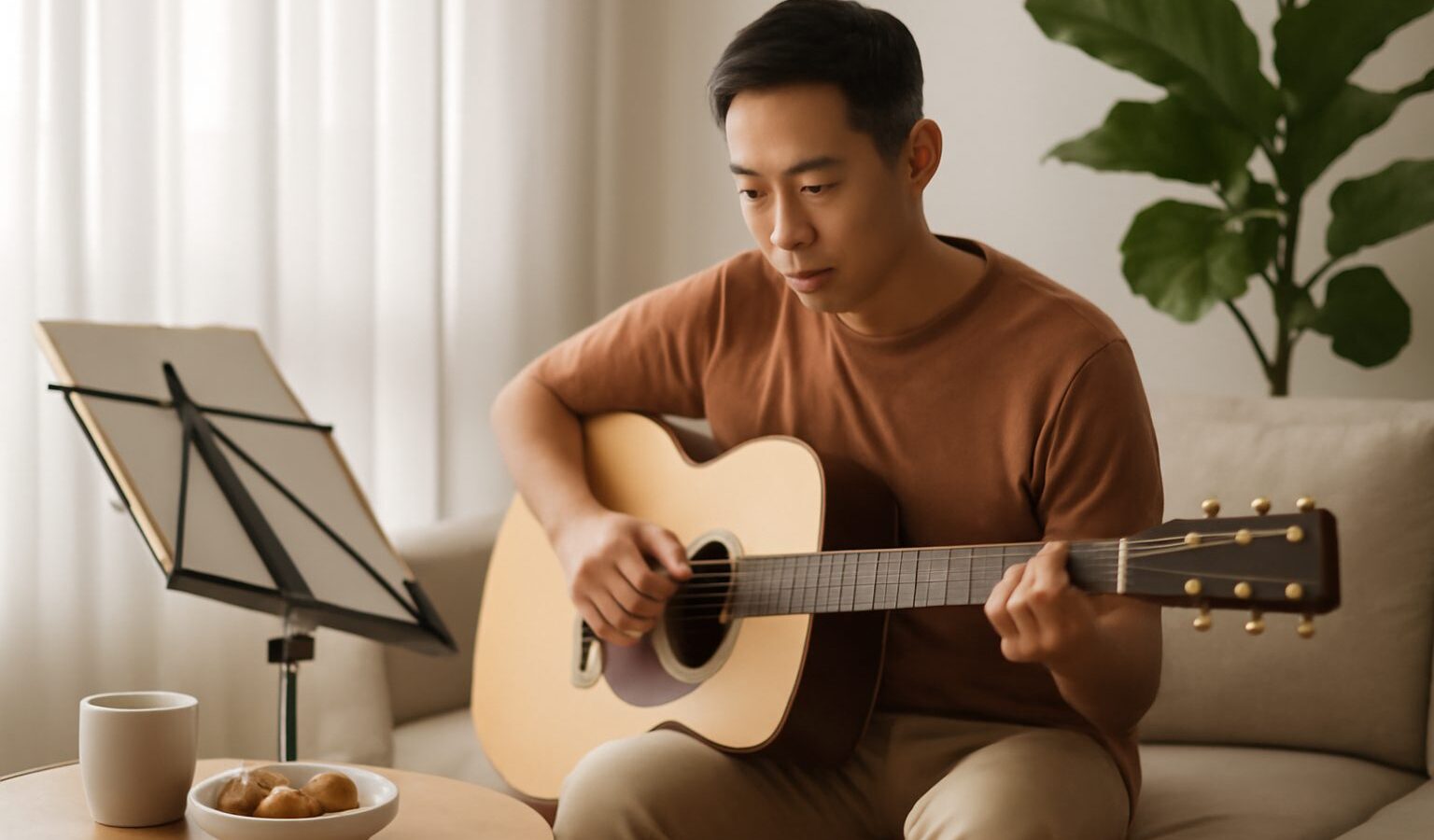
Somewhere along the way a lot of us picked up the idea that music is for children, that if you did not start at six you have missed the boat. It simply is not true. Adults make excellent beginners: you choose your own goals, you understand practice, and you are playing because you want to, not because a parent signed you up. Learning an instrument in Singapore as an adult is very doable, and you can begin at home this week without spending much at all.
This guide walks you through choosing an instrument that fits your life, the small kit you need to start, how to practise in an HDB flat without annoying the neighbours, and where to find lessons here. The only real requirement is a little patience with yourself.
It Really Is Not Too Late
The myth that adults cannot learn music is worth dismantling first, because it stops so many people from starting. Adults learn differently from children, not worse. You can read instructions, break a problem into steps, and stick with something because you decided to. What you may lack in free hours you make up for in focus and motivation.
You also get to skip the parts children endure: no exams unless you want them, no pieces you dislike, no recitals. You set the finish line. Maybe you want to strum three chords well enough to sing along, play one film theme on the piano, or jam a simple bassline. Those are real, reachable goals, and hitting a small one early is what keeps the hobby alive.
Choosing an Instrument That Fits Your Life
The best instrument for you is the one you will actually practise, and in Singapore that often comes down to space, noise and budget as much as taste. A grand piano is glorious and completely impractical for most HDB flats; a digital keyboard with headphones is not. Think about where you live and how you like to learn before you fall in love with something loud.
The table below compares popular starting instruments for adult beginners so you can weigh what suits your flat, your neighbours and your wallet. Prices vary widely between new, used and rented, so check the shop for current rates rather than assuming.
| Instrument | Rough starting budget | Noise and HDB-friendliness | Learning curve | Good if you want |
|---|---|---|---|---|
| Digital keyboard or piano | Low to mid | Quiet with headphones | Gentle at first | Melody and harmony, silent practice |
| Acoustic or classical guitar | Low to mid | Moderate, no plug needed | Moderate | Portable, sing-along chords |
| Ukulele | Low | Soft and neighbour-friendly | Very easy | The fastest, cheapest first win |
| Electric guitar or bass | Mid | Quiet through headphone amp | Moderate | Rock, pop and band playing |
| Digital drum kit | Mid | Quiet with mesh heads and headphones | Moderate | Rhythm and a physical outlet |
Notice how many options can be practised silently through headphones. That single feature makes a huge difference in a flat with thin walls, and it is why keyboards, electric guitars and electronic drums are so popular with adult learners here.
What You Need to Start
You need far less than a full setup. For most instruments the real starter kit is small:
- The instrument itself, bought used or rented to keep costs down while you decide if it sticks.
- Headphones, if your instrument is digital, so you can practise at any hour without disturbing anyone.
- A tuner app, which is free and keeps a guitar or ukulele sounding right.
- A stand or wall hook, so the instrument is out and visible. An instrument in a case gets played far less than one within arm’s reach.
- One beginner course to follow, whether a book, an app or a teacher, so you are not stitching together random clips.
Buying used is genuinely smart here. Adults often quit within weeks, which floods the second-hand market with barely-touched gear at good prices. A gently used keyboard or guitar is easy to resell if the hobby is not for you, so you risk very little by starting modest.
Practising in a Small Space Without Annoying Anyone
Noise is the number one worry for flat dwellers, and it is very manageable. Digital instruments with headphones solve it outright, letting you practise at midnight in total silence. For acoustic guitar or ukulele, daytime and early evening are safest, and you can fit a soft mute or simply play gently. If you must make sound, a quick, friendly word with your immediate neighbours goes a long way.
A few habits make small-space practice stick:
- Keep sessions short and regular. Fifteen focused minutes most days beats a three-hour cram at the weekend. Little and often is how the hands learn.
- Leave it out. An instrument on a stand invites you to pick it up; one packed away in a cupboard does not.
- Practise slowly. Play at a speed where you make no mistakes, then nudge the tempo up. Slow is smooth, and smooth becomes fast.
- Aim for one small song. A single simple piece you can play start to finish is more motivating than endless scales.
Our tropical humidity is worth a thought too. Damp air can swell wooden guitars, dull strings and encourage mould in cases. Keep acoustic instruments away from windows and bathrooms, wipe strings down after playing, and pop a couple of silica gel packets in the case. A wall hook in a ventilated room often treats a guitar better than a closed case does.
Where to Learn and Buy in Singapore
You have plenty of options. For instruments, music shops around Peninsula Shopping Centre and Peninsula Plaza in the city are a long-standing cluster for guitars, keyboards and gear, and larger retailers stock beginner ranges across the island. For used instruments at friendly prices, Carousell is well worth a browse, along with Shopee and Lazada for accessories and headphones.
To learn, you can go three ways. Private teachers and music schools offer structured, paced lessons and are ideal if you like accountability; community centres run approachable group classes through the PA network for ukulele, guitar and keyboard; and self-teaching through apps, YouTube and library books costs almost nothing to try first. Many adults blend them, starting free online and adding a teacher once they are sure. Fees vary a lot, so check the school or class provider for current prices rather than assuming.
Keeping It Going
An instrument survives on small wins, not grand plans. Set a gentle, repeatable rhythm, keep your first pieces short enough to finish, and let yourself sound rough for a while, because everyone does at the start. Record yourself now and again; hearing last month’s clumsy attempt against today’s is the best encouragement there is. Find one song you love and chase it. The point is not to become a concert performer, but to keep the joy of making music alive, one short session at a time.
Explore more
If your interest tilts towards making and recording your own sound, our guide to getting started with home music production is a natural next step. To share what you create or talk about the music you love, see starting a podcast as a hobby. And if you would rather balance music with a quieter creative outlet, try our beginner’s guide to drawing and sketching.