
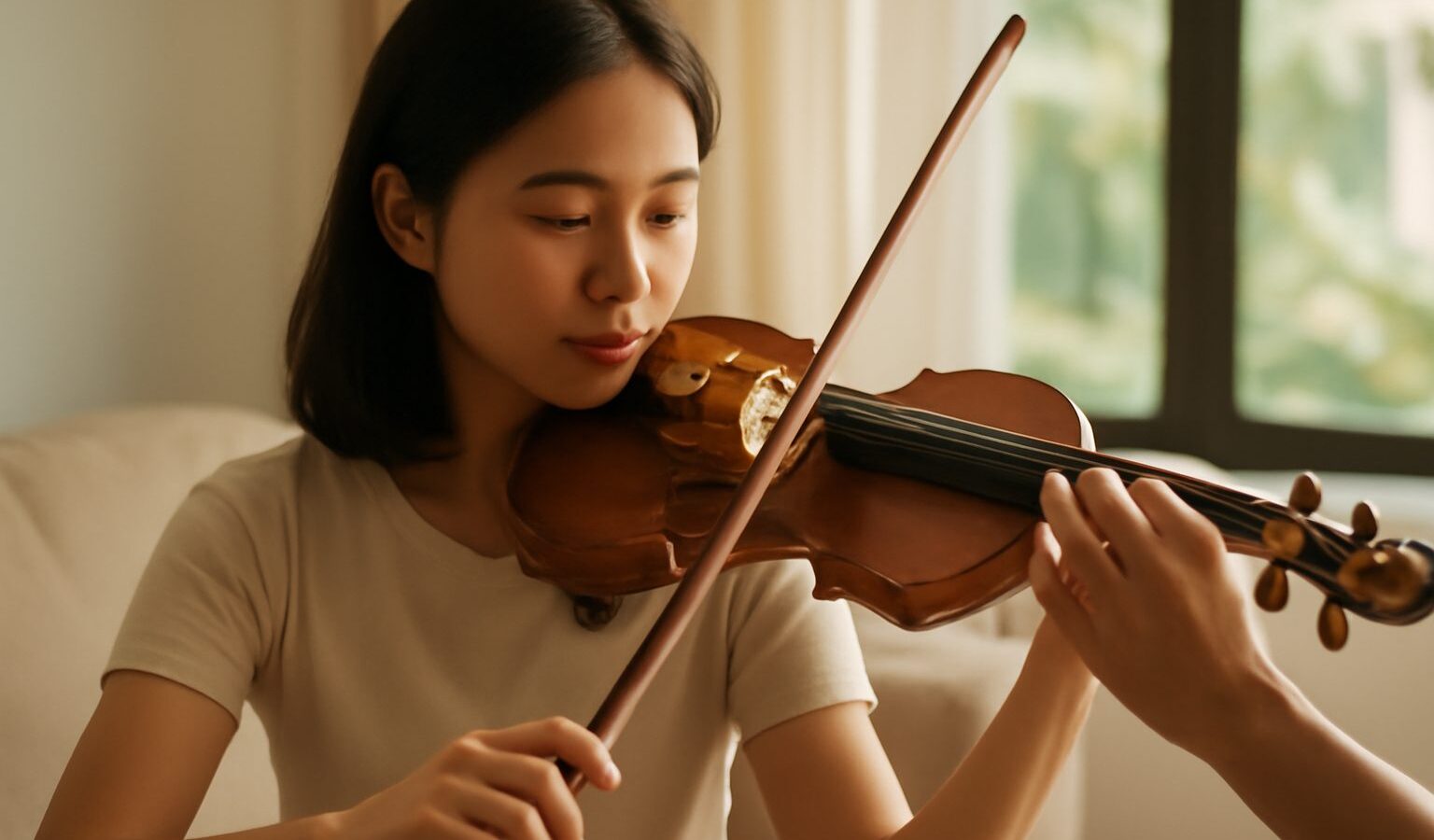
Few instruments reward patience quite like the violin. Its warm, singing tone can move a room, and it sits at the heart of everything from Western classical music to film scores, folk and pop. Learning the violin does ask more of a beginner than some instruments, because you produce every note by ear and touch rather than pressing a key, yet that is exactly what makes it so satisfying once it clicks. This guide is for the complete newcomer in Singapore who wants to know what to buy, how to hold it, and how to build the steady habits that turn scratchy first attempts into real music.
Be honest with yourself from the start: the first weeks will sound rough, and that is normal for everyone. The violin has no frets to tell you where the notes are, so your fingers slowly learn the map through practice. Stick with it, and progress arrives faster than you expect.
What Makes the Violin Special and Demanding
The violin is a small wooden instrument with four strings, played by drawing a bow across them or plucking with the fingers. You change notes by pressing the strings against the fingerboard at precise points, with no markers to guide you. This is why the violin has a reputation for being hard at first. Two skills develop at once: your left hand learns where each note lives, and your right hand learns to draw a smooth, even bow.
The reward is expressiveness. Because you control the pitch and the tone directly, the violin can slide, swell and sing in ways few instruments match. It is also compact and reasonably portable, which suits flat living, though it is genuinely loud, so practising with your neighbours in mind matters in an HDB block. A practice mute, which clips onto the bridge to soften the sound, is a cheap and considerate addition for quiet hours.
Choosing and Sizing Your First Violin
Unlike most instruments, violins come in different physical sizes, and getting the size right matters a great deal, especially for children. A violin that is too big strains the arm and makes good technique almost impossible.
- Full size (4/4) suits most teenagers and adults.
- Smaller fractional sizes such as 3/4, 1/2 and down are made for children, matched to arm length rather than age.
To check the fit, hold the violin under the chin and stretch the left arm along the neck. The hand should curl comfortably around the scroll at the far end without straining. A local string shop or a teacher can measure this properly, and it is well worth doing rather than guessing.
For a first instrument, an affordable beginner outfit that comes with a bow and a case is a sensible choice, and many shops offer rental schemes, which are especially useful for growing children who will change sizes. Avoid the very cheapest novelty violins sold as toys, as they are often hard to tune and discouraging to play. Prices, brands and rental terms change often, so compare current options in person and let a teacher advise you before you commit.
| Option | Upside | Watch out for |
|---|---|---|
| Rent a beginner violin | Low upfront cost, easy to resize | Ongoing fees add up over years |
| Buy a beginner outfit | Yours to keep, no return date | Wrong size wasted if you grow |
| Very cheap toy violin | Cheapest possible | Poor sound, hard to tune, off-putting |
| Second-hand from a shop | Better value, checked over | Needs setting up and new strings |
Holding the Violin and Bow
Good posture is not fussiness; it is what lets you play in tune and without pain. Rest the violin on your left collarbone and gently hold it in place with your jaw on the chin rest, so your left hand stays free to move rather than propping up the instrument. A shoulder rest, a cushioned support that clips underneath, makes this far more comfortable and is worth having early.
The bow is held in the right hand with a relaxed, slightly curved grip rather than a tight fist. Before a bow will make any sound, it needs rosin, a small block of hardened tree sap that you rub along the bow hair to give it grip on the strings. A new bow with no rosin will slide silently, which surprises many beginners. Draw the bow slowly and straight across a single string, keeping it parallel to the bridge, and aim for a steady, scratch-free sound before you worry about anything else.
First Notes, Tuning and Early Practice
The four strings are tuned to G, D, A and E, from the lowest and thickest to the highest and thinnest. Tuning a violin is fiddlier than tuning many instruments, using the pegs for large adjustments and the small fine tuners near the tailpiece for tiny ones. A clip-on tuner or a tuning app helps enormously while your ear develops. At first, ask a teacher or an experienced player to check your tuning, because playing on out-of-tune strings teaches your ear the wrong things.
Begin with the open strings, playing each one with a clean bow and no fingers down, until the sound is smooth. Then add your left-hand fingers one at a time to make new notes, listening carefully to whether each note is in tune. A sensible early routine looks like this:
- Tune up, or have your tuning checked.
- Warm up with slow, even bows on the open strings.
- Practise a simple scale, listening for tuning on every note.
- Work on one short, easy tune you enjoy.
- Finish while it still feels rewarding.
Short daily sessions of fifteen to twenty minutes beat long, tiring weekend marathons, because tuning and bowing are physical skills built through frequent repetition.
Practising Well and Finding Support
The violin is the classic example of an instrument where a good teacher pays for itself. Bad habits in posture, bowing or hand position are hard to unlearn later, and a teacher spots and fixes them early. Singapore has many private violin tutors and music schools, and formal graded exams from the well-known exam boards give a clear path of progress if you enjoy structure. None of that is compulsory, but a teacher, even for occasional lessons, will accelerate your learning more than almost anything else.
Look after your instrument in the local climate too. Humidity and heat are hard on wood and strings, so loosen the bow hair after every session, wipe the rosin dust off the violin with a soft cloth, and store it in its case away from direct sun and damp. A small packet of desiccant in the case helps in humid weather.
Above all, be patient and kind to yourself. Everyone sounds scratchy at the start, and the gap between your first squeaks and a clear, singing note is crossed one short practice at a time. Learning the violin is a long game, but few musical journeys are as rewarding, and every player who moves you today began exactly where you are now.