
Every household here generates rubbish, and figuring out the local way to deal with it is a small but satisfying part of settling in. Recycling in singapore follows some simple, practical habits, and once you learn them they quickly become second nature whether you live in an HDB flat or a condo. This friendly guide covers how the system works day to day and how you can play your part without overthinking it.
One thing to keep in mind throughout: rules, accepted items and collection arrangements can change, and they can differ between estates. For the current, authoritative details, always check with the National Environment Agency and your own town council or condo management rather than relying on hearsay.
How Household Waste Works Here
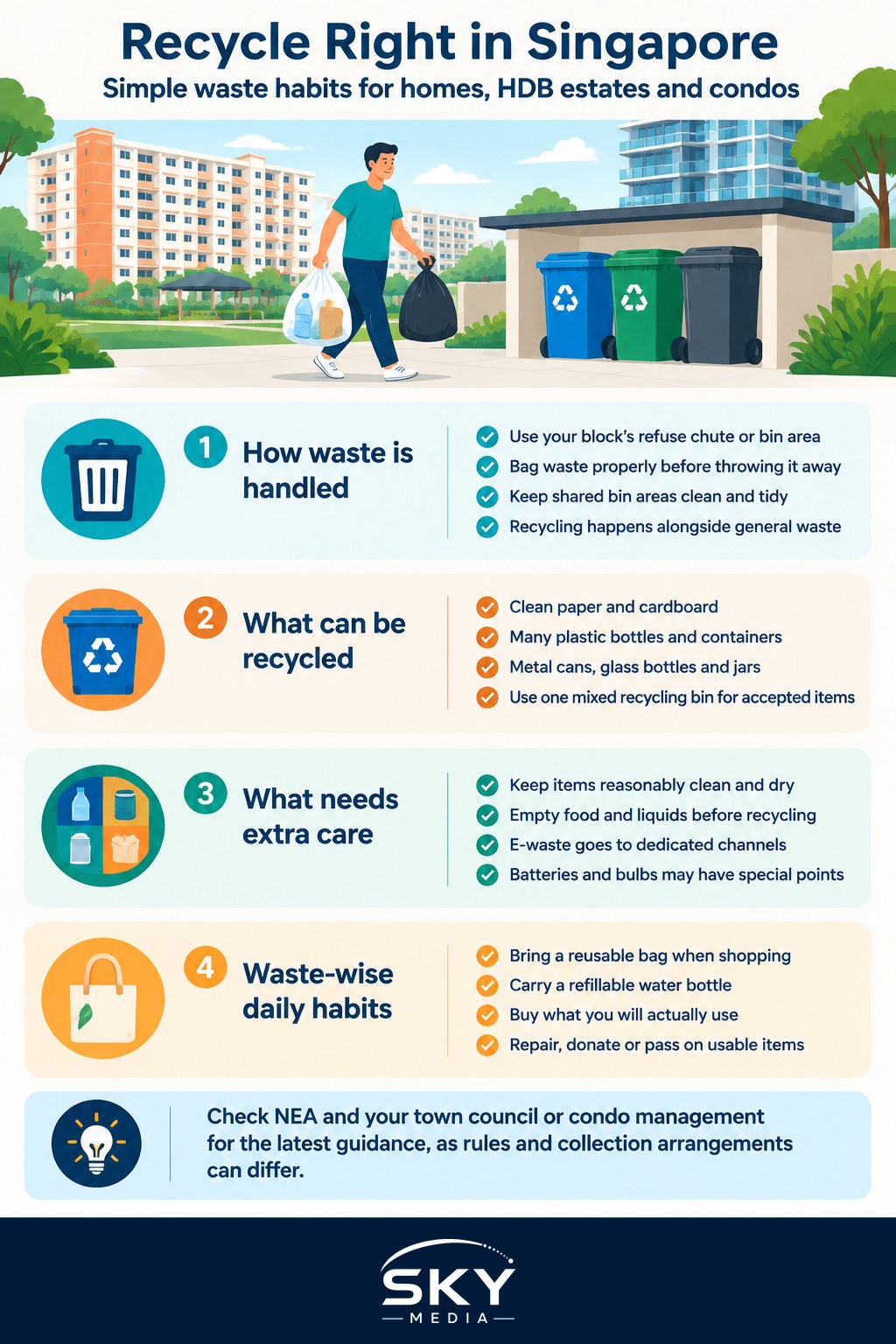
For general waste, most homes dispose of everyday rubbish through their block’s refuse system, whether that is a chute or a communal bin area, with collection handled regularly. It is good manners and good hygiene to bag your waste properly, tie it up, and keep shared bin areas clean for your neighbours.
Recycling runs alongside this. Across the island you will see dedicated recycling bins, commonly known by their distinctive colour, placed near HDB blocks and within many condo developments. The idea is a mixed, or commingled, recycling system, where you can put accepted recyclables together into the same bin rather than sorting them into separate streams yourself. That makes participating refreshingly simple.
If you have just moved in and are still sorting out the practical side of your home, our guide to setting up utilities in Singapore pairs nicely with getting your waste routine going, since both are part of running your new household smoothly.
What Can and Cannot Go in the Recycling Bin
As a general rule, common household recyclables include clean paper and cardboard, many plastic containers and bottles, metal cans, and glass bottles and jars. The golden habit is to make sure items are reasonably clean and dry before they go in, because food-soiled material can contaminate a whole batch and send it to waste rather than recycling.
Some things do not belong in the standard recycling bin, and these often include soft or contaminated items, food waste, and certain specialised products. A few categories need particular care:
- Electronic waste, such as old phones, chargers and small appliances, is usually collected through dedicated e-waste channels rather than the general recycling bin.
- Batteries and bulbs frequently have their own collection points because of what they contain.
- Food and liquids should be emptied out, since wet contamination is the enemy of good recycling.
Because the exact list of accepted items and the right disposal routes for special categories can be updated, check the National Environment Agency’s current guidance and any labels on the bins themselves. When you are unsure about a particular item, it is better to look it up than to guess and risk contaminating the bin.
A simple mental checklist before you toss something into the recycling bin:
- Is it clean and dry, with food and liquid removed?
- Is it one of the commonly accepted materials rather than a special category?
- If it is electronics, batteries or something unusual, does it need a dedicated drop-off instead?
Simple Habits That Cut Down Waste
Recycling is only half the story. Reducing what you throw away in the first place is even better, and it fits naturally into everyday life here. A few easy habits go a long way.
Bring your own reusable bag when you head out to shop, which our guide to grocery shopping as a newcomer touches on too. Carry a refillable water bottle, which is handy in our warm climate anyway. Try to buy what you will actually use, since food waste is one of the biggest contributors to household rubbish. Repair, donate or pass on items that still have life in them rather than binning them by default.
Small choices add up across a whole household and a whole year. None of this requires a dramatic lifestyle change, just a bit of everyday mindfulness that quietly makes a difference.
Settling Into Good Habits
Getting into a rhythm is easier than it sounds. Keep a small recycling collection point at home, perhaps a box or bag for clean recyclables, and empty it into the recycling bin when it fills up. Rinse containers as you go so it becomes automatic. Note where the nearest bins and any special drop-off points are around your estate, so you are never left wondering where things should go.
If you live in a condo, ask the management about the building’s specific arrangements, and if you are in an HDB estate, your town council is the go-to source for local details. Being a considerate neighbour, keeping shared areas tidy and disposing of things properly, is part of fitting into community life here.
Learning to recycle and manage waste thoughtfully is a modest but meaningful way to feel settled and to contribute to your new home. Start with the basics, check official guidance when in doubt, and let these small green habits become just another comfortable part of your life in Singapore.
Frequently Asked Questions
Should I put recyclables in the bin loose or inside a plastic bag? Loose is the usual advice, since bagged items are hard for sorting staff to open and check. Empty your home collection box straight into the bin instead. Guidance can be updated, so confirm the current instructions with the National Environment Agency or the labels on your estate’s bins.
Can greasy pizza boxes and used takeaway containers be recycled? Heavily greasy or food-stained paper and containers generally cannot be recycled, because the residue spoils otherwise good material. Scrape off leftovers and rinse plastic tubs where possible. If something stays dirty after a quick rinse, it is better placed in general waste than in the recycling bin.
What can I do with old furniture, clothes or things that still work? Pass them on before throwing them out. Donating usable clothes and household items, giving them to neighbours or selling them second-hand all keep them in use longer. For bulky items that are beyond saving, ask your town council or condo management how disposal is arranged in your estate.
Who do I contact if the recycling bins near my block are full or not cleared? In an HDB estate, start with your town council, which looks after the common areas. In a condo, speak to the management office. Giving the exact location and when you noticed the problem helps them act faster. The National Environment Agency is the body to check for wider guidelines.
Is recycling really worth the effort if some of it still ends up as rubbish? Yes, because clean, correctly sorted items do get processed, and good habits keep the whole batch usable. Contamination is what causes waste, so the effort is mostly about rinsing and checking what you put in. Reducing and reusing first cuts waste even more than recycling does.
Official sources: National Environment Agency (NEA)
Further reading: How China Newcomers Can Recycle in Singapore