
Once you have keys to a flat, the next task is switching on the essentials: electricity, water and gas. Singapore makes this refreshingly simple, with most of it handled through a single account and a bit of admin you can do online. This guide explains what utilities cover, how to set them up, and who pays for what when you are renting versus owning.
This is a general overview. Providers set their own terms, and charges change, so confirm current details with SP Group, City Energy, PUB and your town council.
What “utilities” actually covers
In a typical home, your utilities are:
- Electricity, which powers everything from lights to air-conditioning.
- Water, supplied and managed nationally.
- Gas, used mainly for cooking and water heating in many homes.
- Refuse collection and conservancy, the cleaning and waste services for your estate, usually billed separately by the town council.
Electricity, water and gas are commonly bundled into one utilities account, while refuse and estate upkeep come through Service and Conservancy Charges.
The SP Group utilities account
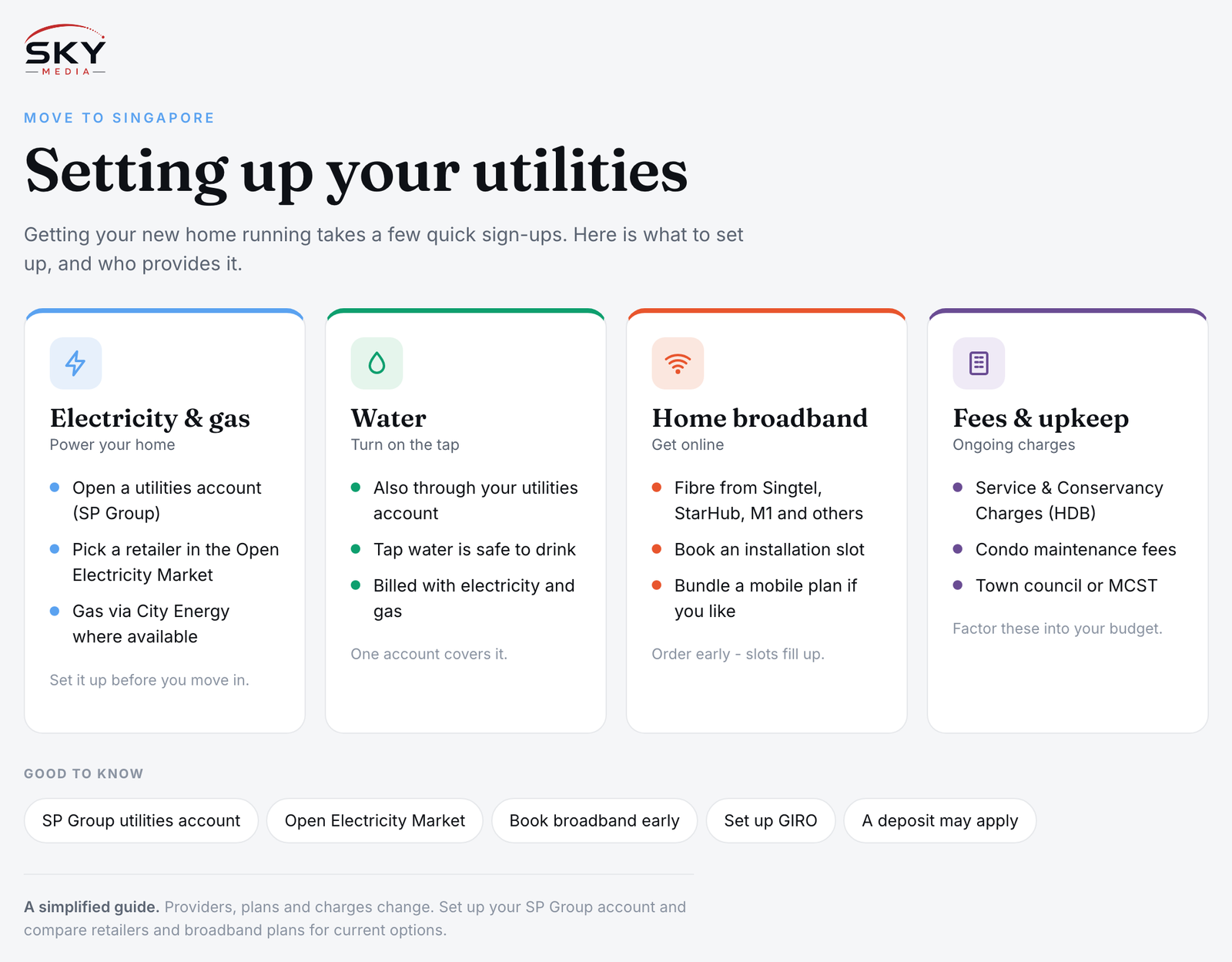
For most homes, the starting point is opening a utilities account with SP Group, which manages the meters and issues the combined bill for electricity, water and gas. You can usually open an account online before or around your move-in date. Be ready with:
- Your identification and pass or residency details.
- Your new address and the intended start date.
- Your tenancy agreement if you are renting.
- A security deposit, the amount of which varies by household type and status, so check the current figure.
Set the start date to match your move-in so you are not paying for an empty home or, worse, arriving to no power. Once open, you can view bills and set up payment through the app or online portal.
Electricity and the Open Electricity Market
Singapore has an Open Electricity Market, which means you can choose to buy electricity from an independent retailer rather than only at the standard regulated tariff. At a high level, you have two options:
- Stay on the regulated tariff supplied through SP Group, which is simple and requires no extra choice.
- Sign up with a retailer in the Open Electricity Market, which may offer different pricing plans.
Whichever you choose, the electricity itself and the wires are the same, and SP Group still maintains the grid and meters. Compare plan structures carefully and read the contract terms, since some plans have fixed periods. If you would rather not decide right away, the standard tariff is a perfectly fine default while you settle in.
Gas from City Energy
Piped town gas is supplied by City Energy in homes that use it. Gas is often set up as part of your utilities account, but check whether your flat uses piped town gas, bottled gas, or is fully electric, since newer or smaller units sometimes skip gas entirely. If your kitchen runs on electricity and induction, you may not need a gas supply at all.
Water from PUB and using it wisely
Water is managed by PUB, Singapore’s national water agency, and is supplied to your home as part of the same utilities setup. Singapore treats water as a precious resource, and there are ongoing efforts to encourage conservation. Simple habits like shorter showers and fixing drips help keep your bill down and support a national priority. Your water usage appears on the same combined bill.
Refuse and conservancy charges
Rubbish collection, corridor cleaning and general estate upkeep are handled through your town council as Service and Conservancy Charges. These are billed separately from your SP Group utilities. If you rent, clarify with your landlord or agent how these are handled, since arrangements vary.
Rough monthly cost expectations
Utility costs depend heavily on the size of your home, how many people live there, and how much you run the air-conditioning, which is the single biggest driver in Singapore’s climate. A small flat with modest usage will sit at the lower end, while a larger home running air-conditioning around the clock will pay considerably more. Treat any figure you see online as a rough guide only, and watch your first couple of bills to understand your own pattern.
Who pays: tenant versus owner
| Item | Provider | How to set up | Who usually pays |
|---|---|---|---|
| Electricity | SP Group or a retailer | Open SP Group account, choose tariff or retailer | Tenant, in most rentals |
| Water | PUB, via SP Group bill | Included in utilities account | Tenant, in most rentals |
| Gas | City Energy, via utilities account | Included where piped gas exists | Tenant, in most rentals |
| Refuse and conservancy | Town council | Often handled by owner or via S&CC | Varies, confirm with landlord |
| Broadband | Separate provider | Arrange your own plan | Tenant |
In a standard tenancy, the tenant typically opens and pays the utilities account, but always read your lease, since some furnished or short-term rentals bundle utilities into the rent up to a cap.
Moving out or transferring
When you move, remember to close or transfer your utilities account so you are not billed after you leave. Give notice through SP Group, provide a final meter reading if requested, and settle the closing bill. Your deposit is generally refunded after final charges are cleared. If you are moving to a new local address, you can often transfer the account rather than closing and reopening.
A simple order of operations
- Confirm your move-in date and sign your tenancy agreement.
- Open your SP Group utilities account online, set the start date, and pay the deposit.
- Decide on the standard tariff or an Open Electricity Market retailer.
- Check whether your unit uses piped gas.
- Sort out broadband separately.
- Note your town council S&CC arrangements.
Get these done and your new home is fully switched on, ready for that first load of laundry and a well-earned blast of air-conditioning.
Explore more: Moving to Singapore checklist · Renting in Singapore · Cost of living in Singapore