
Every day, a small and densely populated island produces a mountain of rubbish, and somehow, by the next morning, it is gone. It is easy to take that for granted. But behind the quiet efficiency sits one of the more remarkable systems a modern city runs. Understanding singapore waste management is genuinely useful, because once you see where your rubbish actually goes, the case for wasting less stops being an abstract slogan and starts making practical sense.
This is the national waste story in plain terms: how rubbish is collected, how it is burned to shrink it and make electricity, where the leftovers end up, and why a small island is working hard to slow the flow of waste in the first place.
From Chute to Collection
For most people here, waste disposal begins at a rubbish chute in an HDB block or a bin at the doorstep. General waste is collected regularly by licensed public waste collectors, who operate across different sectors of the island. From homes, shops, offices and industries, the trucks carry this waste to be treated rather than simply dumped.
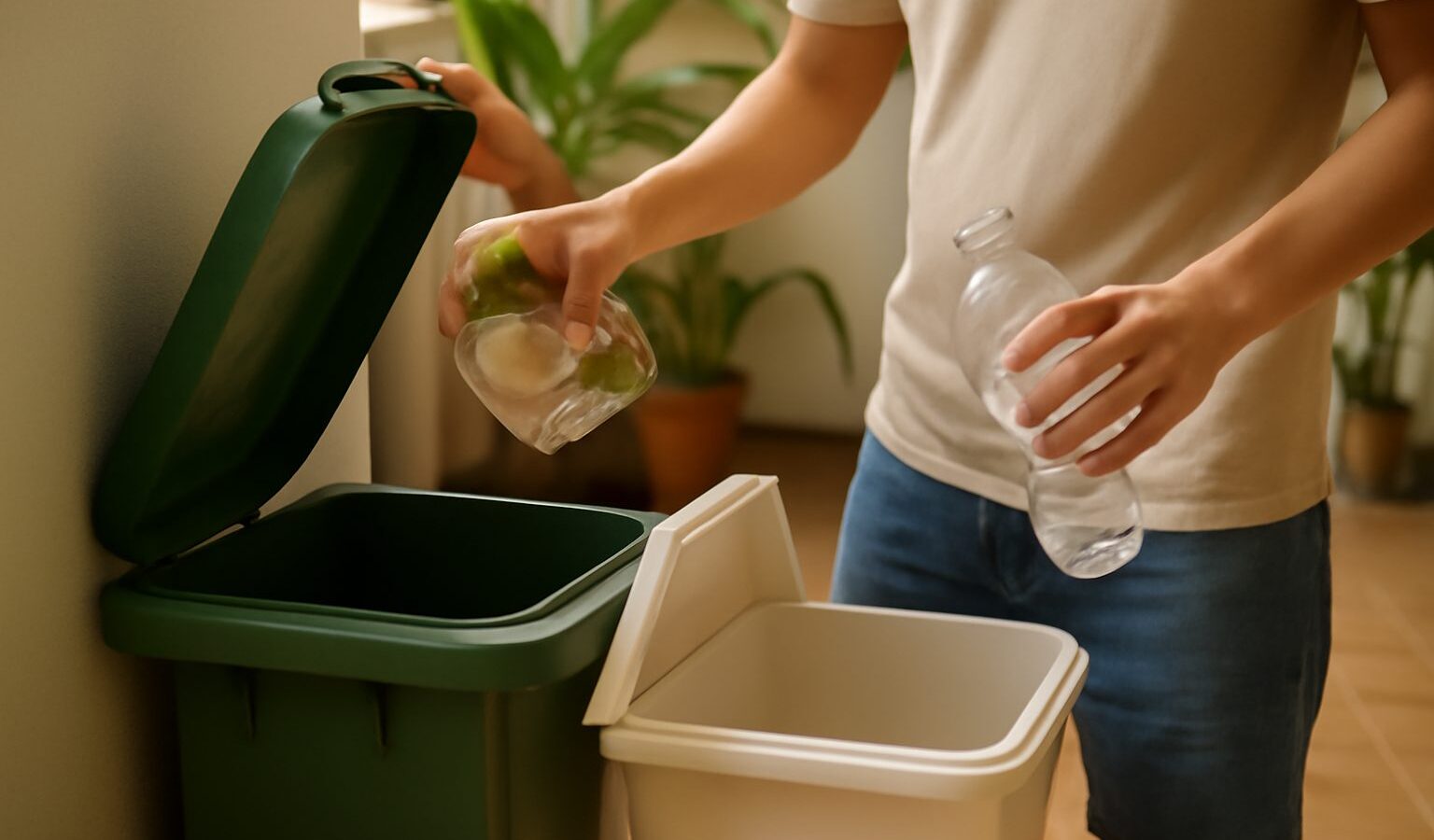
Recyclables travel a separate path. Through the National Recycling Programme, the familiar blue recycling bins sit near HDB blocks and other premises so that households can set aside paper, plastic, metal and glass instead of throwing everything into one stream. What goes into the blue bin is meant to be sorted and processed for recycling rather than burned. The two streams, general waste and recyclables, are the foundation of the whole system, which is why getting your sorting right at home has an effect all the way down the line.
Turning Rubbish Into Energy
Singapore does not have the land to bury its everyday rubbish, so most general waste that cannot be recycled is incinerated. The island runs waste-to-energy plants that burn general waste at high temperatures. This does two important jobs at once. First, it dramatically reduces the volume of the waste, shrinking it to a small fraction of its original size, which matters enormously on a land-scarce island. Second, the heat generated is used to produce steam that drives turbines and generates electricity, so the waste contributes to the power supply rather than being purely a burden.
The plants are fitted with systems to treat the gases produced during burning before they are released, so that incineration is done in a controlled way. What remains after burning is mainly ash, far smaller in volume than the original rubbish but still needing somewhere to go. That is where the next part of the story comes in.
The Island Landfill and Why It Matters
The incineration ash, along with other non-incinerable waste, is shipped out to the Semakau Landfill, an offshore landfill created among the southern islands. It is often described as a surprisingly clean and green space, with the surrounding waters and habitats carefully managed, which is not what most people picture when they imagine a rubbish dump.
Here is the crucial point, though: Semakau is finite. It is Singapore’s only landfill, and it is filling up. The more waste the country generates and the more ash the incinerators produce, the faster that space is used. Building another landfill on such a small and crowded island is enormously difficult, so the goal is to make the one we have last as long as possible. This single fact, a landfill with a projected fill-up date, is the reason so much of the national conversation is about reducing waste at the source rather than just disposing of it more cleverly. Because these projections and dates are updated over time, it is worth checking NEA’s official information for the current picture.
Comparing How Each Waste Stream Is Handled
| Waste stream | How it is handled | Where it ends up |
|---|---|---|
| General waste (non-recyclable) | Collected and incinerated at waste-to-energy plants | Ash sent to Semakau Landfill; energy fed to the grid |
| Recyclables (blue bin) | Collected separately, sorted and processed | Made into new materials and products |
| E-waste (electronics, batteries) | Collected through dedicated bins under the producer responsibility scheme | Recovered for valuable materials |
| Food and organic waste | Increasingly separated for treatment where facilities allow | Turned into energy or other useful outputs |
The Recycling Challenge
On paper, the blue bins should be easing the pressure on the incinerators and the landfill. In practice, the domestic recycling rate, the share of household waste that actually gets recycled, has long been a stubborn challenge. A large part of what could be recycled still ends up in the general waste stream and gets burned.
Several everyday habits explain the gap. Recyclables are often contaminated, for example when food or liquid is left in containers, or when a plastic bag full of mixed rubbish is dropped into the blue bin, spoiling otherwise good material. Many people are also genuinely unsure what can and cannot be recycled, so they either bin recyclables or, trying to help, toss in items that do not belong. This is why simply having blue bins is not enough on its own, and why clearer household habits make a real difference. If you have ever hesitated at the bin, our guide on how to recycle correctly is written to clear up exactly those doubts.
Where the Country Is Heading
Singapore has set out a direction rather than leaving all this to chance. The Zero Waste Masterplan lays out the national strategy for reducing waste, reusing and recycling more, and extending the lifespan of Semakau, with particular attention to priority waste streams such as food, packaging and electronics. It sits within the broader Singapore Green Plan 2030, the national sustainability roadmap that ties waste to wider goals on climate, nature and green living.
The thread running through both is a shift in mindset from disposing of waste to avoiding it in the first place, moving towards a more circular economy where materials are kept in use rather than burned once and lost. Specific targets and timelines are set by the authorities and updated over time, so the reliable approach is to describe the direction, as here, and check the official Green Plan and NEA sources for the current figures.
Why Your Bin Habits Count
It is fair to ask what one household can do against a national waste stream. The honest answer is that the system genuinely runs on the aggregate of individual choices. Every item kept out of the general waste bin is one less thing to incinerate and one less scrap of ash heading to a landfill that cannot be replaced. Every clean, correctly sorted recyclable is material that gets a second life instead of a single trip to the furnace.
You do not need to overhaul your life. Rinsing containers before they go in the blue bin, learning the handful of rules about what belongs there, dropping batteries and bulbs at an e-waste point instead of the chute, and simply buying and binning a little less all feed into the same outcome. Small, consistent habits, multiplied across millions of people, are exactly what makes a land-scarce island’s waste system work.
Explore More
To turn understanding into action, start with how to recycle correctly in Singapore so your blue bin does its job, and read the Singapore Green Plan explained to see how waste fits into the country’s wider push for a greener, more sustainable future.