

You have the qualifications, the experience and a strong CV. Then the application form asks for two referees, ideally people who have worked with you in Singapore, and you have none. For many newcomers, the lack of local references Singapore employers expect feels like a wall that only time can break down.
It does take some time, but less than you might think, and there are practical ways to show credibility while you build. This guide focuses on that gap: how to use the references you already have, how to create local ones quickly, and how to present yourself so employers feel confident even before anyone in Singapore can vouch for you.
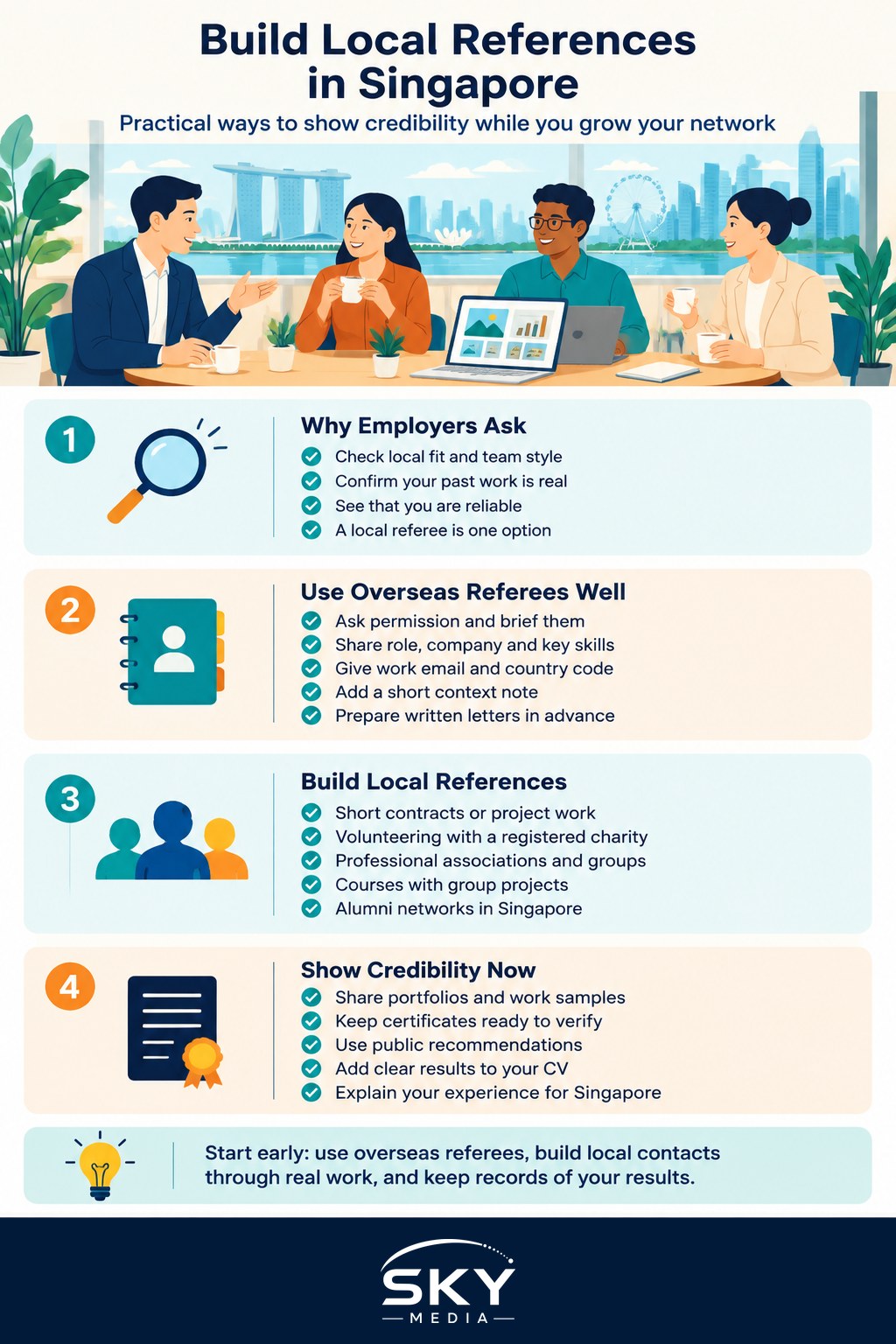
Why Employers Ask for Local Referees
Understanding the employer’s worry helps you answer it. When a hiring manager asks for a local reference, they are usually trying to check three things:
- That you can work in the local environment, including multicultural teams, local business norms and English as the working language.
- That your past performance is real, from someone they can reach easily and whose context they understand.
- That you are reliable, turning up, meeting deadlines and handling feedback well.
A local reference is just one way to answer these questions. If you can answer them in other ways, the missing referee matters much less. Our guide to job references and background checks in Singapore explains how the formal checking process usually works.
Make Your Overseas Referees Easy to Use
Your previous managers abroad are still valuable. The problem is usually friction, not credibility. Reduce it:
- Ask permission and brief them. Tell them the role, the company and what skills to emphasise.
- Collect the right contact details. A work email, a mobile number with country code and the best hours to call in Singapore time.
- Note the language. If a referee is more comfortable in another language, say so upfront, and offer a written reference in English if they can provide one.
- Explain the context briefly. On your reference list, add one line on the company, its size and your role, so a Singapore employer understands who they are calling.
- Get written letters in advance. A signed reference letter on company letterhead can reassure employers if a phone call proves hard. Our guide on how to request an employment reference letter covers what to ask for.
Ways to Build Local References Quickly
The fastest local references come from doing real work alongside people in Singapore, even in small amounts. Each route below has different trade-offs, so pick those that fit your situation and pass conditions.
| Route | How it builds a reference | Things to keep in mind |
|---|---|---|
| Short contracts or project work | A local manager sees your output first hand within weeks | Check that your pass allows this work before accepting it, as permission depends on MOM rules for your pass |
| Volunteering with a registered charity or community group | A coordinator can speak to your reliability and teamwork | Choose roles that use relevant skills, such as finance, events or design |
| Professional associations and industry groups | Committee work or speaking gives peers a reason to vouch for you | Membership alone is not enough, you need to contribute visibly |
| Courses with project components | Trainers and classmates see how you work in a local team | Pick courses with group projects, not just lectures |
| Alumni networks from your university | Fellow graduates in Singapore can make introductions and later act as referees | Attend events consistently rather than once |
A note on passes: if you are on a Dependant’s Pass or another pass, whether you can take paid or even some unpaid work depends on Ministry of Manpower (MOM) rules for that pass. Check the current rules on the MOM website before you start anything.
Show Credibility Before Anyone Vouches for You
While local references take shape, other evidence can do some of the work.
- Portfolios and work samples. Writers, designers, engineers and analysts can show real output, with confidential details removed.
- Verifiable credentials. Make sure qualifications are easy to check. Some employers use third-party verification services, so keep certificates and transcripts ready.
- Public recommendations. Written recommendations on professional networking profiles from former colleagues are not formal references, but they help hiring managers see a pattern of positive feedback.
- Clear numbers on your CV. Concrete results, such as projects delivered, budgets managed or processes improved, make your track record easier to trust.
- Local framing. Explain how your experience applies here. If your previous market is unfamiliar to the interviewer, give a short comparison.
Turn Your First Singapore Job Into a Reference Bank
Once you land a role, treat the first year as reference building time too.
- Agree clear goals early with your manager, so they can later describe specific achievements.
- Work across teams where possible, so more than one person knows your work.
- Ask for feedback regularly and act on it. Managers remember people who improve.
- Stay in touch when people move on. A former manager at another company is still a strong referee. A short message every few months keeps the connection warm.
- Keep a private record of projects, dates and outcomes, to remind referees of details when the time comes.
Do not wait until you are job hunting to think about referees. The best local references come from relationships built steadily, not from last-minute requests.
What to Say When You Have No Local Referee Yet
If an application or interviewer asks directly, be honest and confident. A short answer works well:
“I moved to Singapore recently, so my referees are from my previous roles overseas. I have provided their contact details with the time difference noted, and I am happy to share written references. I am also building local connections through [your volunteering, course or association], and that coordinator would be happy to speak to my work.”
This shows you understand the employer’s concern and have already addressed it. Most reasonable employers will accept good overseas references, especially for experienced hires.
Key Points to Remember
- Employers want reassurance about local fit, real performance and reliability, and a local referee is only one way to show these.
- Make overseas referees easy to reach and well briefed.
- Volunteering, short projects, professional groups and courses can create local referees within months, as long as your pass allows the activity.
- Your first Singapore job is your best reference bank, so nurture it.
With a plan, the missing local referee becomes a short-term gap rather than a barrier.
Frequently Asked Questions
Can I list a former colleague overseas as my referee for a Singapore job? Yes, many employers accept overseas referees, especially for experienced hires. Brief them first, give a work email and a phone number with country code, and note the time difference so the employer can reach them easily.
Does volunteering count as a reference for job applications? It can. A coordinator at a registered charity or community group can speak about your reliability and teamwork, which is what employers want to check. Choose a role that uses skills relevant to the jobs you are applying for.
Can I take short freelance work on a Dependant’s Pass to get a local referee? It depends on the rules for your pass, so check with MOM before accepting any paid or unpaid work. Volunteering or a course project may be options, but confirm the current position on MOM’s website first.
What if an employer insists on a local referee and I have none? Explain honestly that you moved recently, offer well-briefed overseas referees and written letters, and mention any local contacts you are building through volunteering, courses or an association. Many reasonable employers accept this.
Should I ask a recruiter or agency to act as my referee? A recruiter who has worked with you may add some reassurance, but employers usually prefer someone who has seen your work first hand, such as a manager or project lead. Treat a recruiter as a supplement, not a substitute.