
Our feet quietly do an enormous amount of work, carrying us thousands of steps a day across pavements, void decks, and MRT platforms, yet they are often the last part of the body we think about. Good foot health in Singapore comes with its own local twists, from the heat and humidity to a culture of sandals and slippers. This is general information to help you keep your feet comfortable, not medical advice, so please see a doctor or podiatrist for persistent problems.
Why Feet Need Attention in Our Climate
Feet are complex, packed with bones, joints, muscles, and skin that all take a pounding every day. In Singapore, our warm, humid weather adds particular challenges. Feet sweat more, shoes stay damp, and the moist environment inside enclosed shoes is exactly what fungi and bacteria love. That is why sweaty feet, athlete’s foot, and toenail issues are such common local complaints.
At the same time, our fondness for open sandals and slippers has upsides and downsides. Airy footwear keeps feet cool and dry, which is good, but flat, unsupportive slippers worn all day offer little cushioning or support, and open shoes leave feet exposed to cuts and knocks. Balance is the key.
Everyday foot niggles many of us recognise include:
- Sweaty, smelly feet by the end of the day
- Itchy, peeling skin between the toes
- Hard skin, corns, or calluses on pressure points
- Blisters from new or ill-fitting shoes
- Cracked heels, especially with open-backed footwear
- Aching feet after long hours standing or walking
Everyday Foot Care Habits
A simple routine keeps most problems at bay.
Wash and dry thoroughly. Clean your feet daily and, crucially, dry between the toes. Trapped moisture is the main trigger for fungal problems in our climate.
Let shoes breathe. Air out shoes between wears and rotate a couple of pairs so each can dry fully. Damp shoes worn day after day invite odour and infection. Moisture-wicking socks help too.
Trim toenails properly. Cut nails straight across rather than curved deep into the corners, which helps prevent painful ingrown toenails.
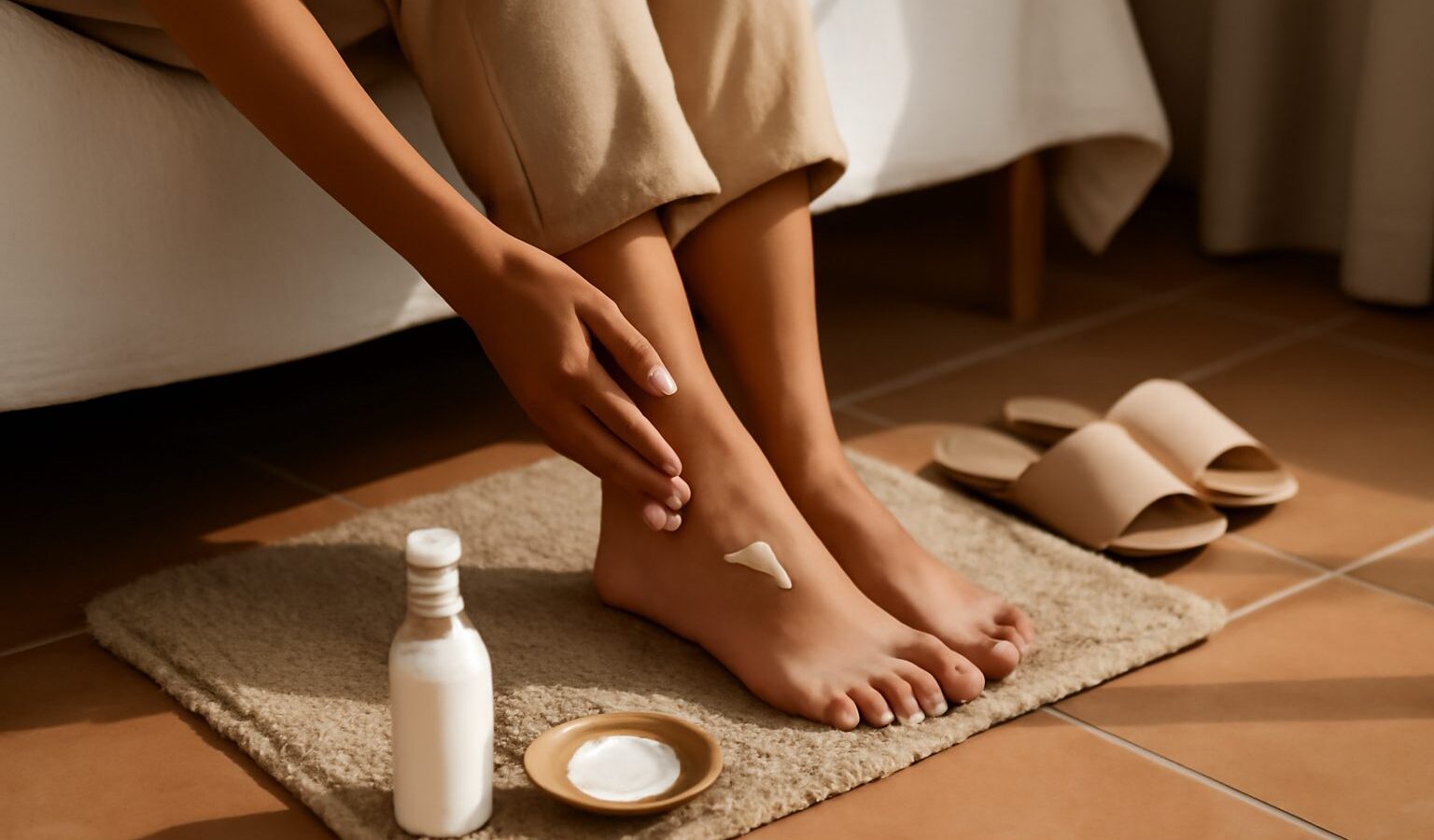
Moisturise dry areas, not between the toes. A moisturiser on dry heels helps prevent cracking, but keep the spaces between the toes dry.
Tackle hard skin gently. A pumice stone on damp skin helps smooth calluses. Avoid cutting corns or hard skin yourself, especially with blades.
Protect your feet in shared spaces. Wear slippers around public pools, changing rooms, and shower areas, where fungal infections spread easily.
Choosing Footwear That Helps
Shoes have a big say in how your feet feel and last. The best choice depends on what you are doing.
| Kinder to your feet | Harder on your feet |
|---|---|
| Cushioned, well-fitting shoes for walking and standing | Flat, worn-out slippers worn all day |
| Supportive trainers for exercise and long walks | High heels or tight shoes for many hours |
| Breathable materials in our humidity | Damp shoes worn again before drying |
| Shoes fitted with a little room at the toes | Squeezing into a size too small or too narrow |
| Rotating pairs so each dries out | Wearing the same enclosed pair every day |
When buying shoes, try them on later in the day when feet are slightly larger, and make sure there is a little wiggle room at the toes. Comfort should be immediate; do not rely on shoes to “break in”. For exercise, proper footwear cushions the impact and protects not just your feet but your knees and joints higher up.
Feet, Diabetes, and Getting Older
Foot care takes on extra importance for some groups, and this is where a careful eye really matters.
If you live with diabetes, your feet deserve special attention, because the condition can reduce sensation and slow healing, so a small cut or blister can turn serious without you feeling it. General guidance is to check your feet daily for cuts, blisters, redness, or changes, keep them clean and moisturised, wear protective footwear, and never ignore a wound. Many people with diabetes have their feet checked regularly by a healthcare professional, and your doctor or a podiatrist can advise on the right routine for you. If you have diabetes and notice any foot wound, do not wait; get it seen promptly.
As we age, skin thins, circulation can change, and reaching the feet to trim nails or check them may get harder. Older adults benefit from comfortable, supportive shoes with good grip to reduce the risk of slips and falls, and a little help from family to check and care for feet that are hard to reach. Well-cared-for feet keep people steady, mobile, and independent.
When to See a Doctor or Podiatrist
Most foot niggles respond to good hygiene, better footwear, and a little patience. Some warrant a professional look. See a GP or podiatrist if you notice:
- A fungal infection, athlete’s foot, or nail problem that does not clear with basic care
- Persistent foot or heel pain that does not settle with rest and better shoes
- An ingrown toenail that is painful, red, or infected
- Numbness, tingling, or pins and needles in the feet
- Painful corns or calluses that keep coming back
- Any foot wound in a person with diabetes
Some situations need urgent care. Seek prompt medical attention for a foot wound that is spreading redness, warmth, swelling, pus, or comes with fever, a wound that will not heal, a foot that is suddenly cold, pale, or very painful, or a significant injury after a fall. Acting quickly on these protects the health of your feet and the rest of you.
Looking after your feet is a small daily habit with a big payoff: comfortable, healthy feet that carry you through Singapore life without complaint. Keep them clean and dry, choose sensible footwear, and get help early when something is not right.
Explore more
Healthy feet support an active, comfortable life. Read our companion guide on caring for your knees and joints, which share the load with your feet, and the health benefits of walking more for a foot-friendly way to stay active. For everyday self-care, see how to look after your hearing.