
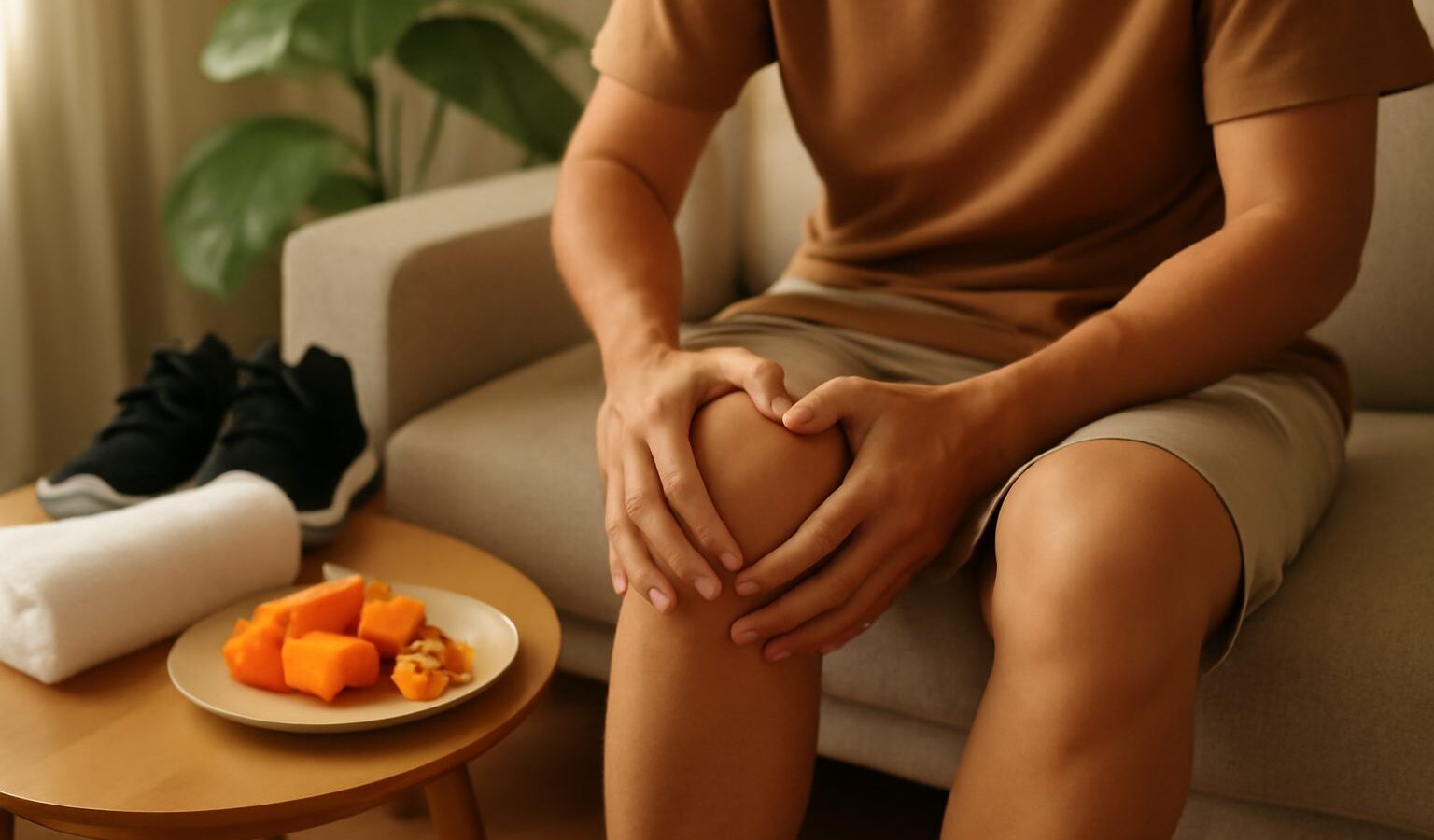
Our knees and joints carry us up HDB stairs, across the void deck, and through the market every day, yet we rarely think about them until they twinge. Looking after knee and joint health in Singapore is worthwhile at any age, whether you are trying to stay active into your later years or simply want to climb stairs without wincing. This is general information, not medical advice, so please see a doctor or physiotherapist for persistent pain or before big changes.
How Joints Work and Why They Ache
A joint is where two bones meet, cushioned by smooth cartilage and lubricated so the surfaces glide. Muscles and ligaments around the joint keep it stable and share the load. When things are working well, movement is smooth and painless. Aches tend to arise when a joint is overloaded, underused, injured, or affected by wear over the years.
The knee is the joint people worry about most, and for good reason: it takes real force every time you stand, squat, or descend stairs. But the same care principles apply to hips, ankles, shoulders, and hands.
A comforting truth cuts against a common fear: movement is generally good for joints, not bad. Gentle, regular activity nourishes cartilage and strengthens the muscles that support the joint. Sitting still for fear of “wearing them out” often makes joints stiffer and weaker. The goal is sensible movement, not avoidance.
Everyday Habits That Protect Your Joints
Small daily choices add up to healthier joints over the years.
Keep moving. Regular, gentle activity keeps joints supple and muscles strong. Aim to break up long sitting, take short walks, and choose the stairs when your knees are comfortable with it.
Build supporting strength. Strong thigh and hip muscles take pressure off the knees. Simple moves like sit-to-stands from a chair, gentle squats within a comfortable range, and calf raises help, done little and often.
Manage your weight. Extra body weight increases the load on knees and hips with every step. Even modest, gradual weight management through balanced hawker choices and activity eases that load noticeably.
Warm up before sport. If you play badminton, football, or run, ease in with a few minutes of light movement first, and progress your training gradually rather than in sudden leaps.
Choose supportive footwear. Cushioned, well-fitting shoes soften the impact on your joints, especially for walking and exercise. Save the flat, worn-out slippers for short trips.
Vary your activities. Mixing walking, swimming, and cycling spreads the load across different joints and muscles instead of hammering the same ones daily.
Listen to your body. A little muscle soreness after activity is normal, but sharp joint pain during exercise is a signal to ease off and rest. Pushing through genuine joint pain rarely helps and can set you back. Do a gentle warm-up, progress slowly, and give a grumbling joint a day or two to settle before you load it again. Working with, rather than against, how your joints feel keeps you moving for the long haul.
Choosing Joint-Friendly Exercise
If your knees already grumble, some activities are gentler than others. The best exercise is one you enjoy and will keep doing, adjusted to how your joints feel.
| Gentler on the joints | Higher impact, build up carefully |
|---|---|
| Swimming and water aerobics | Running on hard pavement |
| Cycling or a stationary bike | Jumping and high-impact aerobics |
| Brisk walking on flat ground | Repeated deep squatting or heavy lifting |
| Tai chi and gentle stretching | Sudden stop-start court sports without warm-up |
| Strength work within a comfortable range | Long stair descents when knees are sore |
Water-based exercise is especially kind, because the water supports your body weight while you move. Many pools and community programmes in Singapore run gentle classes suited to older adults or anyone easing back into activity. If in doubt about what is safe for you, a physiotherapist can tailor a plan.
Joints and Ageing
As we age, some wear in the joints is normal, and Singapore’s ageing society means more of us will feel it. Morning stiffness that eases as you move, or the odd ache after a big day, is often just part of using a well-loved body. The worst response is to stop moving altogether. Staying active, keeping muscles strong, and managing weight are the very things that keep ageing joints working and independent.
Be wary of miracle claims. Supplements marketed for joints are not right for everyone and are no substitute for exercise and medical care. If you are considering one, especially alongside other medication or a health condition, ask your doctor or pharmacist first, and check trustworthy sources such as HealthHub rather than relying on advertising. Never take invented doses on the strength of an online post.
When to See a Doctor or Physiotherapist
A lot of joint niggles settle with movement, rest from aggravating activity, and gentle strengthening. Some symptoms warrant a professional look. See a GP or physiotherapist if you notice:
- Joint pain that lasts more than a couple of weeks or keeps returning
- Pain that stops you doing everyday things or disturbs your sleep
- A joint that is swollen, warm, or stiff for a prolonged period
- A knee that gives way, locks, or cannot fully straighten or bend
- New difficulty with stairs, walking, or getting up from a chair
Some signs need urgent attention rather than a routine booking. Seek prompt medical care if a joint becomes suddenly very painful, hot, red, and swollen, if you cannot bear weight after an injury, if there is an obvious deformity, or if joint pain comes with fever and feeling unwell. These can point to problems that are better treated early.
Caring for your knees and joints is mostly about staying gently active, building the muscles around them, keeping your weight in check, and getting help early when something is not right. Look after them, and they will keep carrying you through daily life for a long time yet.
Explore more
Strong joints support an active life. Read our guides on looking after your feet, which take a beating alongside your knees, and the health benefits of walking more for a joint-friendly way to stay active. If desk life leaves you stiff, see improving your posture at a desk job.