
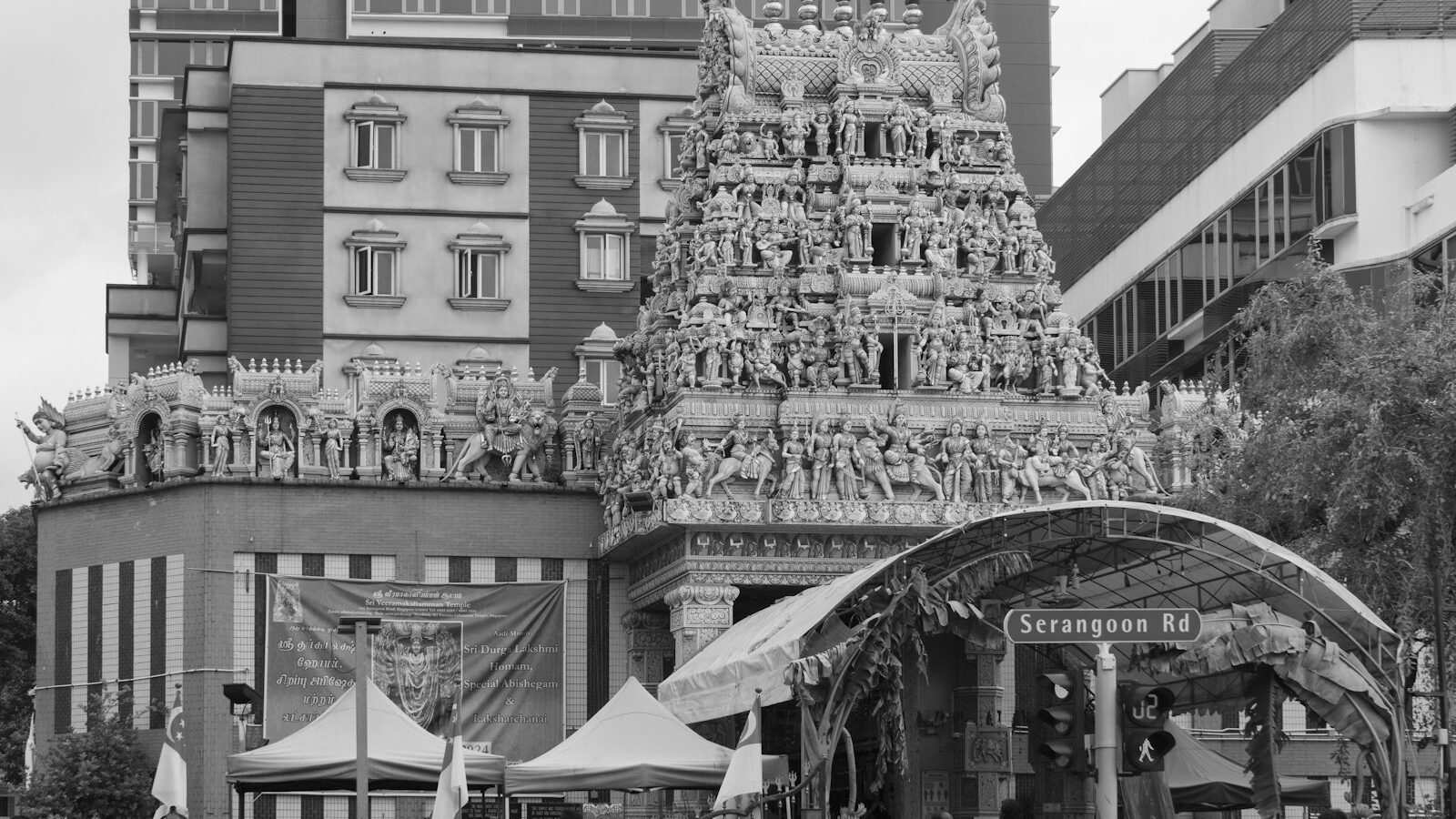
Most Hindu festivals in Singapore are known for colour and noise: the lights of Deepavali, the procession of Thaipusam, the boiling pots of Pongal. Maha Shivaratri is different. It is a festival of the night, of quiet devotion, chanting and staying awake. If you have wondered what happens at Maha Shivaratri in Singapore, why some temples stay open until dawn, and whether a visitor can attend, this guide explains the vigil, the customs and how to take part respectfully.
What Maha Shivaratri Is and When It Falls
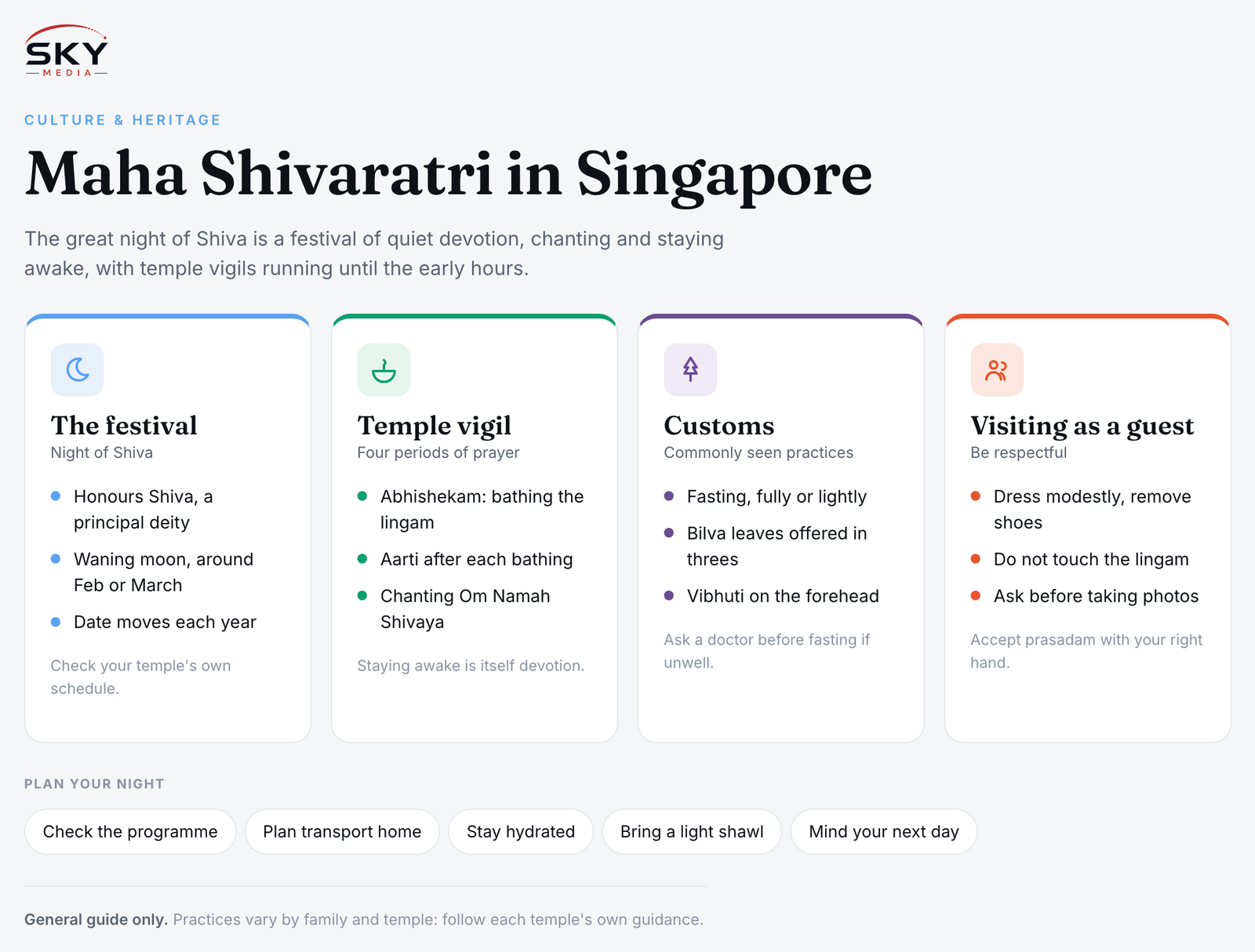
Maha Shivaratri means “the great night of Shiva”. It honours Shiva, one of the principal deities of Hinduism, and is observed on the fourteenth night of the waning moon in the Hindu lunar month that usually corresponds to February or March. Because it follows the lunar calendar, the date moves each year. Temples publish their own schedules ahead of time, so the most reliable way to find the date and programme is to check the notice board or website of the temple you plan to visit.
Several stories are told about the night. Some devotees remember it as the night Shiva performed the cosmic dance, others as the night of his marriage to Parvati, and others link it to the story of Shiva appearing as an endless pillar of light. Different families and traditions emphasise different meanings, and many people simply see it as a night to reflect, pray and seek inner stillness.
Unlike many festivals, Shivaratri is not mainly a time for feasting or new clothes. The focus is on restraint: fasting, prayer and keeping vigil through the night.
The All-Night Temple Vigil
The heart of Maha Shivaratri in Singapore is the temple vigil. Shiva temples, and many other Hindu temples with a Shiva shrine, hold prayers that run from evening into the early hours of the next morning.
The night is commonly divided into four periods, often called the four jaamams or praharas. In each period, priests perform an abhishekam, a ritual bathing of the Shiva lingam, the abstract form in which Shiva is worshipped. Offerings poured over the lingam typically include water, milk, curd, honey, ghee, sugar, tender coconut water and sandalwood paste, with each substance carrying its own symbolism. After each bathing, the lingam is adorned and an aarti, the waving of lamps, is performed.
Between the rituals, devotees chant, sing devotional songs (bhajans) and recite the five-syllable mantra “Om Namah Shivaya”. Some temples arrange religious talks, classical music or dance performances that help the congregation stay awake. The atmosphere tends to be calm and focused rather than festive, with crowds peaking in the late evening and around midnight.
Staying awake through the night, known as jagaran, is itself an act of devotion. Some devotees manage the full night, others attend one or two of the four periods and go home.
Singapore’s best-known Shiva temple has a long history of relocation across the island; you can read about it in our Sri Sivan Temple heritage guide.
Common Customs at Home and at the Temple
Practices vary widely by family, community and region of origin. These are commonly seen customs rather than fixed rules.
- Fasting. Many devotees fast for the day, either fully or by eating only fruit, milk or simple food without grains. Some break the fast the next morning after the final prayers. People with health conditions, pregnant women and older devotees often choose a lighter fast, and anyone with a medical condition should take advice from their doctor before fasting.
- Bilva leaves. Leaves of the bilva (also called vilvam or bael) tree, usually in threes, are a favoured offering to Shiva. Temples and flower stalls around Little India tend to stock them in the days before the festival.
- Offerings of milk and water. Devotees often bring milk or other items for the abhishekam. Temples usually say what they accept and where to hand it in, so ask at the counter rather than approaching the shrine yourself.
- Prayer beads and chanting. Some devotees count repetitions of “Om Namah Shivaya” on rudraksha beads through the night.
- Sacred ash. Vibhuti, the sacred ash, is often applied on the forehead in three horizontal lines, a mark associated with Shiva.
- Quiet observance at home. Not everyone goes to the temple. Families may light a lamp, pray before a small lingam or picture of Shiva at home, and keep vigil together.
Temple Vigil Versus Home Observance
| Aspect | At the temple | At home |
|---|---|---|
| Main ritual | Four abhishekam rituals led by priests through the night | Simple prayers, lamp lighting and chanting led by the family |
| Atmosphere | Crowded at peak hours, chanting, music and talks | Quiet and personal, flexible timing |
| Offerings | Handed to temple staff as the temple directs | Placed at the home altar |
| Staying awake | Supported by the programme and the crowd | Relies on the family’s own effort |
| Best for | Devotees wanting community worship and visitors who wish to observe | Older family members, those with young children or work the next day |
Visiting a Temple on Shivaratri as a Guest
Hindu temples in Singapore generally welcome respectful visitors, and Shivaratri can be a moving night to experience. A few points help you fit in as a welcomed guest.
- Dress modestly. Cover shoulders and knees. Traditional wear is common among devotees but not expected of visitors.
- Remove your shoes before entering the temple, and leave them at the shoe rack provided.
- Do not touch the lingam or enter the inner sanctum. Only priests perform the rituals there. Watch from where other devotees stand.
- Ask before taking photos. Some temples do not allow photography of the main shrine, especially during rituals. When in doubt, keep your phone away.
- Keep your voice low and switch your phone to silent. Many people are meditating or chanting.
- Accept prasadam graciously. Blessed food or vibhuti may be offered after prayers. Accept with your right hand. It is fine to decline politely.
- Follow the flow of the queue. Crowds can be heavy around midnight. Be patient and follow volunteers’ directions.
If you are unsure about anything, temple volunteers and regular devotees are usually happy to explain.
Planning Your Night
Because the vigil runs late, a little planning makes the night easier.
- Check the programme. Look up the timings of each of the four periods on the temple’s own website or notice board. Timings differ between temples and years.
- Plan transport home. Public transport may not be running when the final prayers end. Check last train and bus timings, or plan for a taxi or ride-hail. Our late-night guide to Singapore has general tips for getting around after midnight.
- Stay hydrated. Temples can be warm and crowded. If you are not fasting, drink water before you go. If you are fasting, know your limits.
- Bring a light shawl for the air-conditioned or breezy parts of the evening, and something to sit on if the temple floor is crowded.
- Mind your next day. Many devotees take leave or plan a light day after Shivaratri. If you have work or school, consider attending one or two periods rather than the whole night.
Why the Night Matters to Devotees
For many Hindus in Singapore, Maha Shivaratri is less about spectacle and more about turning inward. The themes of the night, overcoming darkness and ignorance, letting go of ego, and seeking stillness, resonate with people of many backgrounds. Some devotees describe it as the most personal night of the Hindu year.
For visitors, attending even part of a vigil offers a window into a living tradition that has been practised in Singapore for generations, quietly and steadily, in temples across the island. Approach it with curiosity and respect, and you will likely be welcomed warmly.
Explore more: Sri Sivan Temple: A Heritage Guide · A Late-Night Guide to Singapore
Frequently Asked Questions
Can non-Hindus attend a Maha Shivaratri vigil in Singapore? Hindu temples in Singapore generally welcome respectful visitors. Dress modestly, remove your shoes, do not touch the lingam or enter the inner sanctum, ask before taking photos and keep your voice low.
How do I find the date and schedule for Maha Shivaratri? Because it follows the lunar calendar, the date moves each year and usually falls in February or March. Temples publish their own schedules, so check the notice board or website of the temple you plan to visit for the timings of each of the four periods.
What is an abhishekam during Shivaratri? It is the ritual bathing of the Shiva lingam, performed by priests in each of the four periods of the night. Offerings poured over it typically include water, milk, curd, honey, ghee, sugar, tender coconut water and sandalwood paste.
Do I have to stay awake the whole night to take part? No. Staying awake, called jagaran, is itself an act of devotion, but some devotees attend only one or two of the four periods and go home. If you have work or school the next day, attending part of the night is reasonable.
Is it safe to fast on Shivaratri if I have a health condition? Many devotees fast, but pregnant women, older devotees and those with a medical condition often choose a lighter fast. Anyone with a medical condition should take advice from their doctor before fasting.
Further reading: Navaratri and Dussehra in Singapore: Nine Nights of the Goddess