
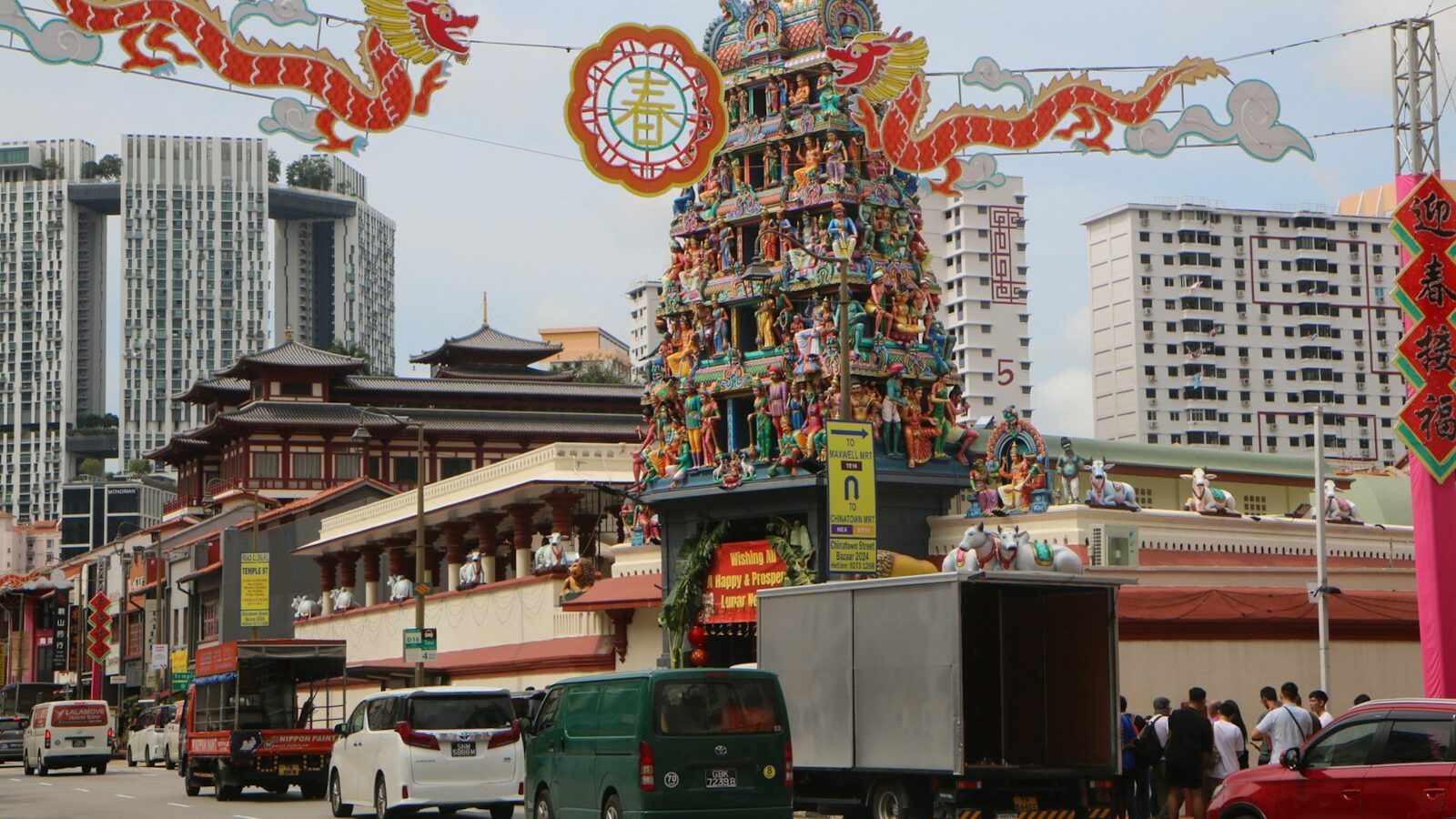
Sri Sivan Temple is one of Singapore’s oldest places of worship dedicated to Lord Shiva, and one of the few that has changed address several times while keeping its congregation together. Today it stands in Geylang East, well away from the tourist trail of Little India, which makes it a calm and rewarding visit for anyone curious about Hindu heritage. This guide covers how the temple came to be where it is, what you will see inside, and how to visit respectfully.
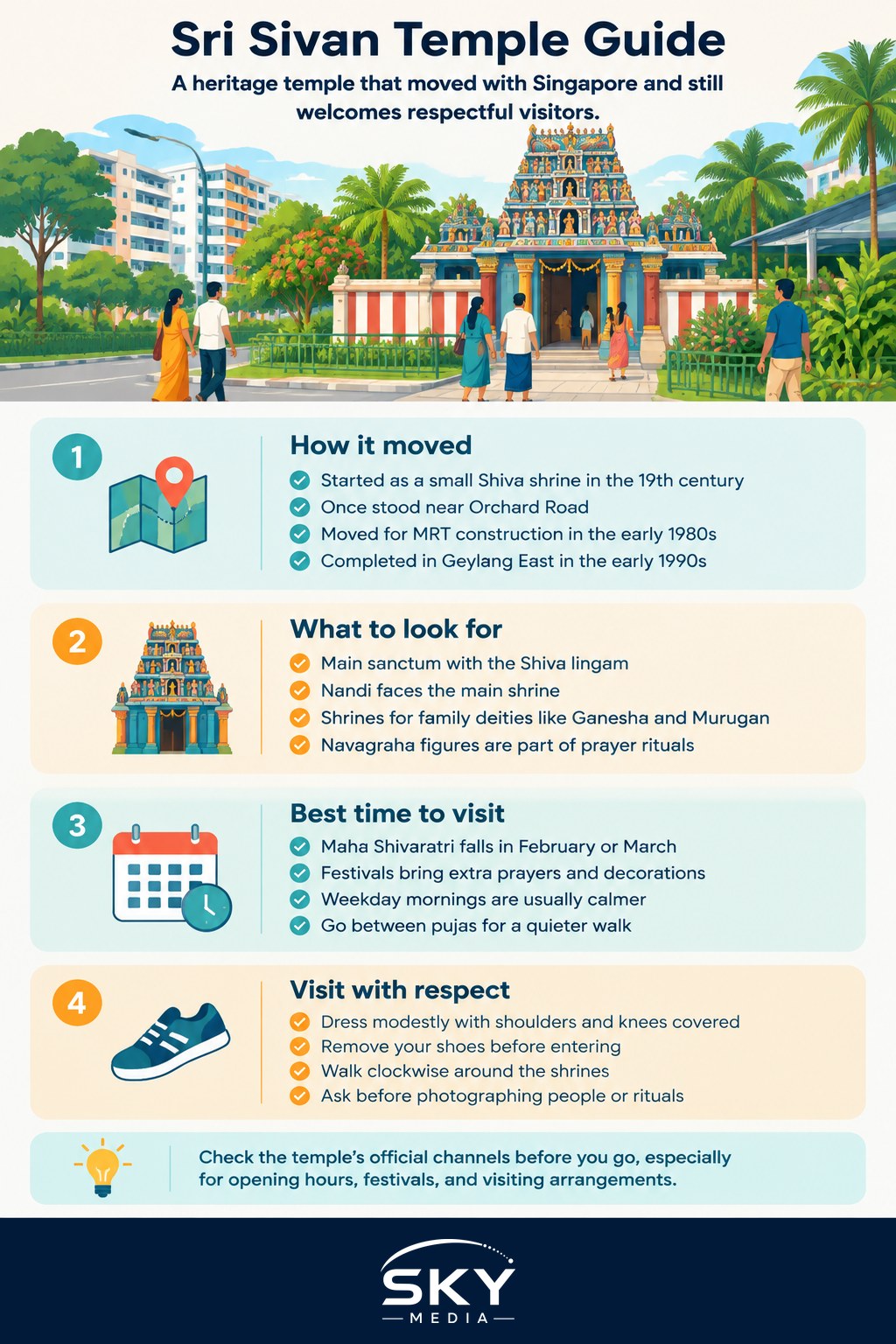
A Temple That Followed the City
Most of Singapore’s historic Hindu temples are known by their streets: Serangoon Road, South Bridge Road, Tank Road. The story of Sri Sivan Temple is different, because the city kept growing around it and, more than once, over it.
Accounts of the temple’s origins trace it to the 19th century, when a modest shrine housing a Shiva lingam (the abstract, rounded symbol through which Shiva is commonly worshipped) was established near what is now Dhoby Ghaut and the lower end of Orchard Road. Over the decades the shrine grew into a proper temple, serving Hindu families who lived and worked in the area, from labourers to traders.
The key moments in its journey are usually told like this:
- The Orchard Road years. For much of its history the temple stood close to Orchard Road, a very different place then from today’s shopping belt. Worshippers rebuilt and expanded it over time.
- Displacement for the MRT. In the early 1980s, the land was needed for the construction of the Mass Rapid Transit system, and the temple had to leave the site where it had stood for generations.
- A temporary home. For a period, the deities were housed in temporary premises while a permanent site was found and a new temple built.
- Geylang East. The present temple on Geylang East Avenue 2 was completed and consecrated in the early 1990s, giving the community a lasting home in a residential estate.
Relocation is a serious matter in Hindu practice. Deities are not simply packed up; moving them involves rituals to transfer their presence, and a new temple is formally consecrated in a ceremony known as a kumbabishegam, which is repeated periodically after major renovation. That Sri Sivan Temple has gone through this process and kept its devotees is a large part of its heritage value.
The temple is administered by the Hindu Endowments Board, the statutory board that also oversees several other historic Hindu temples in Singapore. For current information on events and visiting arrangements, the temple’s own channels and the board’s website are the places to check.
What You Will See Inside
Sri Sivan Temple is a Shaivite temple, meaning its main focus is Shiva, one of the principal deities of Hinduism. If you have visited the goddess-centred Sri Mariamman Temple or the Vishnu-focused Sri Srinivasa Perumal Temple, you will notice that the arrangement of shrines here reflects a different tradition.
Things to look out for as you walk around:
- The main sanctum. The Shiva lingam sits in the inner sanctum, the most sacred part of the temple. Visitors watch from outside; only priests enter.
- Nandi, the bull. Facing the sanctum you will usually find a statue of Nandi, Shiva’s mount and devoted attendant. Devotees often pause here before approaching the main shrine.
- Shrines to family deities. Shiva’s consort and their sons, commonly Ganesha and Murugan, typically have their own shrines within Shaivite temples.
- The Navagraha. Many South Indian temples include a group of nine figures representing the celestial bodies, which devotees circle as part of their prayers.
- Architecture. The building blends traditional temple elements, such as sculpted figures and carved detailing, with the practical needs of a modern structure in a housing estate.
Take your time with the sculptures. Each figure has a pose, objects in its hands and a mount that identify who it is, and temple volunteers are often happy to explain if you ask politely at a quiet moment.
Old Site Versus New Site at a Glance
| Aspect | Orchard Road area (historic) | Geylang East (present) |
|---|---|---|
| Setting | Colonial-era town edge that later became a commercial district | Residential estate with HDB blocks and neighbourhood amenities |
| Reason for change | Land acquired for MRT construction in the early 1980s | Purpose-built permanent home for the relocated temple |
| Who visits | Workers and families living nearby | Devotees from across Singapore plus residents of the east |
| Visitor experience | Now only remembered through records and photographs | Spacious, quieter than Little India temples, easy to explore |
Festivals and the Best Times to Visit
The most important night of the year at a Shiva temple is Maha Shivaratri, the “great night of Shiva”, which falls in February or March depending on the Hindu lunar calendar. Devotees often fast, and prayers and rituals continue late into the night. It is a striking time to witness worship, but it is also very crowded, so first-time visitors who want to look around may prefer a regular day.
Other festivals across the Hindu calendar, including Deepavali and Navarathri, also bring extra prayers and decorations. Each temple’s programme differs and dates shift every year, so check the temple’s announcements before planning around a specific occasion.
For a quiet, unhurried visit:
- Go outside main prayer times. Pujas (prayer rituals) happen at set times through the day. Watching one is fine, but if you want to walk around freely, arrive between them.
- Weekday mornings tend to be calmer than evenings and weekends.
- Check opening hours on the temple’s official channels, as temples usually close for a few hours in the middle of the day.
Visiting Etiquette for First-Timers
Hindu temples in Singapore welcome respectful visitors of all backgrounds. Customs vary between families and communities, so treat the points below as commonly observed courtesies rather than rigid rules.
- Dress modestly. Cover shoulders and knees. Loose, light clothing works well in Singapore’s heat.
- Remove your shoes before entering. There is usually a shoe rack near the entrance.
- Walk clockwise around the shrines, following the flow of devotees.
- Do not touch the deities or offerings, and do not step into areas reserved for priests.
- Ask before photographing. Photography rules vary, and the inner sanctum is generally off-limits. Never photograph people mid-prayer without permission.
- Accept prasadam graciously. If offered blessed food, sacred ash or a flower, receive it with your right hand. You are not obliged to take part in rituals.
- Keep voices low and phones on silent.
If you are visiting during a festival, follow the volunteers’ directions on queues and where to stand. They manage large crowds and appreciate visitors who go with the flow.
Getting There and Making a Day of It
The temple is in Geylang East, within reach of Paya Lebar and Aljunied MRT stations by a walk or short bus ride. Check a map app for the current best route from where you are starting, as bus services and walking paths change over time.
Because it sits away from the city centre, Sri Sivan Temple pairs well with an eastern heritage trail. You could continue towards Joo Chiat and Katong, where the Hindu temple tradition continues at Sri Senpaga Vinayagar Temple, dedicated to Ganesha. Seeing a Shaivite temple and a Ganesha temple on the same day is a good way to understand how Hindu worship in Singapore spans many deities and traditions.
Why Sri Sivan Temple Matters
Sri Sivan Temple tells a story many Singaporeans recognise from their own family histories: moving as the island redeveloped, and carrying community and tradition to a new neighbourhood. Its journey from Orchard Road to Geylang East mirrors the resettlement of households from older town areas into new estates.
Visiting is not only about the building. It is about seeing how a community kept its place of worship alive through change. Go with curiosity, dress respectfully, and you will be welcomed.
Explore more: Sri Mariamman Temple: History and Heritage Guide, Sri Srinivasa Perumal Temple and Sri Senpaga Vinayagar Temple.
Further reading: Maha Shivaratri in Singapore: How the Night of Shiva Is Observed · Sri Krishnan Temple