
Among the many Hindu festivals observed in Singapore, Navaratri holds a special place for its warmth, its music and its devotion to the divine feminine. The word Navaratri means nine nights, and the festival unfolds over that span before culminating in a tenth day of celebration. For the Tamil and wider Hindu communities here, Navaratri Singapore is a season of prayer, colour and togetherness that honours the goddess in her many forms. This guide offers a respectful introduction to what the festival is, how it is observed and where communities gather to mark it.
Because Hindu festivals follow a lunar and religious calendar, the exact dates of Navaratri shift from year to year, usually falling in the later part of the year. Rather than fixing on any single date, it is best to check with local temples and community sources for the timing in a given year. What remains constant is the festival’s spirit of devotion to the goddess and its emphasis on family, community and the triumph of good.
What Navaratri and Dussehra Mean
Navaratri is dedicated to the worship of the goddess, revered as the divine mother and the source of creative and protective power. Across the nine nights, devotees honour her in different aspects. In many traditions the festival is understood in three parts, with sets of nights devoted to different goddesses associated with strength, prosperity and wisdom. The precise interpretations vary between communities and regions of India, and Singapore’s Hindu population reflects this diversity, so you may encounter several ways of observing the same festival.
The tenth day, known as Vijayadashami or Dussehra, marks the culmination. The word can be understood as the victory on the tenth day, and it celebrates the triumph of good over evil and of light over darkness. In some traditions it commemorates the victory of the goddess over a powerful demon, while in others it recalls the victory of Rama, an avatar of Vishnu. Both narratives share a common message about righteousness prevailing, and this hopeful theme lies at the heart of the celebration.
For devotees, Navaratri is far more than a series of rituals. It is a time to reflect on inner qualities, to seek the blessings of the goddess and to renew one’s commitment to living well. Fasting, prayer and acts of devotion are common during the nine nights, undertaken with sincerity and joy rather than solemnity alone.
How It Is Celebrated in Singapore
In Singapore, Navaratri is observed both at home and in the temples. Many Hindu households set up a display known as the golu or kolu, an arranged tier of steps on which figurines of deities, saints and scenes from daily life are placed. Families invite relatives, friends and neighbours to view the display, and guests are often welcomed with kind words, songs and small gifts. This custom of visiting one another’s homes to admire the golu makes the festival a deeply social occasion that strengthens bonds across the community.
Temples take on a central role during the nine nights. They hold special prayers and rituals in honour of the goddess, and the evenings are filled with devotional music and cultural performance. Classical Indian music and dance are closely associated with Navaratri, and the festival is regarded as an auspicious time for the arts. Young learners sometimes give their first public recitals during this season, offering their skill as a form of devotion. The atmosphere in the temples is one of vibrant, unhurried celebration.
Food is another cherished part of the festival. Households prepare special dishes and sweets to share with visitors, and the giving and receiving of these offerings is itself an act of hospitality and grace. In keeping with the devotional mood, many families observe dietary restraint during the nine nights, adding to the sense that this is a set apart and sacred time.
Where and How Communities Observe It
The heart of Navaratri observance in Singapore lies in its Hindu temples, particularly those in and around Little India and other districts with established Hindu communities. During the festival these temples come alive each evening with prayer, music and gatherings of families dressed in bright traditional clothing. Visitors who wish to learn are generally welcome to observe, provided they do so with respect, dress modestly and follow the guidance of temple staff.
On the day of Vijayadashami, the mood turns to celebration and new beginnings. This day is considered highly auspicious for starting fresh endeavours, whether beginning studies, taking up an instrument or launching a new venture, because it symbolises the victory of good and the blessing of the goddess of wisdom. Some families mark the day with simple ceremonies honouring learning and craft.
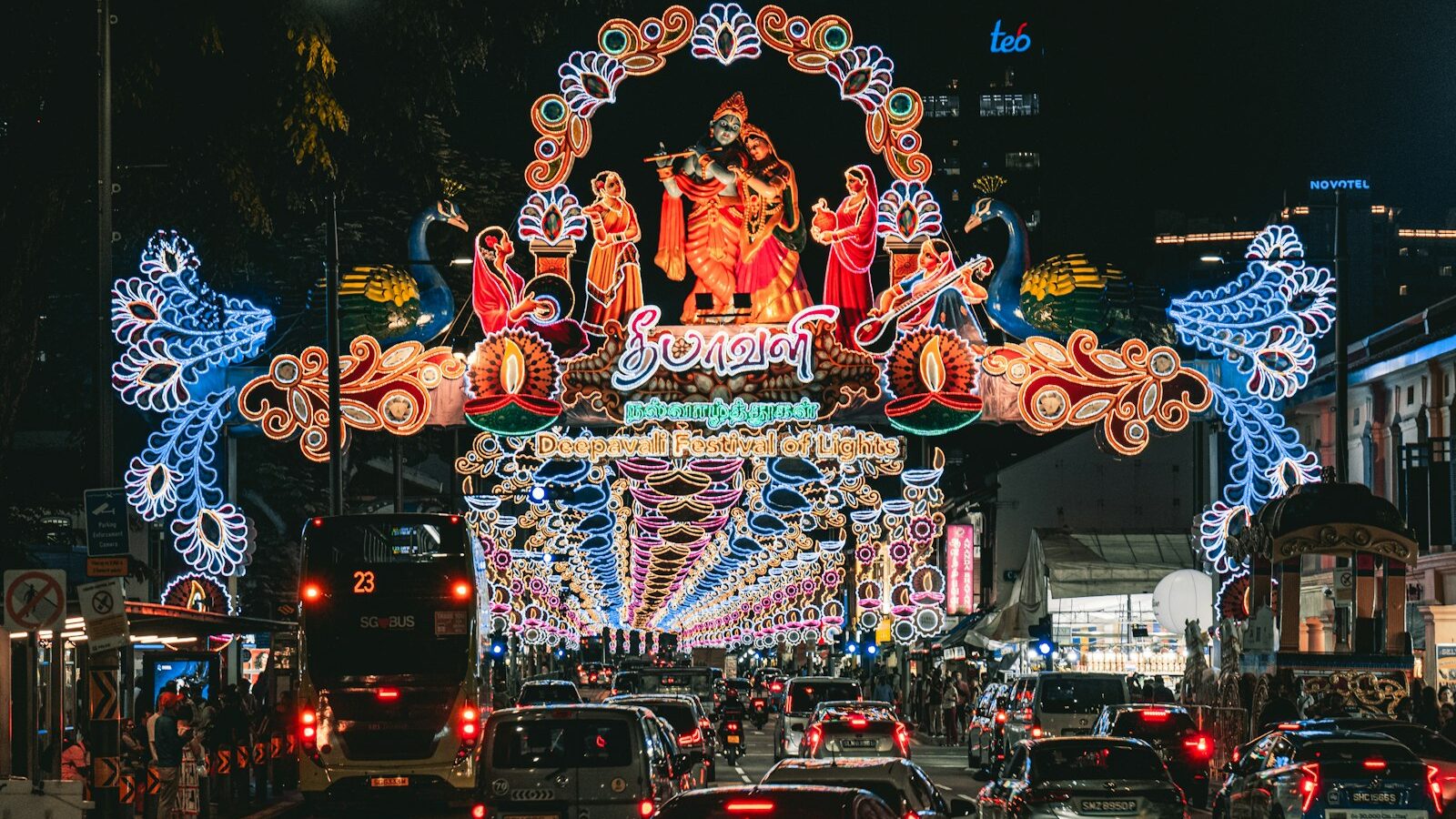
Navaratri sits within the rich annual cycle of Hindu celebration in Singapore, alongside festivals such as Deepavali and the harvest festival of Pongal. Together these occasions form part of the wider tapestry of religious harmony and festivals that gives the nation its multicultural character. For anyone hoping to understand this heritage more fully, the Singapore festivals guide offers a helpful overview of the many celebrations observed here.
To witness Navaratri in Singapore is to encounter a festival of quiet depth and open hospitality. Over nine nights and a tenth day of victory, the community honours the goddess, celebrates the arts and reaffirms the enduring hope that goodness will prevail. Observed with sincerity and shared with warmth, it remains one of the most graceful and welcoming occasions in the local Hindu calendar.