
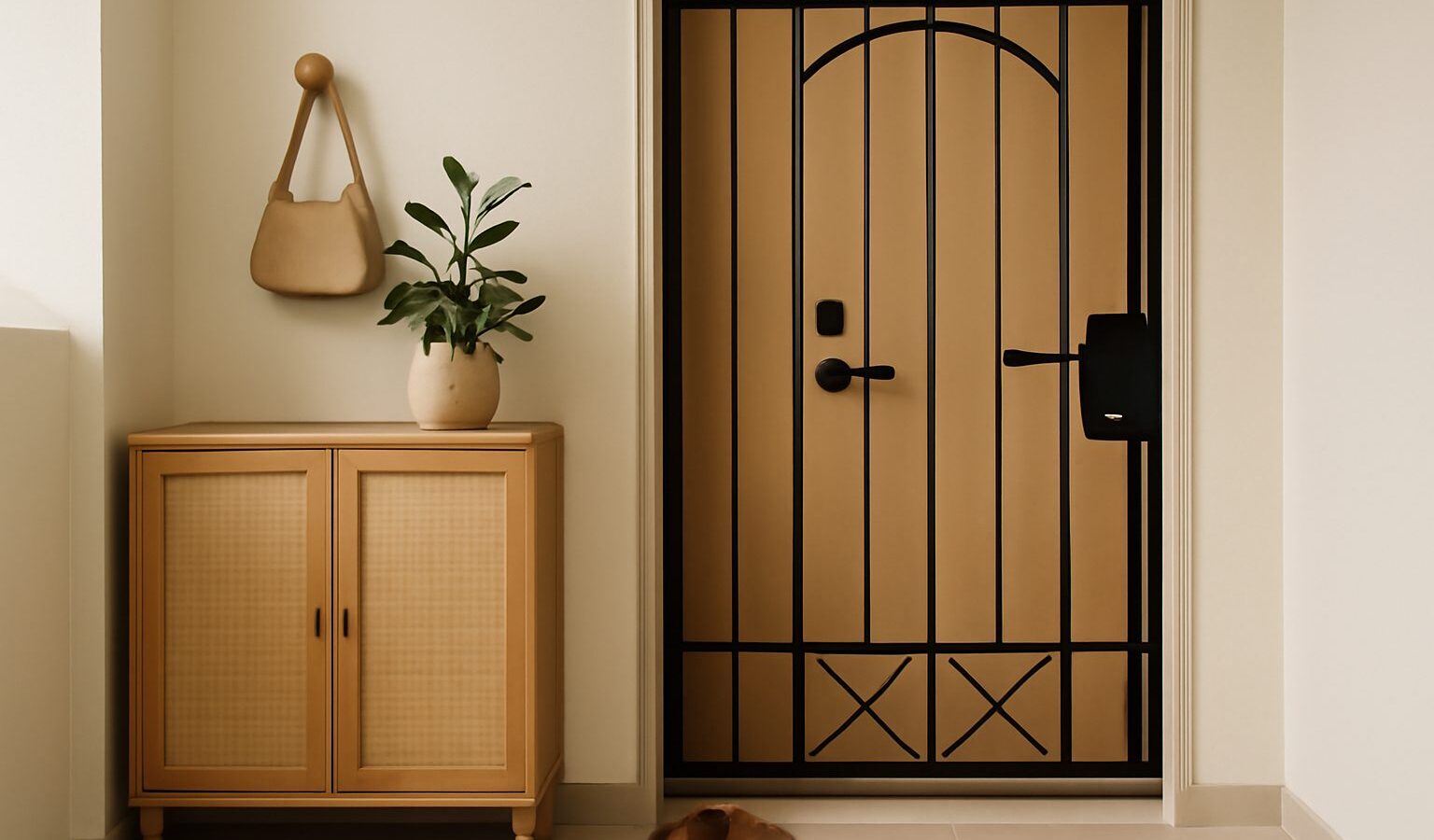
Your main entrance does two jobs at once. It is the first thing guests see, so it sets the tone for the whole home, and it is your front line for security, safety and privacy. Getting the HDB main door and gate right means balancing looks with the practical rules and realities of flat living, from fire safety to the shared corridor outside your unit. This guide covers the styles worth considering, the materials that suit our climate, and the safety points you must not skip before you order.
Understanding the Main Door and Gate Setup
Most HDB flats use a two-layer entrance: a solid main door on the inside and a metal grille gate on the outside. The gate lets you keep the wooden door open for airflow and light while staying secure, which is a real bonus in our heat. The main door gives privacy, sound insulation and a fire barrier.
A crucial point on rules. The main door to an HDB flat is generally required to be a fire-rated door, and there are conditions around replacing it, so you cannot simply fit any decorative door you fancy. Fire safety requirements, permitted works and the approval process change over time, so check the current HDB, town council and SCDF requirements before you commit, and use an HDB-registered contractor for the installation. The same goes for the gate: HDB has guidance on what is allowed, and your renovation must stay within it.
Keeping the Corridor Clear and Compliant
This is the point people forget. Your gate opens onto a common corridor that is a shared space and an escape route in an emergency, so it must not obstruct the corridor or your neighbours’ access. A gate that swings out too far, or a fixture that eats into the walkway, can breach the rules and create a hazard.
- Mind the swing. A gate that opens outward into a narrow corridor may not be permitted or practical. Sliding or inward-opening options can suit tight landings better.
- Do not encroach. Shoe racks, plants and other items pushed out beside the gate can block the corridor. Keep the escape path clear.
- Check before you build. Because corridor and common-property rules are set by HDB and your town council and do change, confirm what is allowed for your block before ordering.
Treat the corridor as off-limits for anything that narrows the walkway. It keeps you compliant and keeps everyone safe if there is ever a fire.
Choosing Your Gate Style and Material
The metal gate is where most of the visible design choice happens, and there is far more variety now than the plain criss-cross grille of old.
- Mild steel gates are the common, affordable choice and can be powder-coated in any colour. They need repainting over the years as our humidity encourages rust.
- Stainless steel gates resist rust far better and keep their finish with little upkeep, which suits our climate, though they cost more.
- Wrought iron and aluminium offer decorative, laser-cut or scrolled patterns for a more designed look.
Consider the pattern density too. A tighter grille improves security and privacy but blocks more light and air; an open, minimalist design feels lighter but shows more of your interior. Powder-coated finishes in black, white, grey or timber-look tones are popular and hide daily marks well.
Main Door Styles, Finishes and Locks
The inner door carries the fire-rating duty and most of the style statement. Because it must meet fire requirements, work with your supplier on approved fire-rated options rather than an unrated decorative slab.
Popular directions include a clean laminate finish in wood grain or solid colour, a moulded panel door for a classic look, or a veneer for a warmer, more natural feel. Darker tones hide scuffs; lighter ones brighten a dim corridor entrance. Matching the door and gate colour palette gives a considered, coordinated look, while a contrast (a pale door behind a black gate, say) reads more design-led.
Digital locks have become a common upgrade, letting you enter with a PIN, card, fingerprint or app instead of fumbling for keys with hands full of groceries. If you fit one, choose a model rated for a fire-rated door, keep a mechanical key backup, and have it installed properly so it does not compromise the door.
Comparing Entrance Options at a Glance
Here is a quick comparison to help you weigh the common choices. Costs vary a lot by material, design and installer, so treat them as rough bands and always get a current quote from an HDB-registered contractor.
| Option | Look and feel | Upkeep in our climate | Rough cost band |
|---|---|---|---|
| Mild steel gate | Versatile, any colour | Repaint occasionally, can rust | Budget to mid |
| Stainless steel gate | Sleek, modern | Low, resists rust | Mid to premium |
| Decorative laser-cut gate | Statement pattern | Depends on base metal | Mid to premium |
| Laminate fire-rated door | Clean, wide colour range | Wipe clean, hard-wearing | Budget to mid |
| Veneer fire-rated door | Warm, natural grain | Needs gentle care | Mid to premium |
Putting It All Together
Start with the rules, then design within them. Confirm the fire-rated door requirement and the gate guidance with HDB and your town council, make sure nothing obstructs the corridor, and only then focus on colour, pattern and locks. Engage an HDB-registered contractor or your interior designer to supply and fit the set, since a badly hung door or gate is a security and safety weak point, not just a cosmetic one.
For shopping, established door and gate specialists, renovation contractors and interior designers all supply and install these, and many have showrooms where you can see finishes and try the locks in person. Pick a supplier who knows HDB requirements well, so your lovely new entrance is compliant from day one.
Explore More
Your entrance is one piece of a secure, well-planned home. If you are sorting out security and airflow, our guide to window grilles and invisible grilles covers the rest of the openings. New flat owners should start with a BTO defects check and inspection, and if your entrance work is part of a bigger reno, see questions to ask your interior designer and renovation loan and financing options.