

A makers market in Singapore is one of the most enjoyable ways to discover local creative work. Unlike a gallery or a formal art fair, a makers market puts you face to face with the illustrator, potter, printmaker or jewellery maker who made the piece. Prices are usually more approachable, the mood is relaxed, and you can ask questions you would never get to ask in a shop.
This guide explains the kinds of makers markets you will come across, how to find them, and how to shop well, especially if you are hunting for art prints for your walls.
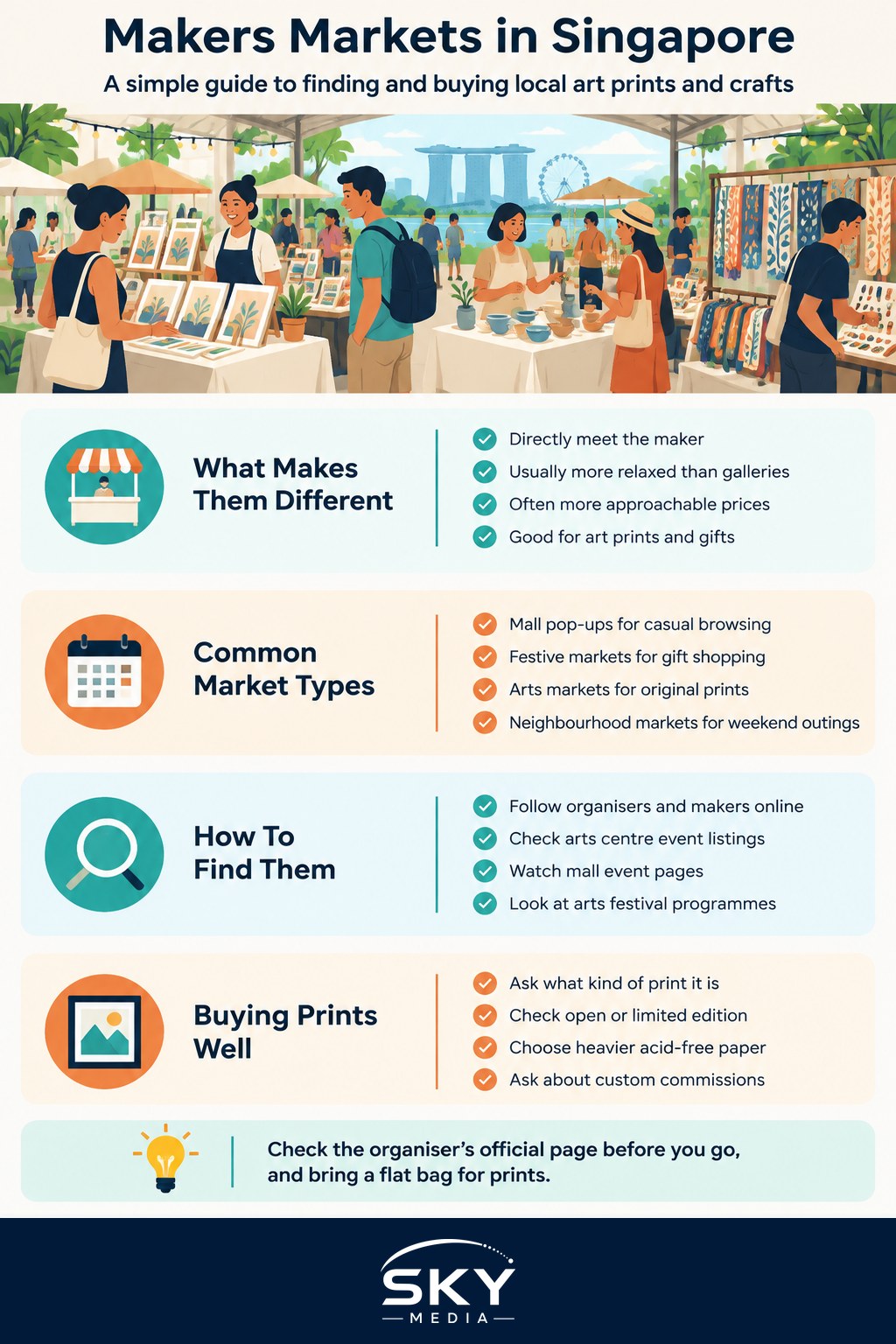
What Makes a Makers Market Different
It helps to know where makers markets sit among the other ways to buy creative work in Singapore.
- Art fairs are large, ticketed events where galleries show work, often at higher price points and with a collector focus.
- Museum and gallery shops sell curated merchandise and reproductions, usually linked to an exhibition or collection.
- Craft workshops are about making something yourself under guidance.
- Makers markets are recurring or seasonal events where independent creators rent a table or booth and sell directly to the public.
The appeal of a makers market is the mix. In one walk you might see risograph zines, hand-thrown ceramics, illustrated tote bags, small-batch candles, botanical prints and upcycled textiles.
Types of Makers Markets You Will Find
Rather than listing specific organisers, which come and go, here are the common formats. Each has its own feel.
| Market type | Typical setting | What you will usually find | Best for |
|---|---|---|---|
| Weekend pop-up in a mall atrium | Air-conditioned shopping centre, a few days at a time | Illustrated goods, accessories, gifts, some prints | Casual browsing with the family |
| Festive or year-end market | Malls, hotels, creative hubs or open-air spaces | Gift-ready items, cards, ornaments, seasonal prints | Christmas and Chinese New Year gift shopping |
| Independent art and zine market | Creative spaces, arts centres, warehouse venues | Original prints, risograph, zines, small editions | Collecting affordable original art |
| Community or neighbourhood market | Community centres, heritage precincts, open plazas | Crafts, home goods, food, secondhand items | A relaxed weekend outing close to home |
| Design and lifestyle market | Design-led venues or event halls | Ceramics, furniture, homeware, textiles | Furnishing a home with local design |
Some markets recur monthly or quarterly, while others appear only around festive periods or alongside arts festivals. Dates and venues change, so always check the organiser’s official page before heading out.
How to Find Makers Markets in Singapore
Because most markets are run by small teams, they rarely advertise widely. These are the most reliable ways to stay informed.
- Follow organisers and makers on social media. Most announce dates, venues and vendor lists there first. Once you follow a few makers you like, they will tell you where they are selling next.
- Check arts centre and creative hub listings. Venues that host markets often list them in their events calendars.
- Watch mall event pages. Shopping centres regularly host pop-up markets in their atriums, especially during school holidays and the festive season.
- Look at arts festival programmes. Larger festivals sometimes include a market component.
- Join newsletters. Some organisers send early notice to subscribers, which is useful if a market is popular and the best pieces sell out early.
Shopping for Art Prints at a Makers Market
Art prints are often the highlight, and a little knowledge helps you buy well. Our guide on how to choose art and prints for your home covers style, size and placement. At the market itself, ask the maker:
- What kind of print is it? A giclée or archival inkjet print uses pigment inks on quality paper. A risograph print is made on a stencil duplicator and has a distinctive grainy texture. A screen print or linocut is printed by hand. Each has its own look and lifespan.
- Is it an open or limited edition? Limited editions are numbered and often signed. Open editions can be reprinted.
- What paper is used? Heavier, acid-free paper holds up better in Singapore’s humidity.
- What size is it? Standard sizes such as A4, A3 or A2 are easier and cheaper to frame with off-the-shelf frames.
- Do they take commissions? Many illustrators accept custom work, such as pet portraits or home illustrations.
Once home, frame prints behind glass or acrylic, keep them out of direct sunlight, and avoid hanging them in bathrooms or damp corners where humidity can cause waviness or mould.
Practical Tips for Your Visit
- Go early for the best choice. Popular makers can sell out of their most sought-after pieces within the first hours.
- Bring a flat bag or folder. Prints bend easily. A large tote or a cardboard folder keeps them crisp on the train home.
- Check payment options. Many stalls accept PayNow, which is Singapore’s instant bank transfer by mobile number or QR code, but some smaller stalls prefer cash. Have a little of both.
- Ask before photographing. Some makers are happy for you to share their work, while others worry about copying. A quick question is polite.
- Collect name cards. If you love a piece but are not ready to buy, take the maker’s card or follow them online. Many sell through their own websites between markets.
- Respect the space. Stalls are small. Keep strollers and bags clear of fragile items like ceramics and glass.
Selling at a Makers Market Yourself
If browsing inspires you to try selling, markets are a common first step for local creatives. You will usually apply to the organiser, pay a table or booth fee, and be selected based on the fit of your work. Organisers set their own fees and terms, so read the application details carefully.
For artists and photographers who want to turn their work into prints, our guides on how to sell prints of your photos and running a print-on-demand business in Singapore explain production, pricing and online sales.
Why Makers Markets Are Worth Your Weekend
A makers market in Singapore offers something mass retail cannot: the story behind the object. Buying a print directly from the artist means more of your money goes to the person who made it, and you go home knowing exactly who drew, glazed or stitched it. Whether you are decorating a new flat, shopping for thoughtful gifts or simply looking for a good weekend wander, keep an eye on the market calendar and come with an open mind.
Further reading: Giclee Printing in Singapore: Turning Your Artwork Into Quality Prints · Selling Fan Art at Doujin Markets and Conventions in Singapore · How to Get a Booth at a Makers Market in Singapore