
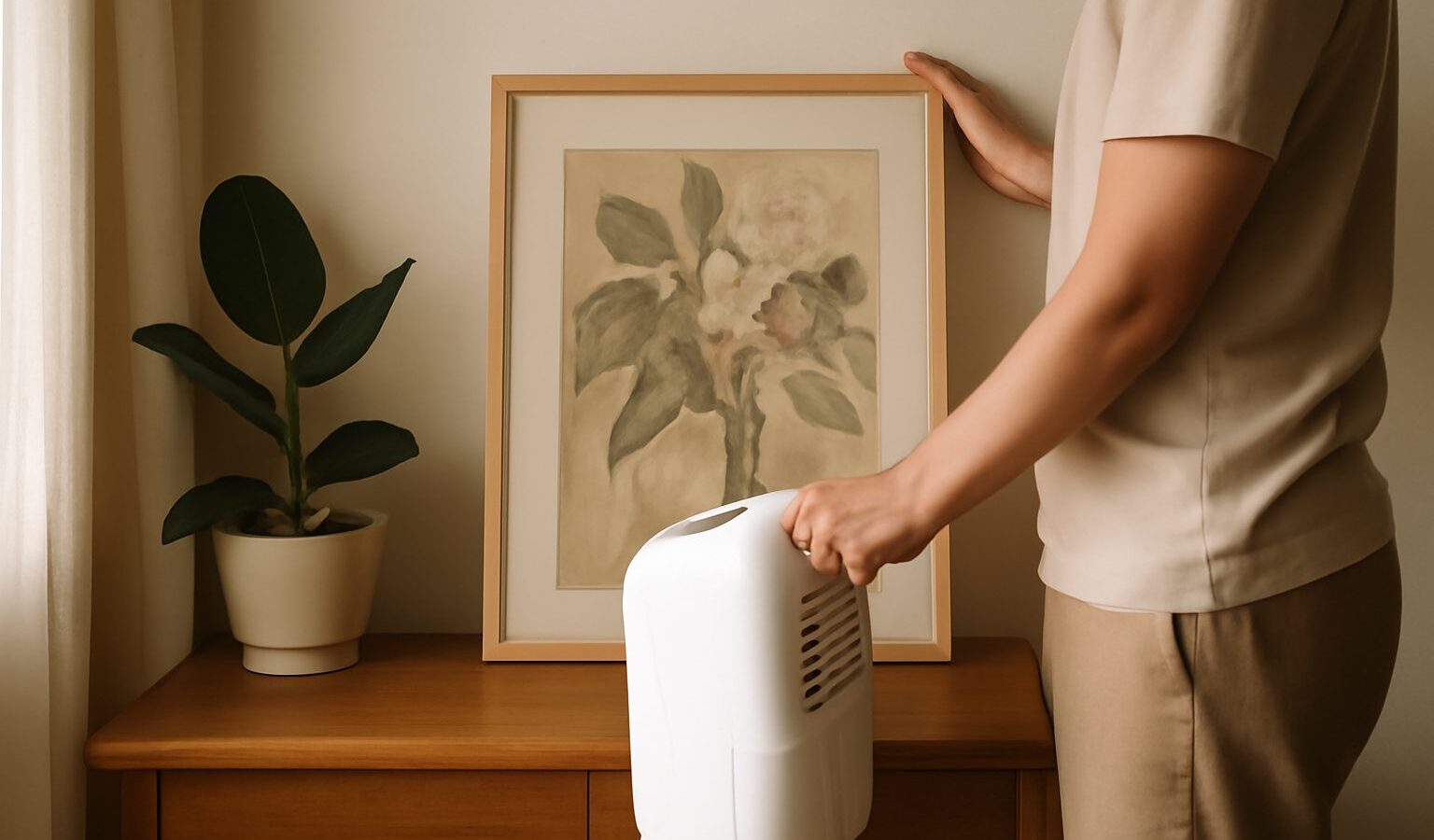
Singapore’s air is warm and damp all year, and that is hard on anything made of paper, canvas, wood or natural pigment. If you own original paintings, limited-edition prints, old family photographs or a growing poster collection, learning how to protect artwork from humidity is the difference between pieces that last decades and pieces that quietly spot, ripple and stain within a few monsoon seasons. This guide focuses on art specifically: what damp does to different media, where to hang and store work in a typical flat, and how to spot trouble early.

What Humidity Actually Does to Art
Paper, canvas and wooden stretchers are hygroscopic: they absorb water from the air and release it as conditions change. In a warm, humid climate that cycle causes several problems.
- Mould. Fungal spores are everywhere. Given warmth, moisture and still air, they grow on paper, canvas, glue and even dust on the surface of a painting. Mould often starts as faint grey, green or white fuzz, frequently on the back of a frame where you will not see it.
- Foxing. These are small rust-brown spots on paper, common on older prints, books and watercolours. Foxing is linked to humidity combined with impurities in the paper, and it tends to get worse in damp conditions.
- Cockling and rippling. Paper that absorbs moisture expands unevenly, leaving waves that may not flatten again, especially when a print is tightly taped into its mount.
- Canvas slackening and flaking. Canvas loosens and tightens as humidity swings, which stresses the paint layer. On older or thickly painted works this can lead to cracking or lifting paint.
- Warping and corrosion. Wooden panels and frames can warp, and metal fixings, hanging wire and staples can rust and stain nearby material.
Where to Hang Art in a Singapore Home
Location matters more than most people expect. The same print can stay crisp in one room and spot within a year in another. For the wider picture of keeping a flat dry, our guide to protecting your home from humidity in Singapore covers ventilation and dehumidifiers in more depth.
| Spot in the home | Risk level | What to expect |
|---|---|---|
| Interior wall in a living room with steady air flow | Low | The safest default for most paintings and framed prints |
| Bedroom that runs air-conditioning nightly | Low to medium | Drier air helps, but daily swings from cool to warm can stress canvas |
| External wall, especially one facing rain | Medium to high | Walls can be cooler and damper, encouraging mould behind the frame |
| Bathroom, kitchen or near the washing machine | High | Steam, cooking fumes and splashes damage paper and varnish quickly |
| Facing a window with strong afternoon sun | High | Fading of pigments and inks, plus heat build-up behind glazing |
| Storeroom, bomb shelter or closed cabinet | High | Stagnant, damp air is where mould grows fastest |
A few practical habits help wherever the work hangs:
- Leave a gap behind the frame. Small bumpers or spacers on the bottom corners let air circulate between the frame and the wall, so moisture does not sit trapped behind it.
- Avoid hanging directly above aircon units or fans blowing straight at the piece. Rapid local temperature changes create condensation risk.
Framing Choices That Help in a Humid Climate
A good frame is not just decoration. It is the first line of defence against damp, dust and insects. If you are buying new work, our guide on how to choose art and prints for your home is a useful companion, and when you are ready to frame, where to frame art, prints and posters in Singapore explains the kinds of framers available.
When you talk to a framer, ask about:
- Acid-free or conservation-grade mount board. Ordinary board can release acids that yellow and weaken paper over time, and it can encourage foxing.
- A mount or spacer between the glazing and the artwork. Paper touching glass is a classic cause of mould and of the image sticking to the glazing in humid weather.
- Hinging rather than taping. Works on paper should be attached with hinges that let the paper expand and contract, not taped down on all sides.
- UV-filtering glazing. It does not solve humidity, but it reduces fading for pieces near windows.
- A sealed backing. A properly sealed dust cover on the back slows the movement of moisture, dust and insects into the frame.
Oil and acrylic paintings on canvas are usually not glazed, because the surface needs to breathe.
Storing Art You Are Not Displaying
Prints, sketches and canvases waiting for wall space are often at greater risk than the ones on display, because they end up in the dampest, darkest corners. Some steady rules:
- Store flat where possible. Lay prints between sheets of acid-free tissue in a portfolio or archival box rather than rolling them tightly.
- Keep storage off the floor and away from external walls. A shelf in an air-conditioned room is far better than a storeroom.
- Avoid sealed plastic bags. They trap any moisture already inside and can create a mini greenhouse. Breathable archival sleeves and boxes are better.
- Add moisture absorbers, and check them. Disposable moisture absorber boxes or rechargeable silica gel packs help in cupboards, but they fill up quickly here, so check and replace them regularly.
- Consider a dehumidifier for a dedicated art room. Many conservation guides suggest aiming for moderate, stable humidity rather than very dry air. A cheap hygrometer lets you see what the room is actually doing.
Spotting Early Damage and What to Do
Make a habit of inspecting your collection every few months, and after long rainy spells. Take each piece down, look at the front under good light, then check the back of the frame and the hanging fixings.
Warning signs include:
- A musty smell when you lift the frame
- Fine white, grey or green fuzz on the backing, mount or surface
- New brown speckles on paper
- Rippling paper that was previously flat
- Condensation on the inside of the glazing
- Rust stains spreading from staples or wire
If you find light mould on the outside of a frame or backing, move the piece to a drier, well-ventilated room, away from other artwork, and wear a mask while handling it. Do not wipe mould across the surface of a painting or print, and do not use household bleach, sprays or water on the artwork itself, as these can cause permanent damage. The same principle applies to fabric; our guide on how to protect your clothes from mould in Singapore explains why moving items into dry, moving air is the first step.
For anything valuable, sentimental or already visibly affected, contact a professional paper or paintings conservator before attempting a fix. A conservator can assess whether cleaning, re-mounting or treatment is appropriate, and advise on the right conditions for that particular work.
A Simple Routine for Collectors
You do not need a museum climate to keep art in good shape at home. A sensible routine covers most risks:
- Hang work on interior walls with a little air gap behind the frame.
- Keep it out of kitchens, bathrooms and direct afternoon sun.
- Frame works on paper with acid-free mounts, hinges and a gap from the glass.
- Store spare prints flat, in breathable archival materials, off the floor.
- Use a hygrometer, and add a dehumidifier or absorbers where readings stay high.
- Inspect front and back every few months, and call a conservator early if you see trouble.
Treat these steps as part of owning art in the tropics, and your paintings, prints and photographs will stay bright and stable for years.
Frequently Asked Questions
What humidity level should I aim for to protect artwork at home? Conservation guides generally suggest moderate, stable humidity rather than very dry air, and stability matters as much as the number. A cheap hygrometer shows what your room is doing. For valuable pieces, a conservator can recommend a target suited to the specific work.
Do photographs and posters need the same care as paintings? Yes, and they are often more vulnerable. Prints on paper cockle, spot and stick to glass in damp air, and inks fade in sunlight. Use acid-free mounts, keep a gap from the glazing, hang them on interior walls and inspect the back of frames regularly.
Does switching the air-conditioning on and off harm my artwork? Large daily swings between cool and warm, humid air can stress canvas and paper, so a steadier environment is kinder. Avoid hanging art directly above vents, and consider a dehumidifier or consistent air movement in rooms where the aircon is only used at night.
How do I dust a framed painting or print safely? Use a clean, soft, dry brush or cloth on the frame and glass, and never spray cleaner directly onto the piece. Do not touch the surface of unglazed paintings. If dust has caked in or mould is suspected, stop and ask a professional conservator.
How do I find a conservator for a valuable or damaged piece? Ask the gallery or framer where you bought the work, or enquire at museums and art institutions for referrals. Look for someone experienced with your type of work, such as paper or paintings, and ask for an assessment before agreeing to any treatment.
Further reading: Giclee Printing in Singapore: Turning Your Artwork Into Quality Prints · How to Commission a Painting or Portrait in Singapore