
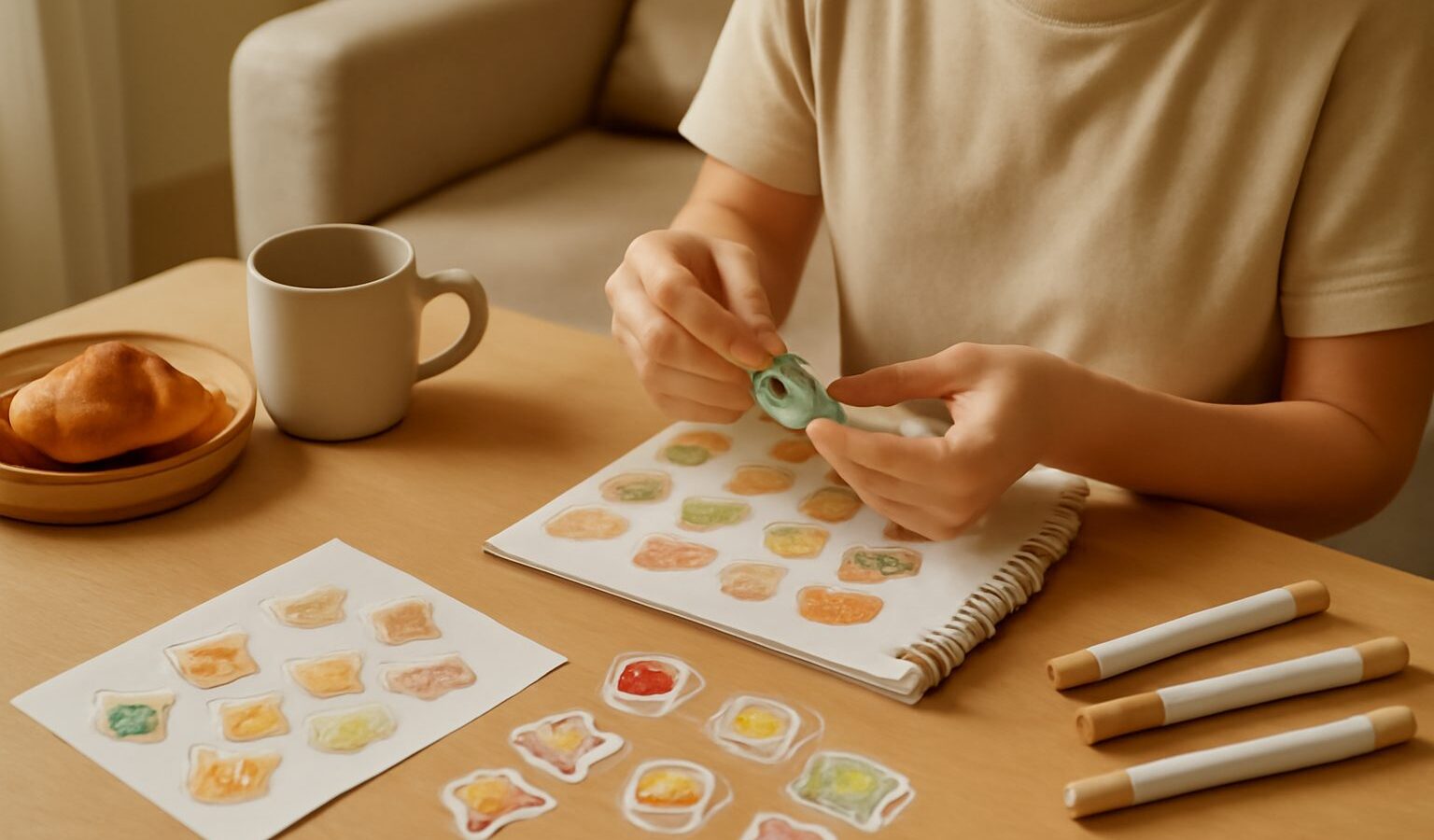
There is something deeply satisfying about turning your own doodles, photos or lettering into a neat little sticker you can peel and stick anywhere. Making stickers is one of the most beginner-friendly crafts around: the tools are cheap, the results are instant, and you can start on your kitchen table with nothing more than a printer, some sticker paper and a pair of scissors. It suits anyone who likes drawing, journaling, decorating laptops and water bottles, or simply making small, cheerful things.
This guide covers what making stickers involves, the supplies you actually need in Singapore, how to design and produce your first sheet, the mistakes beginners tend to make, and how to level up once you are enjoying it.
What Making Stickers Involves
At its simplest, a sticker is a printed image on adhesive-backed paper, cut to shape. You create or choose a design, print it onto sticker paper, seal it so it survives handling, and cut it out. That is the whole process, and you can do every step by hand.
There are two broad routes. The hand-made route uses a home printer, sticker paper and scissors or a craft knife, and it is perfect for learning. The machine-assisted route adds a small desktop cutting machine that reads a “print and cut” file and cuts each shape precisely, which becomes worth it only once you are making many stickers regularly.
Stickers also come in different finishes. Paper stickers are cheap and great for planners and journals. Vinyl stickers are water-resistant and tougher, so they suit laptops, bottles and anything that gets handled. Clear and matte films give different looks again. Beginners usually start with plain paper sticker sheets and move to vinyl once the basics feel easy.
What You Need to Start
You can begin with a genuinely tiny kit. Most of it you may already own, and the rest is available from a stationery shop, an art-supply store or an online marketplace.
Here is how a simple hand-cut setup compares with a machine-assisted one, so you can see what is worth buying now and what can wait.
| Aspect | Hand-cut starter setup | Machine-assisted setup |
|---|---|---|
| Cutting | Scissors or a craft knife | Desktop cutting machine |
| Cost to begin | Very low | Higher upfront outlay |
| Best for | Learning and small batches | Many stickers, repeat shapes |
| Precision | Good with practice | Very precise, consistent |
| Setup effort | Almost none | Software and calibration |
Beyond a printer, gather sticker paper (start with a few matte paper sheets), a cutting tool, and a self-healing cutting mat or thick card to protect your table if you use a craft knife. A ruler helps for straight edges. To make stickers last, a sheet of laminate or a roll of clear adhesive film seals the surface. None of this is expensive, and a small starter haul goes a long way.
Designing and Making Your First Sheet
Start with a handful of simple shapes rather than one intricate masterpiece. Bold outlines, clear colours and a little white border around each design are far more forgiving to cut than fine, spindly artwork. You can draw by hand and photograph it, or design on any free graphics tool, then arrange several designs on one page to avoid wasting paper.
Before printing the real thing, run a test on ordinary paper to check the size and colours. When you are happy, print onto your sticker sheet using your printer’s best or photo setting so the ink is crisp. Let the ink dry fully, because our humidity slows drying and smudged ink is the most common early disappointment. Give it several minutes, or longer on a damp day.
Sealing comes next and makes a huge difference. Home printer ink can smear or run when it gets wet, so lay a sheet of laminate or clear film over your printed stickers and smooth it down from one edge to avoid trapping bubbles. Then cut. For hand cutting, leave a small even border around each shape; a craft knife gives cleaner curves than scissors, but always cut on a mat, draw the blade away from your body, keep your other hand clear, and store the knife capped away from children.
Common Beginner Mistakes to Avoid
Everyone hits the same snags early on, and each has a simple fix.
- Peeling or handling stickers before the ink dries, which smears the design.
- Skipping the seal, so the first drop of water or a sweaty palm ruins the print.
- Cutting with no border, which leaves ragged edges and exposed cut lines.
- Printing at low quality, giving blurry, washed-out colours.
- Using the wrong paper for the job, such as thin paper stickers on a water bottle.
Slow down at the drying and sealing stages and most problems vanish. Keep a few scrap prints to practise cutting curves and corners before you touch your good sheet.
Storing Supplies and Finished Stickers
Sticker paper is sensitive to damp. Kept in our humidity, unused sheets can curl or the adhesive can grow tacky at the edges, so store them flat in a sealed folder or zip bag with a sachet of silica gel, away from direct sun. Cut stickers keep best on their backing sheet in a slim box or binder pocket.
Store your craft knife blades dry too, as they spot with rust quickly in humid air. A small, tidy kit that lives in one box means you can pull it out for twenty minutes whenever the mood strikes, which is half the fun of this hobby.
Going Further and Sharing Your Work
Once a plain paper sheet feels easy, try vinyl paper for durable, water-resistant stickers, experiment with matte or clear finishes, or invest in a desktop cutting machine that handles precise “print and cut” shapes in batches. Kiss-cut sheets, where the backing stays whole but each sticker peels away cleanly, are a satisfying next challenge.
Many hobbyists give stickers to friends, decorate their own gear, or trade with other makers. Some go on to sell sticker packs at markets or online. If you decide to sell what you make, treat that as general information rather than business or financial advice; you would want to check current rules on registering a business with ACRA. However far you take it, making stickers stays a cheap, cheerful and wonderfully hands-on way to see your ideas out in the world.
Explore more
If you enjoy designing and cutting on paper, our guide to card making and papercraft is a natural companion. Sticker fans often love scrapbooking for beginners too, where your handmade stickers can decorate every page.