
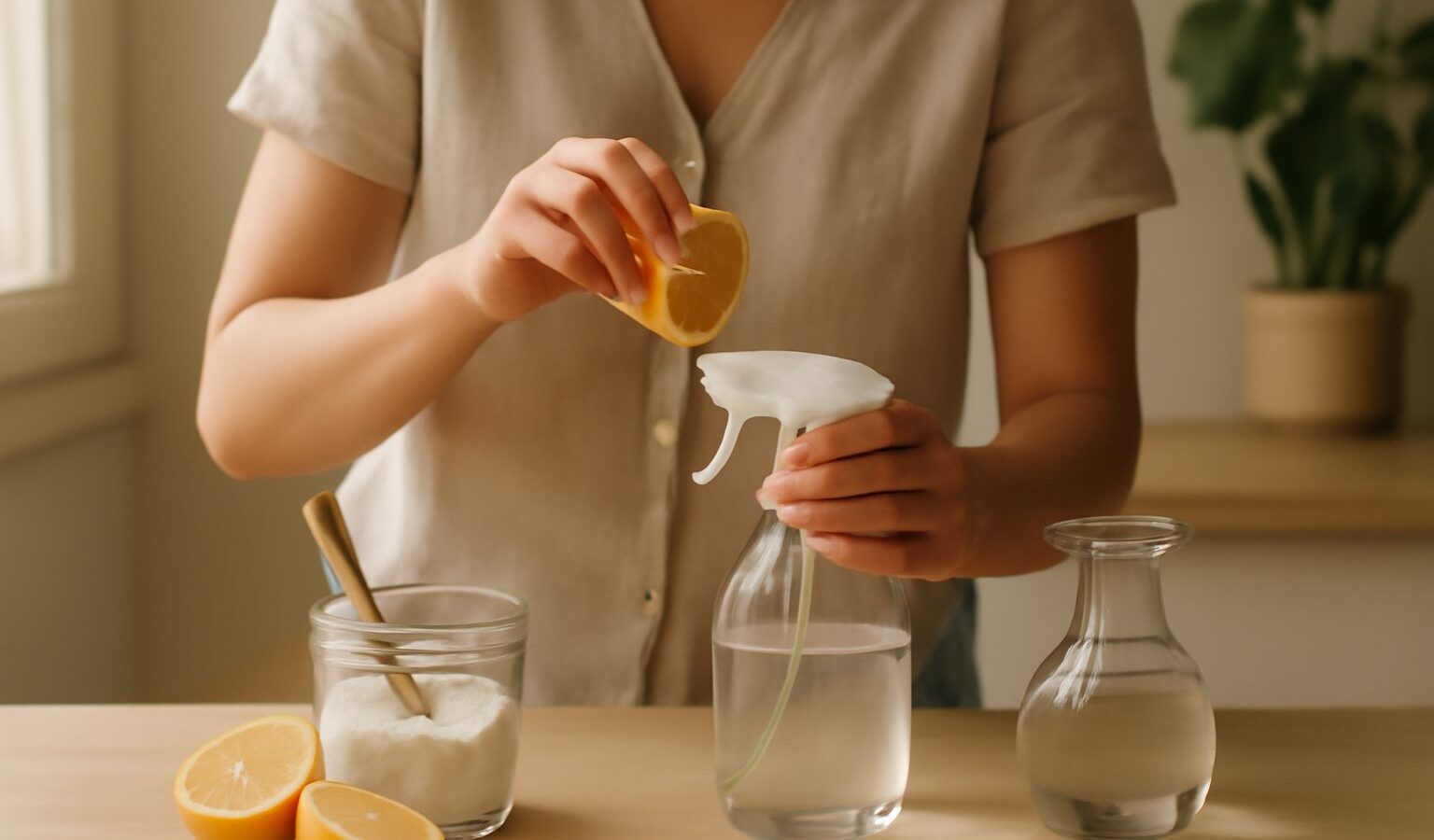
Walk down the cleaning aisle of any supermarket here and you will find rows of sprays and scrubs that are pricey, heavily scented, and wrapped in single-use plastic. Making your own natural cleaning products Singapore homes can rely on is far easier than it sounds, and it usually costs a fraction of the branded stuff. With a handful of pantry staples you can handle most everyday messes in an HDB flat or condo, cut down on packaging, and know exactly what you are wiping onto your surfaces. This is not about being a perfect zero-waste household. It is about a few simple swaps that save money and clutter under the sink.
Why Make Your Own Cleaners
The first reason is cost. Basic ingredients like white vinegar and bicarbonate of soda are cheap at any supermarket or wet market, and a single bottle of concentrate stretches across weeks of cleaning. Compare that to a shelf of specialised sprays, each one for a single job, and the savings add up quickly.
The second reason is waste. Every branded bottle is another piece of plastic, and many are only half recyclable once you factor in triggers and pumps. When you mix your own, you can reuse the same spray bottle over and over and top it up from bulk stock. That fits neatly with Singapore’s push under the Green Plan 2030 to cut the waste we send to Semakau.
The third reason is control. In our climate, flats are often sealed and air-conditioned for hours, so strong chemical fumes linger longer than they would in an airy room. Simple ingredients let you skip the harsh smells and the long list of names you cannot pronounce. That said, natural does not automatically mean risk-free, so a little care still matters, which we cover below.
The Basic Kit
You do not need much to get started. A small starter kit covers almost everything:
- White vinegar, your workhorse for grease, glass, and limescale.
- Bicarbonate of soda, also sold as baking soda, for gentle scrubbing and odours.
- A plain liquid soap or castile soap for general washing.
- A lemon or two, whose acidity cuts grease and freshens.
- A few microfibre cloths, which clean well with just water and last for years.
- One or two refillable spray bottles, ideally reused from something you already had.
- Optional essential oils, such as tea tree or lemon, for a light scent.
Warm water helps most mixes work better, and in our humidity it pays to make small batches you will use up quickly rather than large bottles that sit around. Keep a dry cloth handy too, since our damp air means surfaces take longer to dry on their own.
Safety First: What You Must Never Mix
This is the part to read twice, because natural ingredients can still be dangerous when combined carelessly. Never mix bleach with vinegar, lemon, or any acid, and never mix bleach with ammonia or with cleaners containing it. These combinations release toxic gases that can seriously harm your lungs, and in a small, sealed flat there is nowhere for the fumes to go. If you use bleach at all, use it on its own, with good ventilation, and never pour it into a mix.
A few more rules keep your homemade cleaners safe:
- Always label every bottle clearly with what is inside and the date you made it, so no one mistakes it for something else.
- Keep all bottles, including natural ones, well out of reach of children and pets.
- Patch-test on a hidden corner before using any mix on a new surface, since acids can dull or mark some materials.
- Do not store mixed cleaners for months on end. Make small batches and refresh them.
One honest caveat: homemade cleaners are great for everyday wiping and tidying, but they are not a substitute for proper disinfection where hygiene really matters. When someone is ill, after handling raw meat, or in a bathroom that needs sanitising, use a product proven to disinfect and follow its instructions. Green habits and good hygiene can sit side by side.
Simple Recipes for Everyday Cleaning
Once your kit is ready, these basics cover most of the flat. Start with an all-purpose spray: mix roughly equal parts white vinegar and water in a bottle, add a squeeze of lemon or a few drops of oil, and use it on kitchen counters, tiles, and the hob. For a gentle scrub, sprinkle bicarbonate of soda onto a damp cloth or straight into the sink, then work it over stains and rinse. For glass and mirrors, a light vinegar-and-water mix buffed with a dry microfibre cloth leaves streak-free shine without paper towels.
A word on surfaces. Vinegar is acidic, so avoid it on natural stone like marble or granite, on unsealed grout, and on some appliance seals, where it can cause damage over time. For those, plain soap and water is the safer choice. In our tropical bathrooms, vinegar helps with light mould and soap scum, but heavy black mould in a damp corner may need a dedicated product, so do not rely on a mild spray alone.
The table below shows where each ingredient shines and where to hold back.
| Ingredient | Great for | Avoid on |
|---|---|---|
| White vinegar | Grease, glass, limescale | Marble, stone, unsealed grout |
| Bicarbonate of soda | Scrubbing sinks, odours | Soft or scratchable finishes |
| Liquid or castile soap | General washing, floors | Mixing directly with vinegar |
| Lemon | Cutting grease, freshening | Delicate stone surfaces |
Where to Shop and Refill in Singapore
You can buy the basics almost anywhere. Supermarkets and wet markets stock vinegar and bicarbonate of soda cheaply, and buying the larger sizes cuts both cost and packaging per use. A growing number of refill and zero-waste stores let you bring your own container and top up soap, vinegar, and other liquids by weight, which is a satisfying way to avoid buying yet another plastic bottle.
For the empties you do end up with, rinse them and pop them in the blue recycling bin if they are clean and dry, since food or liquid residue can contaminate a whole batch. Better still, keep a couple of sturdy bottles aside to reuse as your permanent mixing bottles. Reusing beats recycling every time.
Storing and Labelling Your Cleaners
Good storage keeps your cleaners safe and effective. Glass bottles suit acidic mixes well and do not hold smells, though sturdy reused plastic is fine for short-term batches. Write the contents and date on a piece of masking tape so every bottle is identified at a glance, and store them together, upright, in a cupboard that children and pets cannot open. Keep them out of direct sun and heat, which our flats get plenty of, since warmth can degrade some mixes faster. Make what you will use in a few weeks, and you will always have a fresh, effective cleaner ready without a shelf of half-forgotten sprays.
None of this has to happen overnight. Swap in one homemade cleaner, see how it goes, and add another when you are ready. Small steps still count.
Explore more
Cleaning is one corner of a lower-waste home. If this got you started, take a look at our guide to reusable swaps for everyday life to cut single-use plastic further, and our walkthrough on easy upcycling projects for the home for those empty bottles and jars. To green your work-from-home corner too, read setting up a greener home office next.
Related across Sky Media: Making Your Own Hot Sauce · Making Your Own Clothes