
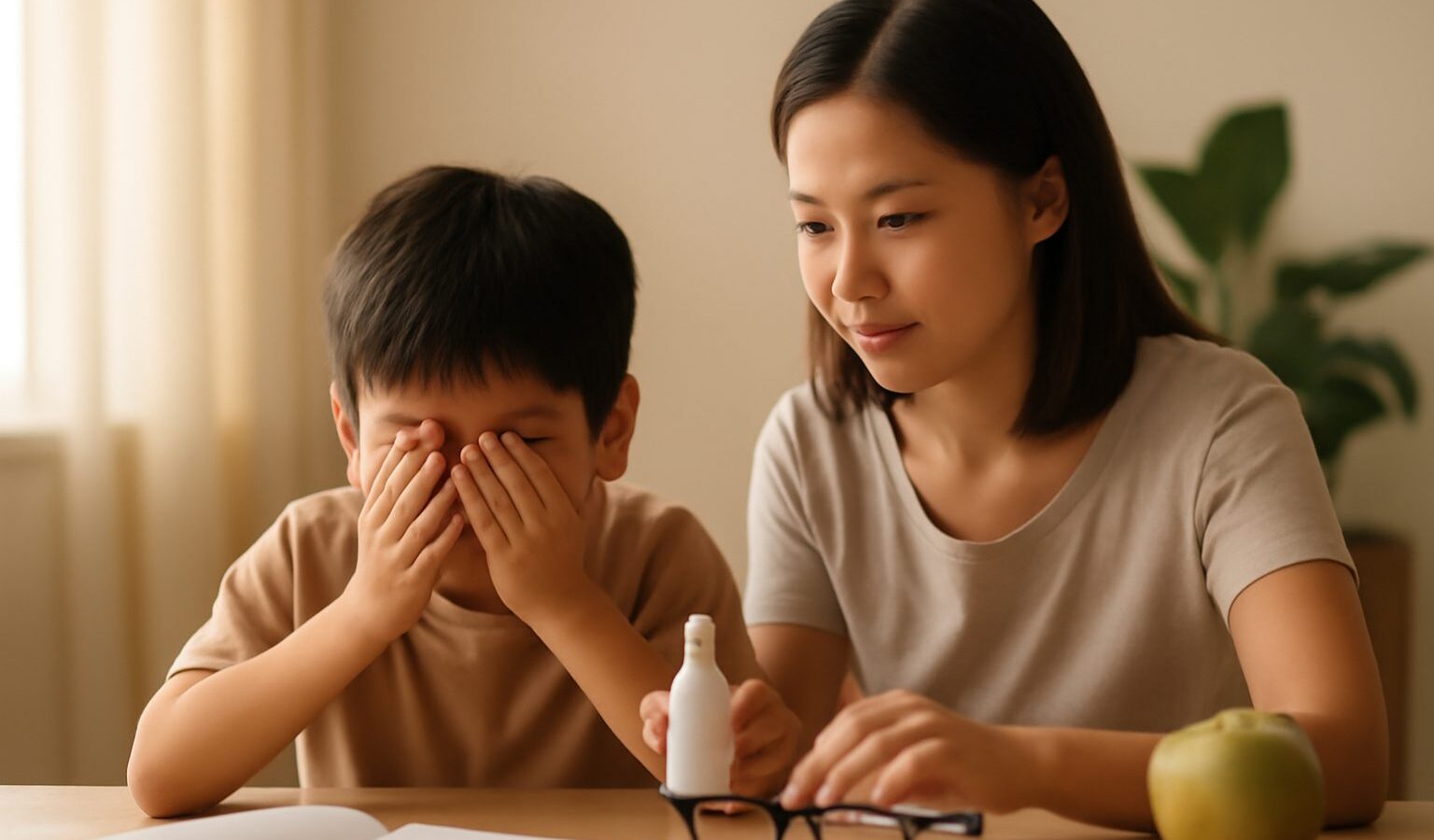
Short sightedness is one of the most common worries parents raise after moving to Singapore, and for good reason. Child myopia in Singapore is very widespread, and many families notice their children needing glasses at younger ages than they expected. The good news is that with sensible daily habits and regular eye checks, you can support your child’s eye health and work closely with an eye professional to manage things well. This article shares general, supportive information for parents. It is not medical advice, so please consult an optometrist or eye doctor for guidance on your own child.
Why Myopia Is So Common Here
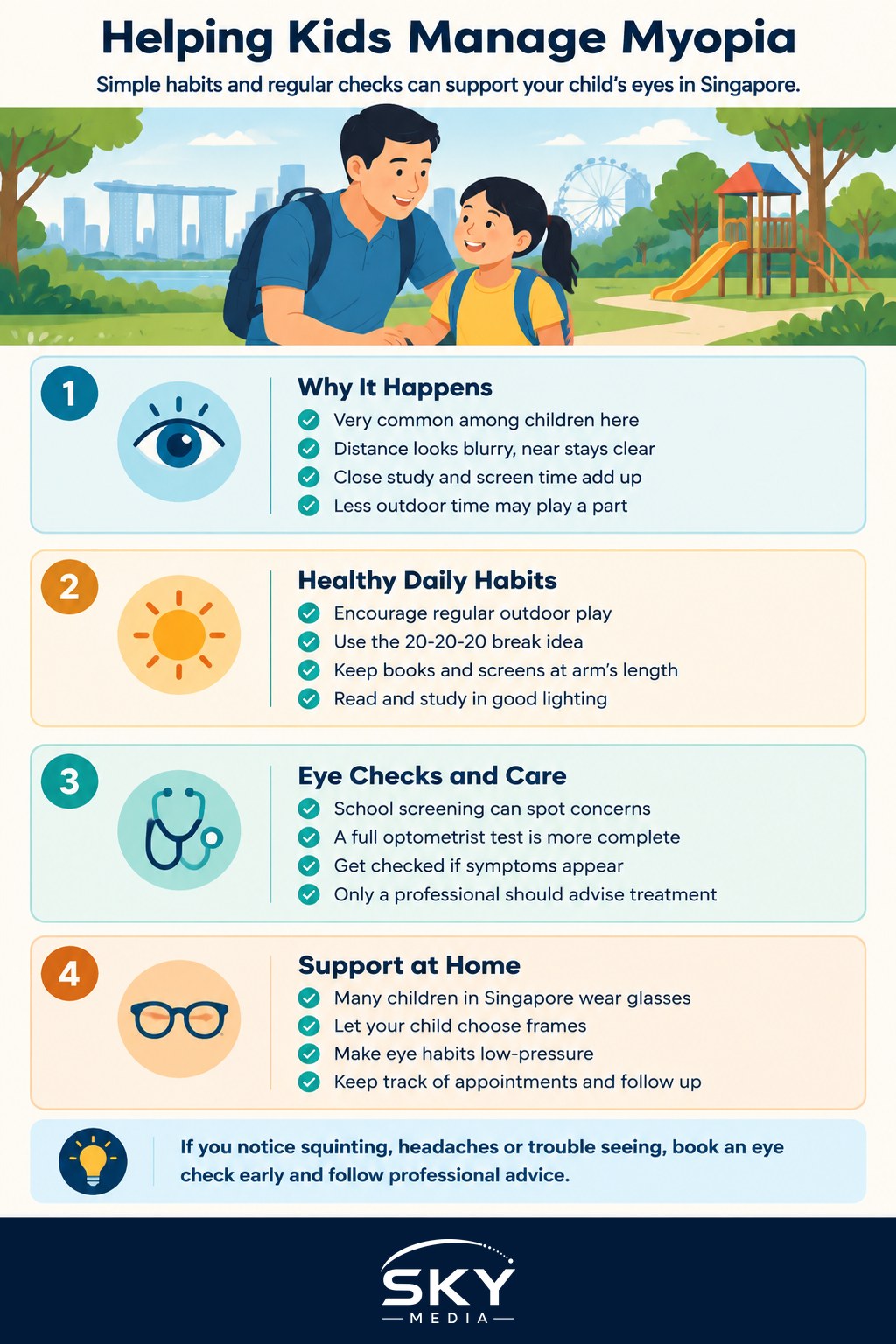
Myopia, or short sightedness, means distant objects look blurry while close ones stay clear. It usually begins in childhood and can progress as a child grows. Singapore has one of the highest rates of childhood myopia in the world, and researchers link this partly to lifestyle: a lot of close up study and screen time, and comparatively little time spent outdoors.
For newcomer families, the academic environment can feel intense, and children often spend long hours reading, doing homework and using devices. All of this near work is thought to contribute. Genetics also play a part, so if both parents are short sighted, a child is more likely to be too. None of this is anyone’s fault, and it does not mean your child has done anything wrong. It simply means eye care deserves a regular place in family life.
The reason parents are encouraged to act early is that higher levels of myopia in adulthood carry a greater risk of certain eye conditions later in life. Slowing the progression while a child is young is therefore worthwhile, and this is something an eye specialist can guide.
Everyday Habits That Support Eye Health
While treatment decisions belong to a doctor, the daily habits below are widely recommended and easy to build into family routines. They are general good practice rather than a cure.
Spending time outdoors is one of the most talked about protective habits. Natural daylight is thought to benefit developing eyes, and many eye health campaigns encourage children to get regular outdoor play each day. A trip to the park, playground or simply walking outside all counts.
Taking breaks from near work matters too. A popular reminder is the 20-20-20 idea: every twenty minutes, look at something about twenty feet away for around twenty seconds. This gives the eyes a rest from constant close focus. Encourage your child to hold books and screens at a comfortable distance rather than very close to the face, and to read in good lighting.
Managing screen time is part of the same picture. Devices are hard to avoid entirely, but balancing them with outdoor time, breaks and other activities helps. Try to keep screens out of very dim rooms and encourage pauses during long sessions.
| Habit | Simple goal | Why it helps |
|---|---|---|
| Outdoor time | Regular daily play outside | Daylight supports eye development |
| Screen breaks | Follow the 20-20-20 idea | Rests the eyes from close focus |
| Reading distance | Keep books and screens at arm’s length | Reduces strain from near work |
| Good lighting | Read and study in bright light | Eases visual effort |
| Eye checks | See an optometrist regularly | Catches changes early |
Regular Eye Checks and Professional Care
Regular eye checks are the backbone of managing child myopia. Schools in Singapore carry out basic vision screening, which is helpful for spotting problems, but a full eye test with an optometrist gives a more complete assessment. If your child squints, sits very close to the television, complains of headaches, or struggles to see the board at school, arrange a check promptly.
An optometrist can measure your child’s vision, prescribe glasses if needed, and monitor how the myopia changes over time. If progression is a concern, they may refer your child to an ophthalmologist, an eye doctor who can discuss options.
There are treatments that aim to slow myopia progression, but these are decisions for a doctor to make with you, not something to start on your own. For example, low dose atropine eye drops and orthokeratology, sometimes called ortho-k lenses worn overnight, are approaches an eye specialist may discuss where appropriate. Special spectacle or contact lens designs also exist. Whether any of these suit your child depends on their individual situation, and only a qualified professional can advise. Please do not attempt any treatment without proper guidance.
Supporting Your Child With Care
A new diagnosis of short sightedness can feel worrying, but try to keep it in perspective. Many children here wear glasses, so your child will not feel out of place, and modern lenses are light and comfortable. Involve your child in choosing frames so they feel positive about wearing them, and make good eye habits a normal, low pressure part of family life rather than a source of stress.
It also helps to bring your child along in understanding their own eyes. Explain in simple terms why breaks and outdoor play matter, and turn the 20-20-20 idea into a gentle game rather than a rule. Children who feel involved tend to stick with good habits far more happily than those who feel nagged. If your child dislikes their first pair of glasses, give it a little time and speak to the optometrist, as the frame fit or lens type can often be adjusted for comfort.
Keep a note of your child’s eye appointments and follow the schedule your optometrist suggests. Consistency matters more than any single visit. By combining sensible daily habits with regular professional checks, you give your child the best chance of healthy vision as they grow up in Singapore. When in doubt, always turn to an eye specialist who can look at your child’s specific needs, and never start or stop any treatment on your own.
Explore more
Getting Glasses and Eye Care in Singapore
Booking Medical Appointments Online
How to Register with a CHAS Clinic
Frequently Asked Questions
Are atropine eye drops and ortho-k safe to start on my own? No. Treatments that aim to slow myopia progression, such as low-dose atropine drops and overnight ortho-k lenses, are decisions for a qualified eye professional to make with you. Never start or stop any treatment without proper guidance.
Does myopia run in families? Genetics play a part, so if both parents are short-sighted, a child is more likely to be too. It is nobody’s fault, and it simply means eye care deserves a regular place in family life, including regular checks.
What is the 20-20-20 rule for kids? Every twenty minutes of close work, your child looks at something about twenty feet away for around twenty seconds. It rests the eyes from constant close focus. Turning it into a gentle game works better than turning it into a rule.
What signs suggest my child needs an eye check? Squinting, sitting very close to the television, headaches or struggling to see the board at school are signs to arrange a check promptly. School screening helps, but a full test with an optometrist gives a more complete picture.
What if my child hates wearing glasses? Give it a little time and involve your child in choosing the frames so they feel positive about them. Many children here wear glasses, so they will not feel out of place. Speak to the optometrist, since the fit or lens type can often be adjusted for comfort.
Official sources: HealthHub
Further reading: Ortho-K Lenses for Children in Singapore: How They Work and What They Cost · Colour Blindness in Children: Signs, Testing and School Life