

Few moments in a relationship feel as nerve wracking as the first time you sit down with your partner’s family. You want to make a good impression, show respect, and be yourself all at once, which is a lot to hold in your head over one dinner. The good news is that meeting your partners parents singapore families welcome you into is usually far warmer than the anxiety leading up to it. Parents generally want to see that their child is happy and cared for, and if you bring genuine warmth and good manners, you are already most of the way there.
This guide offers supportive, practical pointers. It is general relationship advice, not counselling, and every family is different. Treat these ideas as a starting point and adapt them to your partner and their household.
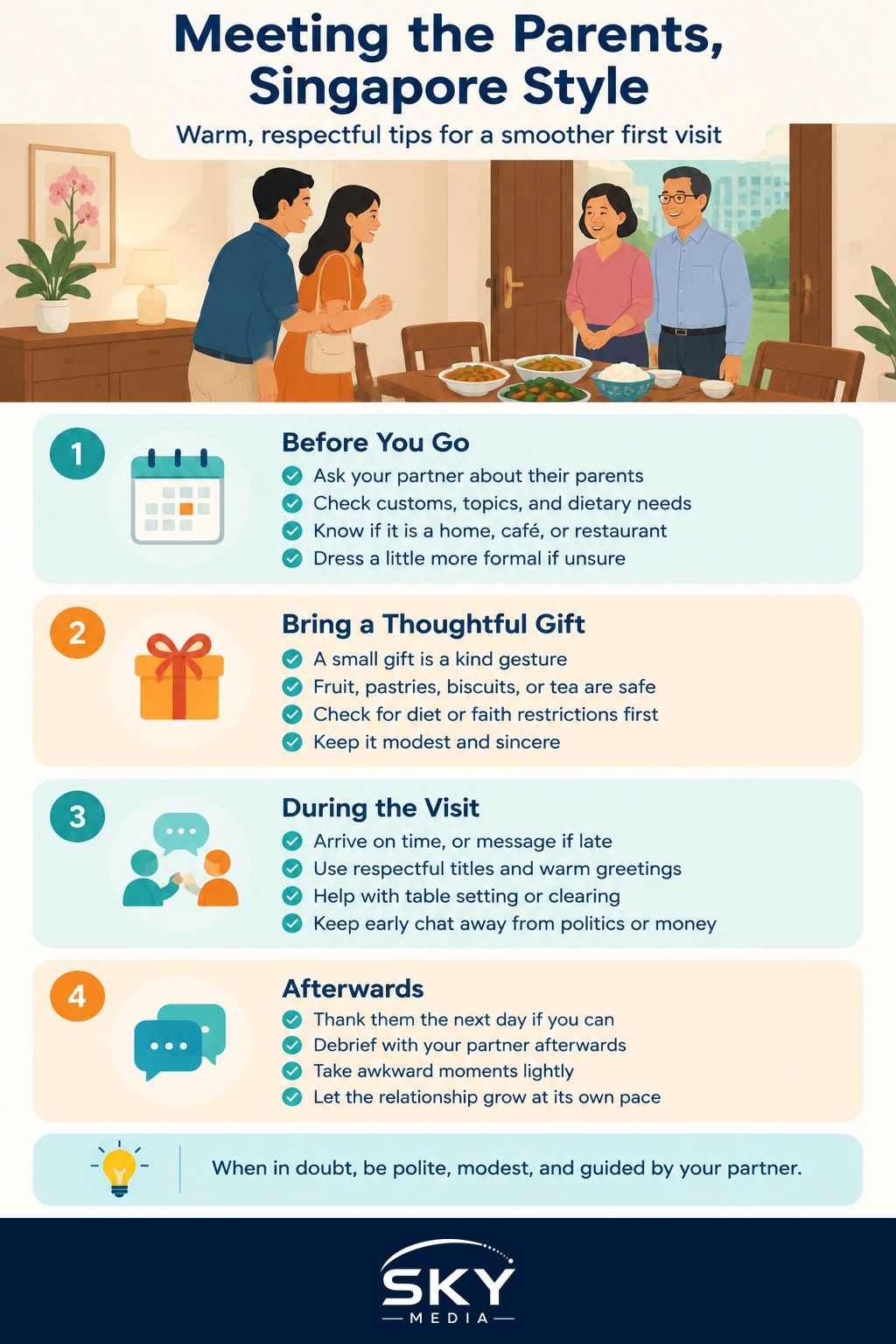
Prepare With a Little Homework
The single most useful thing you can do is talk to your partner beforehand. Ask them what their parents are like, what topics to steer toward or away from, and whether there are any customs you should know. In multicultural Singapore, families come from many backgrounds, and small differences in expectation can matter. Some homes ask you to remove your shoes at the door. Some prefer you address elders with a respectful title rather than their first name. Some have dietary practices, such as halal or vegetarian meals, or avoid alcohol entirely.
Ask about the setting too. A casual kopi session at a coffee shop calls for a very different energy than a formal dinner at home or a restaurant. Knowing the plan helps you dress and prepare appropriately. When in doubt, lean slightly more formal and polite rather than too casual.
If your partner’s family speaks a language or dialect you do not, learning a simple greeting can go a long way. You are not expected to be fluent, and a warm smile with a respectful hello shows effort and care.
Bring a Thoughtful Gift
Arriving with a small gift is a kind gesture in most Singapore homes, though the right choice depends on the family. Fruit, pastries, biscuits, or a box of nice tea are safe and appreciated. Ask your partner about preferences and restrictions first, because a gift that clashes with a family’s diet or beliefs can create awkwardness rather than goodwill.
Keep it modest and sincere. The point is the thought, not the price tag. Present the gift with both hands as a sign of respect if that suits the family’s customs, and let your partner guide you on the details.
| Situation | Helpful Approach |
|---|---|
| Casual coffee shop meet | Relaxed but neat; let conversation flow naturally |
| Formal dinner at home | Dress smart, remove shoes if asked, bring a small gift |
| Different diet or faith | Ask ahead; respect halal, vegetarian, or no-alcohol norms |
| Language barrier | Learn a simple greeting; smile and stay warm |
| Tough question comes up | Answer honestly and briefly; stay calm and kind |
During the Visit
Arrive on time, or message ahead if you are running late. Offer a warm greeting to each family member and use respectful titles if that is the custom. Small manners are noticed: helping to set or clear the table, accepting food graciously, and complimenting the cooking are all easy wins. If you are offered a second helping, a polite acceptance is often read as a compliment, though you should never force yourself past comfort.
Conversation is where nerves usually spike. You do not have to be dazzling. Ask the parents about themselves, listen genuinely, and share a little about your work, family, and interests. Keep early conversations away from heated topics like politics or money unless the family raises them. If a pointed question comes up about your intentions or future plans, answer honestly and briefly without over promising. It is fine to say you and your partner are still figuring things out together.
Show affection with your partner in a measured way. Warmth is lovely, but many families, especially more traditional ones, prefer restraint in front of elders. Follow your partner’s lead and the tone of the room.
Handling Nerves and Awkward Moments
Nerves are completely normal, and parents usually understand that a first meeting is stressful. If you fumble a name or spill a drink, laugh it off gently and move on. Nobody expects perfection. What families remember is whether you were respectful, attentive, and kind to their child.
If a comment lands awkwardly or a family member seems cool toward you, try not to take it personally on day one. First impressions are just that. Relationships with in laws build slowly over many visits. Debrief with your partner afterward, share how it felt, and support each other rather than keeping score.
After the Meeting
A short thank you message the next day is a warm touch, whether sent directly or passed through your partner. It signals that you valued the time and the effort they put in. Then let the relationship grow at its own pace. Later visits are usually easier, and familiarity does most of the work.
Meeting the parents is a milestone, not a test you can fail. Come prepared, be respectful of the family’s customs, bring a little thoughtfulness, and above all be genuinely yourself. That combination is what turns a nervous first dinner into the start of a comfortable, lasting bond.
For more on growing closer as a couple, see our guides on meeting your partner’s friends, keeping your relationship strong, and talking about money as a couple.
Frequently Asked Questions
What should I do if my partner’s parents speak a language I do not? Learn a simple greeting and pair it with a warm smile. You are not expected to be fluent, and the effort shows care. Your partner can also help translate or tell you which respectful titles the family uses.
Is it okay to say no to food I cannot eat when meeting the parents? Yes, if you explain politely and early. Tell your partner about any dietary needs beforehand so they can warn the family. At the table, accept what you can graciously and decline the rest kindly rather than forcing yourself past comfort.
How should I answer questions about my plans for the future? Answer honestly and briefly without over-promising. It is fine to say you and your partner are still figuring things out together. Stay calm and kind, and avoid being drawn into heated topics such as politics or money.
How much affection should I show my partner in front of their parents? Keep it measured. Warmth is lovely, but many families, especially more traditional ones, prefer restraint in front of elders. Take your cue from your partner and the tone of the room.
What if one of the parents seems cold toward me? Try not to take it personally on day one. First impressions are just that, and relationships with in-laws build slowly over many visits. Talk it through with your partner afterwards and support each other rather than keeping score.