

The Mekong Delta is where Vietnam slows down. Rivers and canals replace roads, markets float, and fruit orchards line the water. Planning a trip to the Mekong Delta from Singapore is easier than many people expect, because Ho Chi Minh City is a short flight away and the Delta begins just a few hours’ drive south.
This guide covers how to get there, the difference between a day trip and staying overnight, what the floating markets are really like, and practical tips for Singapore travellers. Transport schedules, entry rules and tour formats change, so check current details with airlines, operators and official Vietnamese sources before you go.
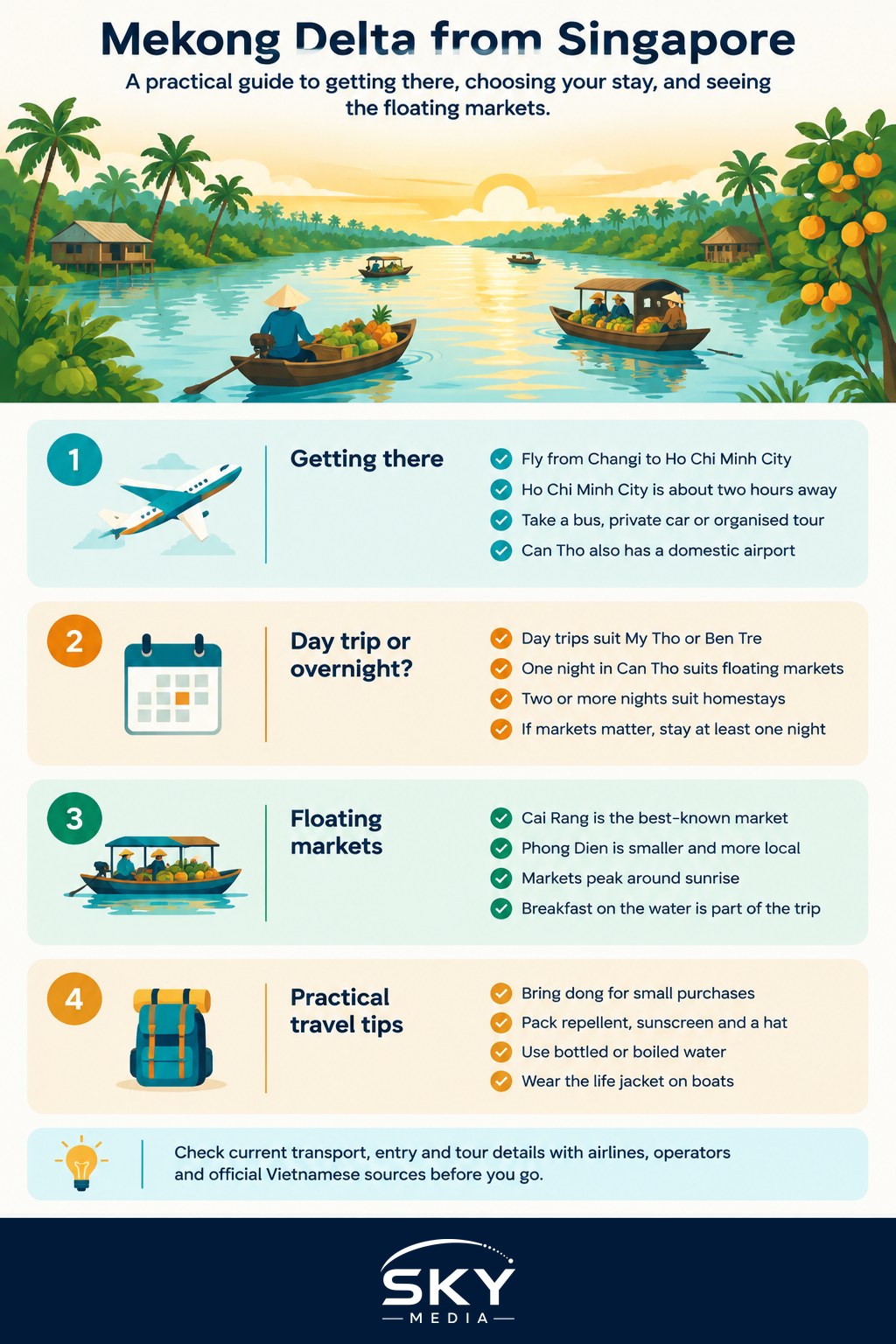
Getting to the Delta: Singapore to Ho Chi Minh City and Beyond
Most travellers fly from Changi to Tan Son Nhat International Airport in Ho Chi Minh City (HCMC), which takes roughly two hours. For the rest of the country, see our guide to Vietnam from Singapore. From there you have several options to reach the Delta:
- Organised tour from HCMC. The simplest choice. Pickup is usually from District 1 hotels, with transport, boat rides and meals bundled.
- Intercity bus. Several bus companies run frequent services from HCMC to Can Tho and other Delta towns. Sleeper and seated coaches are common and fairly comfortable.
- Private car with driver. More expensive but flexible, good for families or small groups wanting to stop at several towns.
- Domestic flight to Can Tho. Can Tho has its own airport with domestic routes. Some travellers fly in from other Vietnamese cities to skip the road journey.
Can Tho, the largest city in the Delta, is typically a few hours by road from HCMC depending on traffic. Closer towns such as My Tho and Ben Tre are reachable in less time, which is why they feature on most day trips.
Entry rules: Singapore passport holders have generally enjoyed visa-free entry to Vietnam for short stays, but the permitted length and rules for other nationalities differ. Check the current requirements with Vietnam’s immigration authorities or the Vietnamese embassy before booking, especially if you or travel companions hold a different passport.
Day Trip or Overnight: Choosing the Right Format
This is the biggest decision, and it shapes what you actually see.
| Option | What you see | Best for | Trade-offs |
|---|---|---|---|
| Day trip to My Tho or Ben Tre | Boat ride on the river, coconut candy workshops, orchards, small canals | Short HCMC stays, first-timers | Long hours in a vehicle, no early-morning floating market |
| One night in Can Tho | Cai Rang floating market at dawn, city riverfront, local food | Travellers who want the real floating market | Extra night of accommodation, early start |
| Two or more nights with homestay | Floating markets, village life, cycling, cooking with hosts | Slow travellers, families, photographers | More planning, simpler facilities in rural homes |
| Extended loop to Chau Doc or further | Border-region markets, Cham villages, mountains near the Cambodian border | Return visitors to Vietnam | Longer road journeys, needs more days |
If seeing a floating market is a priority, plan at least one night in the Delta. The markets are busiest in the very early morning, and a day trip from HCMC usually cannot reach them in time.
The Floating Markets: What to Expect
The best-known is the Cai Rang floating market near Can Tho, with the smaller and more local Phong Dien floating market further upriver. Here is how they work.
Wholesale boats anchor in the river with their goods. Traders hang a sample of what they sell, such as a pineapple, watermelon or sweet potato, on a tall pole so buyers can see it from a distance. Smaller boats move between them, buying in bulk. Mixed in are vendors in sampans selling coffee, noodle soup and fresh fruit to passing boats.
Timing matters. Activity peaks around sunrise and thins out by mid-morning. Tours often leave the pier before dawn.
Manage expectations. The markets have changed as roads and bridges improved, and some are smaller than they once were. They remain a genuine working market, but do not expect the crowded scenes from decades-old photos.
Try breakfast on the water. Buying a bowl of noodles or a coffee from a boat vendor is part of the experience. Pay in Vietnamese dong in small notes.
Homestays and Village Life
A homestay is where the Delta really opens up. Many families in the Vinh Long, Ben Tre and Can Tho areas host guests in simple rooms, often with shared meals.
What a typical homestay might include:
- Home-cooked meals using local produce, such as elephant ear fish, river prawns and fresh herbs
- Cycling along canal paths and over small bridges
- Visiting fruit orchards, rice paper or rice noodle makers, and brick kilns
- Evening conversations with hosts, sometimes through a translation app
Facilities vary. Some homestays have air-conditioning and private bathrooms; others are more basic with fans and mosquito nets. Read recent reviews, check whether breakfast and dinner are included, and confirm how you will get from the bus station or pier to the homestay.
Practical Tips for Singapore Travellers
Weather and timing. The Delta is hot year-round. The rainy season brings afternoon downpours and, in some months, higher water levels that flood fields and change the landscape. The drier months are generally easier for cycling and walking. Check seasonal patterns before planning.
Health and insects. Bring insect repellent, sunscreen and a hat. Drink bottled or boiled water. If you have health concerns about travel to rural areas, consult a travel clinic or your GP before going.
Money. Bring Vietnamese dong for small purchases at markets and homestays. Cards are accepted more widely in Can Tho city than in villages. ATMs are available in larger towns.
Language. English is spoken in tourist-facing businesses, less so in rural areas. A translation app with Vietnamese downloaded for offline use helps a lot.
Boat safety. Wear the life jacket provided, keep phones in a waterproof pouch, and step on and off boats carefully. Small sampans can tip if everyone moves to one side at once.
Food for different diets. Fish sauce and pork are common. Halal options are limited outside cities, though Muslim travellers may find Cham community food in parts of An Giang province around Chau Doc. Vegetarian travellers can ask for “an chay” (vegetarian food), and Buddhist vegetarian restaurants exist in larger towns.
Sample Itineraries
Two days, one night
- Day 1: Early bus or tour from HCMC to Can Tho, stopping at an orchard or workshop on the way. Evening stroll along the Can Tho riverfront and night market.
- Day 2: Pre-dawn boat to Cai Rang, breakfast on the water, canal tour, then return to HCMC by afternoon.
Three days, two nights
- Day 1: HCMC to Ben Tre or Vinh Long, afternoon boat ride, homestay dinner.
- Day 2: Cycling and village visits, transfer to Can Tho in the afternoon.
- Day 3: Floating market at sunrise, then back to HCMC for an evening flight to Singapore.
Plenty of travellers combine the Delta with a few days in HCMC itself. Building in at least one night on the river makes the difference between seeing the Mekong from a boat window and actually waking up beside it.