
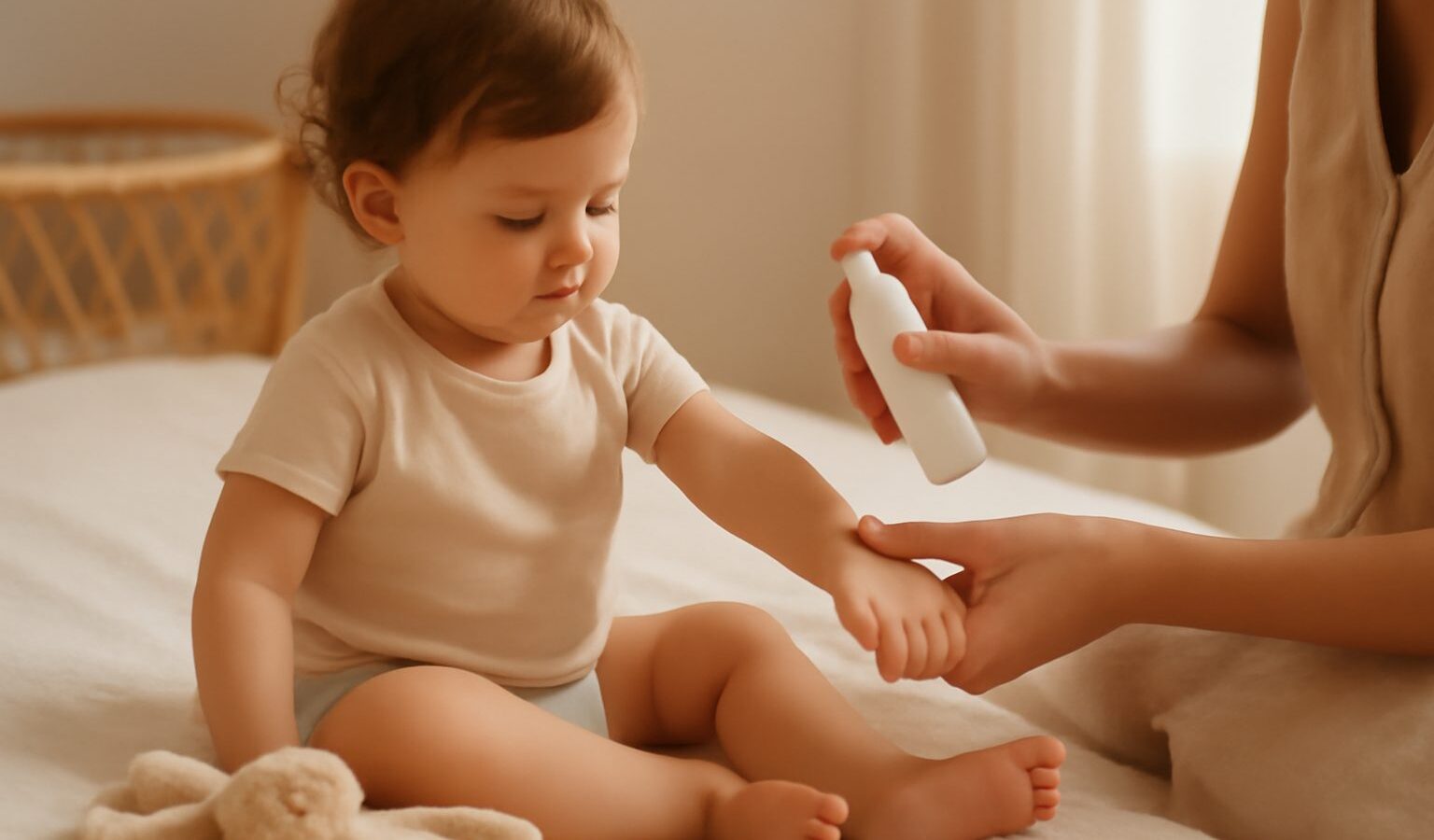
In Singapore’s warm, humid climate, mosquitoes are a year-round reality, and parents often find themselves standing in a pharmacy aisle comparing sprays, lotions, patches and bands. Choosing a mosquito repellent for babies and young children is different from choosing one for yourself: age matters, ingredients matter, and how you apply the product matters just as much.
This guide compares the common repellent ingredients, what age groups they are generally considered suitable for, and practical ways to protect little ones. It is general information, not medical advice. Always read the product label, and speak to your doctor, a polyclinic or a pharmacist if your child is very young, has sensitive skin or has a medical condition. For background on the illness itself and breeding prevention, see our guide to preventing dengue and mosquito bites in Singapore.

Start With Age: The Most Important Filter
Before looking at ingredients, look at your child’s age and the age guidance on the label.
- Young babies. Many health authorities advise against applying insect repellent to babies in their first couple of months. For very young infants, physical protection such as mosquito nets over cots and prams is usually the first line of defence. Check with your doctor before using any repellent on a newborn.
- Older babies and toddlers. Some repellents are labelled as suitable from a certain age. The minimum age differs between ingredients and between brands, so the label is your guide.
- Preschool and school-age children. More products become suitable, but children still need an adult to apply them correctly.
If a product does not state an age on the label, or the age is unclear, choose another product or ask a pharmacist.
Comparing Common Repellent Ingredients
The table below summarises the active ingredients you are most likely to see in Singapore pharmacies and supermarkets. Age suitability varies by concentration and formulation, so always follow the specific product’s label.
| Ingredient | What it is | General notes for children | What to check on the label |
|---|---|---|---|
| DEET | Long-established synthetic repellent | Widely used and studied; lower concentrations are commonly marketed for children | Minimum age, concentration, how often to reapply |
| Picaridin (also called icaridin) | Synthetic repellent with a lighter feel | Often chosen for children because it is less greasy and has little smell | Minimum age, concentration, duration of protection |
| IR3535 | Synthetic compound related to a natural amino acid | Common in family and child formulations | Minimum age, whether it is combined with sunscreen |
| Oil of lemon eucalyptus or PMD | Plant-derived active ingredient | Some health authorities advise against it for children under three | Clear age limit; do not confuse with pure essential oil |
| Essential oil blends (citronella, lavender, etc.) | Plant oils | Protection tends to be shorter and less consistent; can irritate skin | Whether it is registered as a repellent, patch-test advice |
A few points to note:
- Higher concentration usually means longer protection, not stronger protection. A higher percentage generally lasts longer between applications. For children, the label’s recommended product and frequency matter more than chasing the highest number.
- “Natural” is not automatically safer. Plant oils can still cause skin reactions, and some are not recommended for young children.
- Avoid combination sunscreen-repellent products for regular use. Sunscreen often needs reapplying more frequently than repellent, so many experts suggest using them separately: sunscreen first, then repellent.
Patches, Bands and Other Formats
Beyond sprays and lotions, parents see stickers, wristbands, clip-ons and plug-in devices.
- Stickers and patches placed on clothing or prams usually contain plant oils such as citronella. They may help a little in a small area, but they do not protect the whole body like a properly applied repellent.
- Wristbands have similar limits and can be a choking hazard for babies and toddlers who chew them.
- Plug-in and coil products are for rooms, not skin. Follow ventilation guidance on the pack and keep them well out of children’s reach.
- Mosquito nets remain one of the most reliable options for cots, prams and play areas, especially for babies who are too young for skin repellents.
Physical barriers at home also help. Our guide to choosing mosquito screens for windows and doors covers options for HDB flats and condos.
How to Apply Repellent Safely on Children
How you apply a repellent matters as much as which one you buy. These are common safety practices; always defer to the product label.
- An adult applies it. Spray or squeeze the product onto your own hands first, then rub it onto your child’s exposed skin. Do not let young children handle repellent themselves.
- Avoid hands, eyes and mouth. Children put their hands in their mouths and rub their eyes. Keep repellent off their hands and away from the face, applying only a thin layer around the ears if needed.
- Only on exposed skin. There is no need to apply it under clothing.
- Never on cuts or irritated skin. Skip broken skin, rashes and eczema patches.
- Use the least needed. A thin, even layer is enough. More does not mean better protection.
- Wash it off afterwards. When your child comes indoors and no longer needs protection, wash the treated skin with soap and water.
- Store safely. Keep repellents in a high cupboard, the same way you would store medicines.
If your child develops a rash, swelling, or seems unwell after using a repellent, wash it off and seek medical advice. In an emergency, call 995.
Clothing and Timing Help Too
Repellent works best as part of a wider routine.
- Dress in light, loose clothing that covers arms and legs when visiting parks, gardens or areas near water. Light colours are cooler and make it easier to spot mosquitoes.
- Balance cover with heat. Singapore’s heat is a real concern for small children, so choose breathable fabrics and watch for overheating. Our guide to keeping babies and toddlers safe in hot months has more on this.
- Be extra careful at peak biting times. The mosquitoes that spread dengue tend to bite during the day, especially in the early morning and late afternoon, so daytime protection matters.
- Check the pram and cot. A fitted net over a pram or cot is simple and effective for infants.
Quick Checklist Before You Buy
- Is the product clearly labelled as an insect repellent, with an active ingredient listed?
- Does the label state a minimum age, and does your child meet it?
- Is it a format you can apply evenly and avoid the face and hands?
- Have you patch-tested it on a small area of skin first, especially for children with sensitive skin?
- Do you have a separate sunscreen for outdoor days?
Choosing a mosquito repellent for babies and kids comes down to age, ingredient and careful application. Combine the right product with nets, screens, sensible clothing and a home free of stagnant water, and you give your child solid protection without overdoing it. When in doubt, a quick chat with your pharmacist or doctor is always worth it.
Official sources: HealthHub