

Moving to Singapore in your 40s or 50s is a wonderfully different experience from arriving fresh out of university. You bring hard won career experience, a clearer sense of what you want from life, and often a family whose needs shape every decision. You may also be thinking further ahead, about schooling for teenagers, healthcare as you get older, and the shape of the next decade. Singapore rewards that maturity: it is safe, well organised and full of opportunity, and it suits people who value stability and quality of life.
This guide shares warm, general information for those making the move in midlife. It is not legal, immigration, medical or financial advice, and rules change over time, so always check the latest guidance from the relevant authorities such as the Ministry of Manpower (MOM) and the Immigration and Checkpoints Authority (ICA), or consult a qualified professional about your own circumstances.
Career moves in midlife
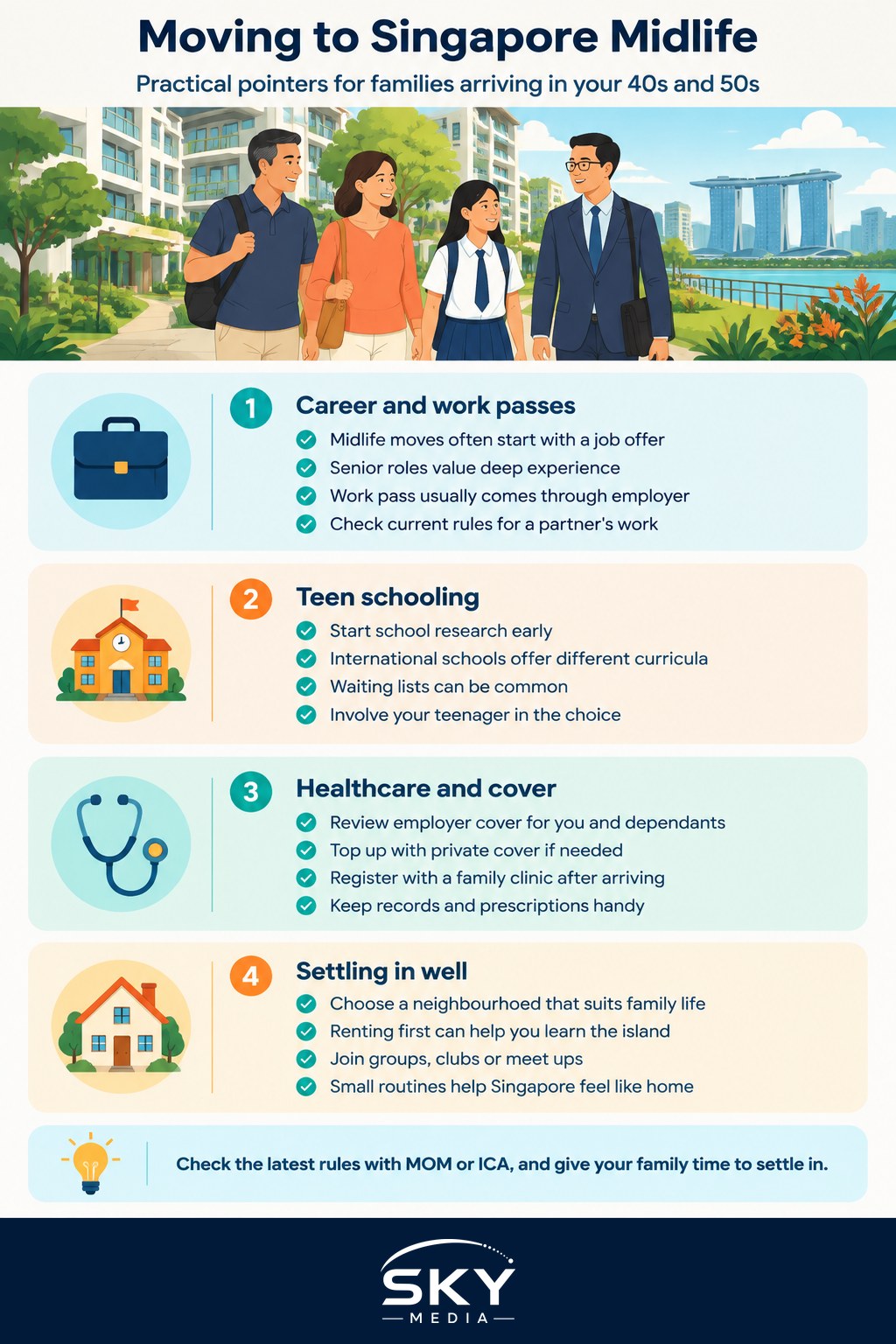
By your 40s and 50s, you are likely to be moving for a senior role, a specialist skill or a leadership opportunity, and employers here value that depth of experience. Often the move is anchored by a firm job offer, with the relevant work pass arranged through your employer. If a partner or children are joining you, they may be able to come on a Dependant’s Pass where the family meets the eligibility conditions, which are set by the authorities and updated from time to time, so confirm the current position with MOM.
A midlife move is also a chance to think strategically about work. Your experience is an asset, so lean into the networks, professional bodies and industry events that will help you land well and stay visible. If you are relocating with a partner who also wants to work, plan for that second career too, and check the current rules on whether and how a dependant may take up employment before making assumptions. Give yourselves realistic timelines; senior roles and considered decisions rarely happen overnight, and that is fine.
Schooling for teenagers
If you are moving with teenagers, education will be near the top of your list, and the choices you make matter because older children have less time before major exams and transitions. Singapore offers international schools following various curricula, which many relocating families choose so their teens can continue a familiar system, as well as other pathways depending on eligibility.
Good schools can have waiting lists, so start early. Research the curricula on offer, think about which pathway best matches your child’s stage and future plans, and consider practical factors such as location, class sizes and the support available for new arrivals. Where possible, involve your teenager in the conversation. Moving in the teenage years can be tough socially, so choosing a school where they feel they belong makes an enormous difference to how the whole family settles.
Beyond the classroom, help your teens build a life outside school through sports, clubs and hobbies. Friendships and a sense of routine will do as much for their happiness as any academic ranking. Be patient with the adjustment; it is normal for older children to take a term or two to feel truly at home.
Healthcare and insurance
As you move through your 40s and 50s, healthcare and insurance deserve more attention than they might have a decade or two ago. Singapore’s healthcare is well regarded, with a strong network of clinics and hospitals across public and private sectors, so you will be in good hands. The key is to get your cover sorted properly before you need it.
Check what your employer scheme includes, both for you and for any dependants, and consider additional private cover if the scheme does not stretch far enough. Premiums can rise with age, so review the details rather than assuming, and think about the cover you want for routine care, specialist visits and any ongoing conditions. Register with a family clinic near home soon after arriving, keep your medical records and prescriptions handy, and note the local emergency number.
| Consideration | A practical note for midlife movers |
|---|---|
| Career | Senior and specialist roles value your experience |
| Partner’s work | Check current rules before assuming a dependant can work |
| Teen schooling | Research curricula early; waiting lists are common |
| Health cover | Confirm what covers you and dependants, top up if needed |
| Ongoing care | Register with a local clinic and carry your records |
| Longer view | Plan finances and cover with the next decade in mind |
Settling in with a longer view
One quiet advantage of moving in midlife is perspective. You are less likely to sweat the small stuff and more likely to invest in the things that make a place feel like home. Choose a neighbourhood that suits your family’s rhythm, whether that is close to your child’s school, near green space for weekend walks, or handy for your commute. Renting first is common and sensible, giving you time to learn the island before any longer term decisions.
Build your own social life too, not just the children’s. Professional groups, sports clubs, faith communities and interest based meet ups are all easy ways to make friends as an adult, and midlife is a great time to try something new. It is normal for the whole family to take a few months to settle, so be kind to yourselves and celebrate the small wins along the way. Small habits help enormously here: a regular walk, a favourite hawker stall, a weekend routine you look forward to. These little anchors turn an unfamiliar city into a place that feels reassuringly like home.
Moving to Singapore in your 40s brings real advantages: experience, clarity and the wisdom to plan ahead. Sort your career, your children’s schooling and your healthcare thoughtfully, verify the details with the official channels, and give the family time to adjust. Do that, and this chapter can be one of your most fulfilling yet.
Explore more
Relocating With Family
Healthcare for Newcomers
Best Places to Live
Moving to Singapore Checklist
Frequently Asked Questions
Is being in my 40s or 50s a disadvantage when applying for a work pass? Work passes are assessed on factors such as the role, your qualifications and experience, and salary, and senior experience is often an asset. Rules are set by MOM and change over time, so check the current criteria rather than assume.
Can my elderly parents come and live with us? Parents may be able to visit, and longer stays can fall under separate passes with their own conditions. These are not automatic and depend on your own pass. Ask ICA and MOM which options apply before you promise your parents anything.
How should I think about retirement savings when I relocate? Check what happens to pensions or retirement accounts at home, since rules differ by country and some contributions may stop or continue. Do not stop saving just because the move is busy. A licensed financial adviser can help you plan across both countries.
What if my teenager is struggling to settle at the new school? Adjustment often takes a term or two, so stay patient and keep talking with your teen. Speak to the school’s pastoral staff or counsellor early, and help them build friendships through sports or clubs. Seek professional help if low mood persists.
Should I get a health check before relocating? A check-up before you go is sensible at any age, and especially in midlife. Ask your doctor for copies of records, test results and prescriptions, and discuss any ongoing conditions. That way a new clinic here can pick up where your old doctor left off.
Official sources: Ministry of Manpower (MOM)