
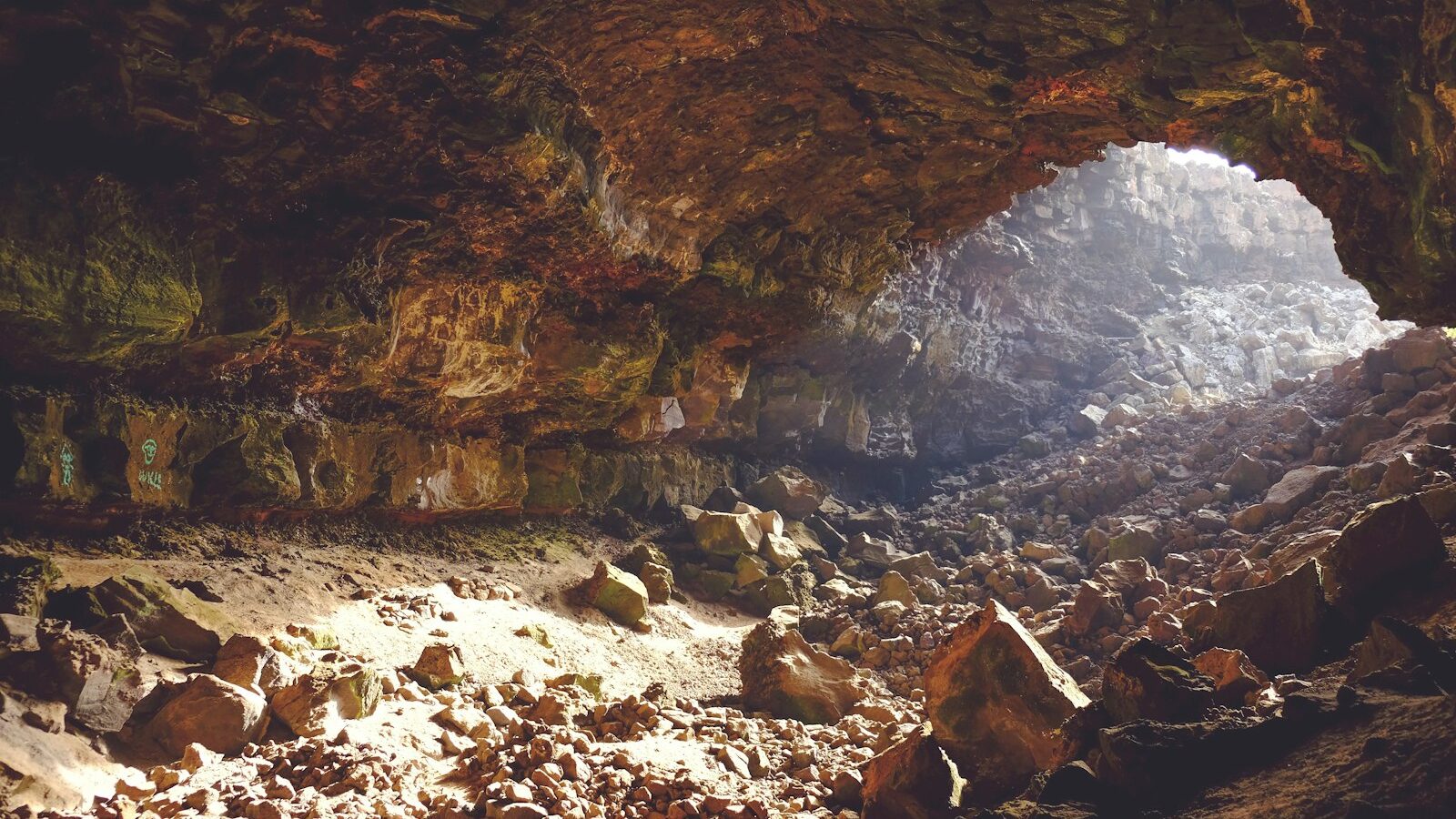
Deep in northern Sarawak, on the island of Borneo, Gunung Mulu National Park protects some of the largest cave systems in the world. The Mulu caves include enormous passages, underground rivers and a nightly bat exodus that draws visitors from around the globe, and the park is a UNESCO World Heritage Site. It is surprisingly reachable from Singapore, yet far fewer people go than to Bali or Bangkok.
This guide covers how to get there via Miri, the show caves you can visit on boardwalks, the adventure caving options for the more daring, and how to plan a trip that fits a long weekend or a week. Details such as flight schedules, permits and activity bookings change, so always confirm with the airlines and the park’s official booking channels.
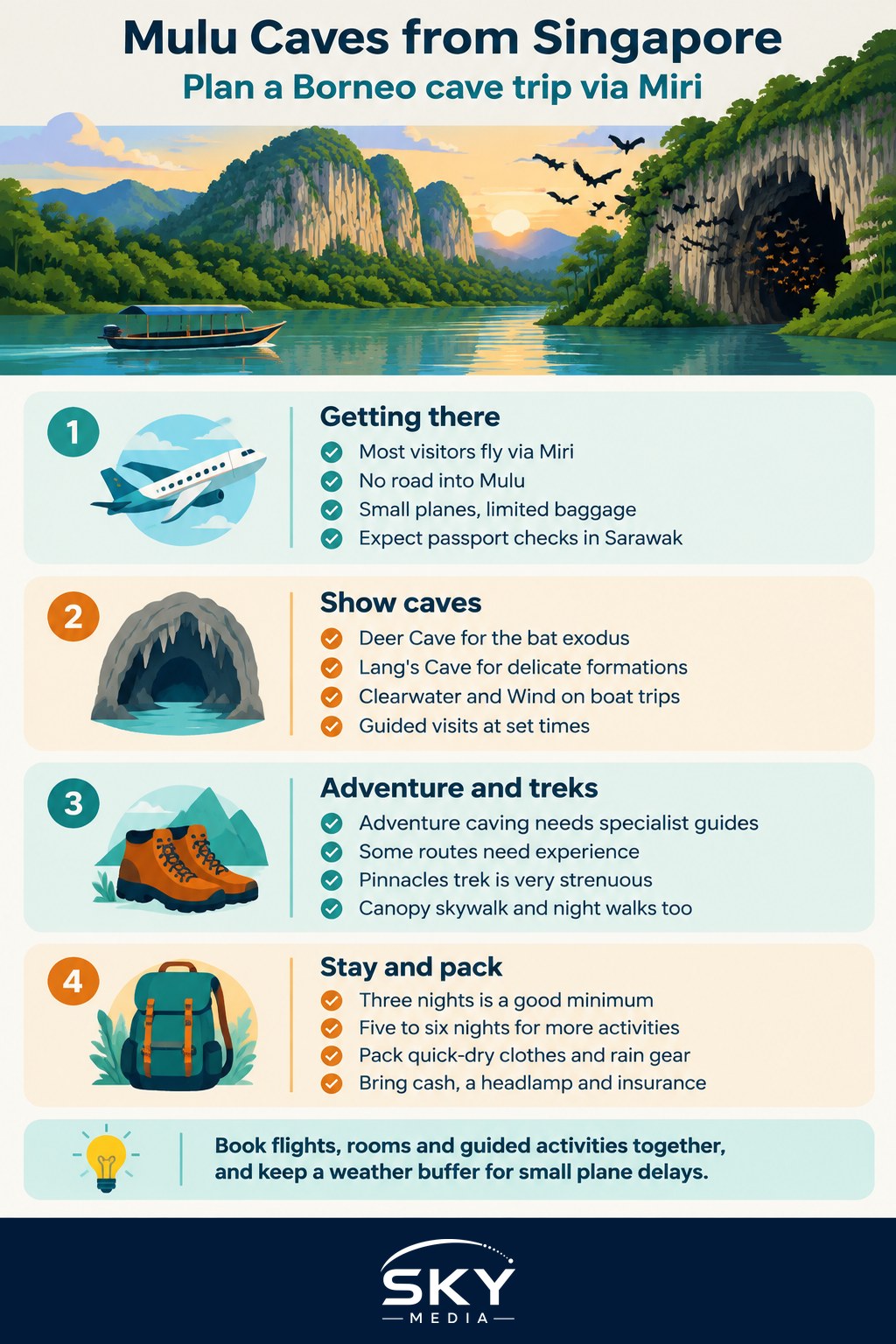
Getting to Mulu via Miri
There is no road into Mulu, which is part of its appeal. Most visitors arrive by air on a small turboprop plane into Mulu Airport, a short drive from the park headquarters.
The usual route from Singapore:
- Fly from Singapore to Miri, a coastal city in northern Sarawak. Depending on the schedules at the time, this may be a direct flight or a connection via Kuala Lumpur or Kuching.
- Connect from Miri to Mulu on a regional domestic flight. Flights are short and the aircraft are small, so seats can be limited and baggage allowances may be lower than on jet services. Check the allowance carefully.
- Transfer to park headquarters, which is close to the airport. Accommodation operators often arrange pick-ups.
Some visitors fly to Mulu from Kuching or Kota Kinabalu instead, or take a long river journey through the interior, but the Miri connection is the most common.
A note on entry: Sarawak has its own immigration control, so even if you have already entered Malaysia elsewhere, expect a passport check on arrival in Sarawak. Bring your passport for every leg and check current entry requirements for your nationality before travelling.
Leave a buffer between connecting flights. Weather can delay small regional flights, so avoid booking a tight same-day connection back to Singapore.
The Show Caves
The show caves are lit, have walkways and are visited with a park guide. They suit most reasonably fit travellers, including older children, though there are many steps.
- Deer Cave. One of the largest cave passages in the world, reached by a walk through the forest. In the late afternoon, weather permitting, large numbers of bats often stream out of nearby openings at dusk to feed. Watching from the observation area is a highlight of any trip.
- Lang’s Cave. Smaller and usually visited with Deer Cave, known for its delicate formations such as stalactites, stalagmites and curtains.
- Clearwater Cave. Part of a very long cave system with an underground river, typically reached by longboat along the river.
- Wind Cave. Often paired with Clearwater Cave on the same boat trip, with cool breezes and decorated chambers.
River trips may also stop at a local community village, where you can buy handicrafts. Be respectful, ask before photographing people, and buy rather than haggle hard.
Visits to the show caves are typically scheduled at set times and must be done with the park’s licensed guides. Book through the park or your accommodation, especially during peak travel periods.
Adventure Caving and Treks
For travellers who want more than walkways, Mulu offers adventure caving with specialist guides. Routes range from introductory trips that involve crawling, wading and scrambling, to demanding ones with climbing, squeezes and long hours underground. The most challenging routes require previous caving experience, and the park may ask you to complete an easier route first.
Before booking, check:
- Fitness and experience requirements for each route
- Minimum age and any health restrictions
- What is supplied, such as helmets and headlamps, and what you need to bring
- Group size and cancellation policy if water levels rise after rain
Above ground, the park is known for:
- The Pinnacles trek. A strenuous multi-day trip that usually involves a boat ride, a forest walk to a basic camp and a very steep climb to view sharp limestone spires. It suits fit hikers comfortable with ropes and ladders, and it books up.
- The canopy skywalk. A guided walk on suspended bridges through the treetops, giving a different view of the rainforest.
- Night walks. Guided walks to spot insects, frogs and other nocturnal wildlife.
The table below compares the main types of activity.
| Activity | Effort level | Who it suits | Booking tip |
|---|---|---|---|
| Show caves (Deer, Lang’s, Clearwater, Wind) | Easy to moderate, many steps | Most travellers, including older children | Book guided slots ahead in peak periods |
| Introductory adventure caving | Moderate, with crawling and wading | Fit first-timers comfortable getting wet and muddy | Check age limits and what gear is supplied |
| Advanced adventure caving | Very demanding | Experienced cavers only | May require a prior easier route |
| Pinnacles trek | Very strenuous, multi-day | Fit hikers with a head for heights | Book early, as spaces are limited |
| Canopy skywalk | Easy to moderate | Most visitors without a fear of heights | Can close for weather or maintenance |
How Long to Stay and When to Go
Three nights is a comfortable minimum to see the main show caves, the bat exodus and one other activity without rushing. Five to six nights lets you add adventure caving or the Pinnacles trek, plus a buffer day for weather.
Mulu is in a rainforest, so expect rain at any time of year. Some months are wetter than others, which can affect river levels, boat trips and some caving routes. Our guide to the best time to visit Southeast Asia explains the general monsoon patterns in the region.
Accommodation ranges from park lodgings near headquarters to a resort and smaller guesthouses nearby. Options are limited, so book flights and rooms together.
Packing and Practical Tips
- Quick-dry clothing and a light rain jacket. Cotton stays wet in the humidity.
- Shoes with good grip for wet boardwalks, plus footwear that can get muddy for adventure caving.
- A headlamp, insect repellent, sunscreen and a refillable water bottle.
- Dry bags for phones and cameras on river trips and in caves.
- Some cash in Malaysian ringgit. Card and ATM access can be limited in remote areas, so check before relying on them.
- Travel insurance that covers adventure activities such as caving and trekking. Read the policy wording, as some exclude certain activities.
- Respect the park rules. Do not touch cave formations, stay with your guide, take your rubbish out, and never feed wildlife.
If you are adding Mulu to a longer Borneo itinerary, our guide to planning a multi-country trip from Singapore helps with routing and budgets. Cave lovers might also enjoy our Phong Nha guide, covering Vietnam’s cave country, as a future trip to compare. For travelling with friends, see planning group trips from Singapore, especially useful for booking small-group caving slots together.
Further reading: Sandakan and Sepilok From Singapore: Orangutans and Wildlife