
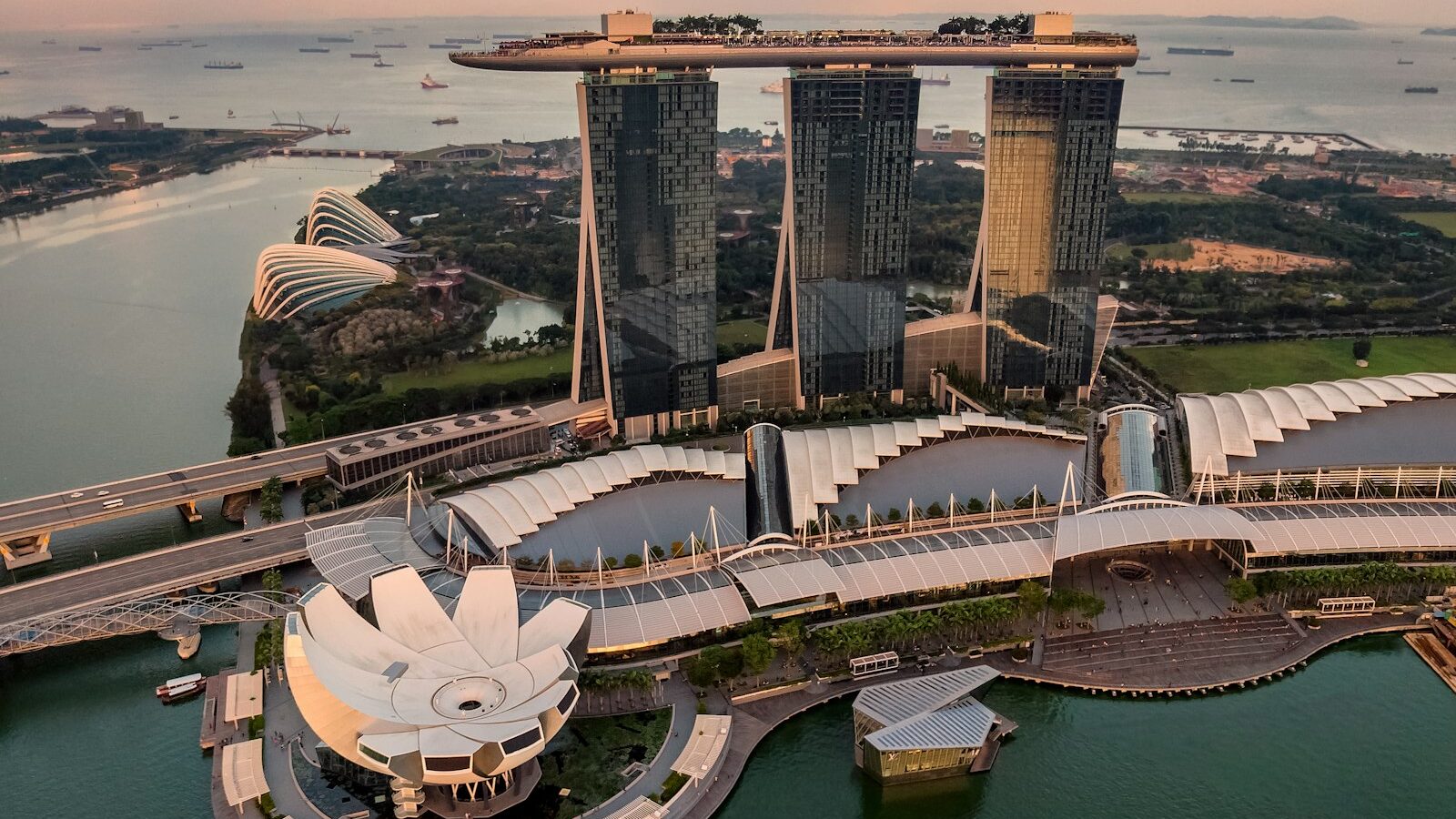
A multi-country trip from Singapore is one of the great advantages of living here. Changi puts most of Southeast Asia within a short hop and much of Asia within half a day, so stringing together two, three or four countries in a single journey is realistic even on a normal leave allowance. The catch is that a multi-country trip rewards planning far more than a single-destination holiday does. Get the order, the pacing and the paperwork right, and the whole thing flows. Get them wrong, and you spend your holiday backtracking, rushing for connections or queuing at borders you could have skipped.
This guide gives you a repeatable method for building a route that works, whether you are looping through the region or heading long-haul with several stops along the way.
Start With A Shape, Not A List
Most people begin with a wish list of cities and try to cram them in. A better start is to pick the shape of your route first. There are really only a few shapes, and choosing one early prevents a lot of pain later.
- Loop: fly into one city, travel overland or on short hops, and fly home from a different city. This is efficient and avoids retracing your steps.
- Hub and spoke: base yourself in one well-connected city and take short return trips out to nearby countries. Good when you want less packing and unpacking.
- Line: a one-way overland push in a single direction, for example from the top of mainland Southeast Asia down towards Singapore.
Once you know the shape, you can decide how many countries genuinely fit. A rough rule that saves many trips: allow at least three to four nights per country for a first visit, more if the country is large or the transport is slow. Two countries in a week is relaxed. Four countries in a week usually means you saw airports, not places.
Sequence Your Stops To Save Time And Money
The order of your stops is not just about geography, it is about flights and rest. A few principles make a big difference.
Group stops that are physically close so you can move overland or on cheap regional hops rather than doubling back by air. Put the longest or most demanding leg early, when you have the most energy and the most buffer if something slips. If you are combining a long-haul destination with regional stops, decide whether the long-haul city sits at the start or the end, and build the rest around it.
This is also where open-jaw and multi-city flights earn their place. Instead of a return ticket to a single city, you book into one airport and out of another. From Singapore this often costs little more than a standard return and can save a whole day of backtracking. Search the trip as a multi-city itinerary rather than stitching separate one-way tickets, then compare, because sometimes separate low-cost tickets still win.
Compare How You Move Between Countries
The way you cross each border shapes your budget and your pace. Here is a rough comparison of the common options for a regional multi-country trip. Treat any figures as loose illustrations only, since fares and times move constantly.
| Mode | Best for | Rough time | Pace and cost feel |
|---|---|---|---|
| Regional budget flight | Longer gaps, saving days | 1 to 3 hours in the air | Fastest, but add airport and transfer time |
| Overland bus or coach | Neighbouring countries, tight budgets | Half a day or more | Cheapest, scenic, tiring |
| Train | Comfort on set routes | Varies widely | Relaxed where the line exists |
| Ferry or boat | Island hops and river crossings | A few hours | Fun, weather dependent |
| Private car or transfer | Groups, remote borders | Flexible | Convenient, higher cost |
The point is not that one mode wins. It is that mixing modes deliberately, a flight to cover a big gap, a bus for a short neighbour, gives you a route that respects both your time and your wallet.
Handle Documents, Visas And Borders Early
This is the part that quietly derails multi-country trips, because the rules multiply with every border you add. Requirements differ by destination, by your nationality and by how you enter, and they change often. Do not rely on what a friend did last year.
Work through it country by country before you book anything expensive:
- Passport validity. Many countries require at least six months of validity beyond your entry date, and some want blank pages. If your Singapore passport is close to expiry, renew with ICA before you plan. For any Singapore-side exit or passport matter, ICA is your reference.
- Entry requirements per country. The Singapore passport has strong visa-free access to many places, but it is never guaranteed, and rules can differ for a multi-country routing or a specific entry point. Verify current requirements for each destination directly with that country’s embassy or consulate.
- Onward travel proof. Some borders ask to see proof that you are leaving. A confirmed onward ticket, which you have anyway on a multi-country trip, usually covers this.
- Border logistics. Check whether a crossing is open to foreign travellers, what its hours are, and whether any entry approval must be arranged in advance.
Keep digital and paper copies of every booking and document, and note the local emergency number and the nearest Singapore mission for each country. Registering your trip and checking MFA travel notices for the countries on your route is a sensible habit, especially for less-visited borders.
Build In Buffer, Money And Health Margins
A multi-country trip has more moving parts, so it needs more slack, not less. Leave generous connection times between an arriving flight and an onward bus or flight in a different country, because a delay in one leg can topple the rest of the chain. Where you can, avoid booking a non-refundable onward leg tight against an international arrival.
On money, carry a mix rather than relying on one method. Have some SGD to change or spend at the start, a card that works well abroad, and small amounts of each local currency for arrivals when you cannot immediately find an ATM. Tell your bank your rough route so cards are not blocked as you cross borders. Costs vary hugely between countries on a single trip, so budget per country rather than as one lump.
On health, see a doctor or travel clinic well before departure, since a multi-country route may touch places with different health considerations, and some vaccines need time to take effect. This is general information, not medical advice, so get destination-specific guidance for your own health. Sort travel insurance that covers every country and every activity on your itinerary, and read the policy wording rather than assuming, since a multi-stop trip is exactly where gaps in cover show up.
Plan the shape, sequence with intent, respect every border, and leave yourself room. Do that, and a multi-country trip from Singapore becomes one of the most rewarding ways to travel from here.
Explore more
Once you have your route, turn it into a day-by-day plan with our guide to building a travel itinerary from Singapore, and get every border document in order with the travel documents checklist for Singapore travellers. If your multi-country trip is a regional overland adventure, backpacking Southeast Asia from Singapore covers the practical side of moving slow and cheap.