
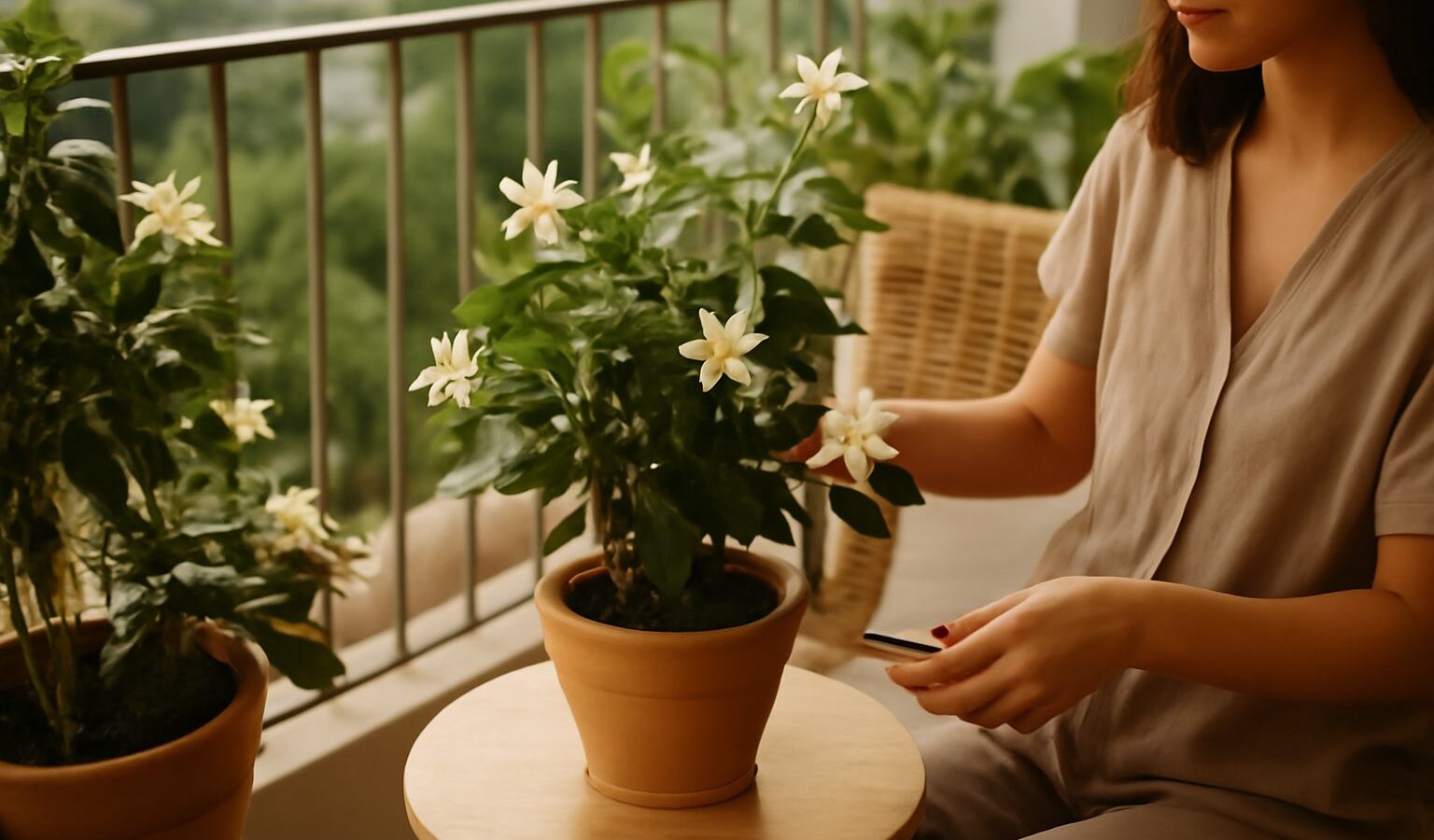
Most of us only get to enjoy our balconies after work, when the sun has dropped and the air finally cools a little. That makes night blooming plants Singapore gardeners can grow in pots a smart choice: they save their scent for the hours you are actually home. Many of these plants evolved to attract moths and other night pollinators, so they release fragrance at dusk, often with pale or white flowers that glow softly under low light.
This guide focuses on evening-scented plants that cope with tropical heat, humidity and the limited space of an HDB corridor, condo balcony or landed patio. For a broader look at scented gardening through the whole day, see our guide to growing a fragrant garden.

Why Evening Scent Works So Well in Singapore
Singapore’s climate suits many night bloomers because they come from warm, humid regions in the first place. A few practical reasons they fit local homes:
- You are home to enjoy them. A plant that peaks at 8pm suits working households better than one that is most fragrant at 10am.
- Still evening air holds scent. On calm nights, fragrance lingers around a sheltered balcony instead of blowing away.
- White flowers show up in the dark. Pale blooms reflect street and indoor light, so even a small pot looks lovely at night.
- Moths still visit high-rise plants. You may notice moths around your pots on lower and mid floors, which is a sign the plants are doing their job.
One caution before you buy: strong scent in a small enclosed space can be overpowering for some people, and fragrance can trigger headaches or discomfort for those who are sensitive. Start with one or two pots and see how your household reacts before filling the balcony.
The Best Night-Blooming Plants for Balconies and Patios
These plants are commonly sold in local nurseries and generally tolerate lowland tropical conditions. Availability varies, so ask your nursery what they have and which cultivars do well in pots.
Night-blooming jasmine (Cestrum nocturnum). Often called “lady of the night”, this shrub produces clusters of small greenish-white flowers with a very strong evening perfume. It grows fast and needs regular pruning to stay pot-sized. Its parts are considered toxic if eaten, so keep it away from curious children and pets.
Tonkin jasmine (Telosma cordata). Known in Chinese as 夜来香 (yè lái xiāng, “fragrance that comes at night”), this twining vine has clusters of yellow-green flowers with a sweet scent after dark. It is a good choice for a trellis or grille and will happily climb if given support.
Arabian jasmine (Jasminum sambac). The familiar melati used in garlands opens its white flowers in the late afternoon and smells strongest in the evening. It is compact, flowers repeatedly with enough sun, and is one of the easiest choices for beginners. Our guide to jasmine and fragrant climbers covers its care in more depth.
Tuberose (Polianthes tuberosa). Called sedap malam in Malay, tuberose sends up tall spikes of waxy white flowers with a rich, heady fragrance at night. It grows from bulbs and does well in a deep pot with good drainage.
Queen of the night (Epiphyllum oxypetalum). This leafy cactus, known as 昙花 (tán huā) in Chinese, is famous for its large white flowers that open late at night and fade by morning. Blooming is occasional rather than constant, which makes each flush an event worth staying up for. It prefers bright shade rather than harsh afternoon sun.
Night jasmine or parijat (Nyctanthes arbor-tristis). Small white flowers with orange tubes open at night and drop by dawn, leaving a pretty carpet on the ground. It becomes a large shrub, so it suits patios more than narrow corridors.
Four o’clock flower (Mirabilis jalapa). As the name suggests, the flowers open in the late afternoon and carry a light scent into the evening. It is easy and cheerful, but its seeds and roots are considered toxic, so place it with care.
Comparing Night Bloomers at a Glance
| Plant | When the scent peaks | Growth habit | Best spot |
|---|---|---|---|
| Night-blooming jasmine | Dusk into late night | Fast shrub, needs pruning | Sunny patio, large pot |
| Tonkin jasmine | Evening | Climbing vine | Trellis or grille, bright light |
| Arabian jasmine | Late afternoon to evening | Compact shrub | Sunny balcony ledge |
| Tuberose | Night | Bulb with tall spikes | Deep pot, full sun |
| Queen of the night | Late night, occasional | Leafy cactus | Bright shade, hanging or tall pot |
| Night jasmine (parijat) | Night to dawn | Large shrub | Landed patio or garden bed |
Light, Pots and Soil for Tropical Balconies
Most fragrant night bloomers still need good daytime light to flower well. Scent is produced at night, but the energy for those flowers comes from the sun.
- Check your light honestly. A balcony that only gets an hour or two of direct sun suits queen of the night better than tuberose or jasmine, which prefer several hours of sun.
- Use pots with drainage holes. Sitting water is the most common cause of root rot in our wet season. Raise pots on feet so water can escape.
- Choose a free-draining mix. A general potting mix with added perlite or bark suits most of these plants. Epiphyllum does better in a chunky, airy mix similar to orchid media.
- Size up for shrubs. Cestrum and parijat grow quickly, so give them a larger container and expect to prune.
- Mind the wind on high floors. Strong gusts can dry plants out and snap tall tuberose spikes. Group pots together or place them against a wall for shelter.
If you live in an HDB flat, keep pots inside your own space and follow your town council’s rules on corridor clutter and fire safety. Nothing should block escape routes or sit on ledges where it could fall.
Watering, Feeding and Getting More Flowers
Night bloomers tend to flower best when they are steadily cared for rather than pampered one week and forgotten the next.
- Water by feel, not by schedule. Push a finger into the soil. If the top layer is dry, water deeply until it drains out. During rainy spells, you may need to water far less.
- Feed lightly and regularly. A balanced or flowering fertiliser used at the strength on the label supports steady blooming. Overfeeding with nitrogen gives lots of leaves and few flowers.
- Deadhead spent flowers. Removing faded blooms on jasmine and tuberose encourages the plant to keep producing.
- Prune after a flush. Light pruning after flowering keeps shrubs compact and promotes new flowering shoots.
- Watch for pests. Mealybugs, aphids and spider mites are common on balcony plants. Check under leaves often and remove pests early with a gentle spray of water or a suitable product.
Mosquito control matters too. Empty saucers and trays after rain and avoid letting water collect in pots, in line with NEA guidance on preventing mosquito breeding.
Enjoying Your Evening Garden Safely
A little planning makes a night-scented balcony more pleasant for everyone at home.
- Place strongly scented plants near the door, not the bedroom window, if anyone in the household finds fragrance intense at night.
- Keep toxic plants out of reach. Several night bloomers, including Cestrum and four o’clock flower, are considered harmful if eaten. If you have young children or pets, research each plant and ask your vet or doctor if you have concerns.
- Add soft lighting. Warm, low lights make white flowers stand out after dark without disturbing neighbours.
- Be considerate in shared spaces. A very fragrant shrub next to a shared corridor may bother a neighbour, so a friendly chat goes a long way.
Start with one easy plant, such as Arabian jasmine or tuberose, learn how it behaves on your balcony, then add a vine or a queen of the night once you know your light and space. Within a few months, your evenings outdoors can smell as good as they look.
Frequently Asked Questions
Will night-blooming plants attract mosquitoes or moths to my balcony? You may see moths, since many of these plants evolved to attract night pollinators. Mosquitoes are linked to standing water, not the plants themselves, so empty saucers and trays after rain. If moths bother you, place the plants a little away from the doorway.
Can I grow night-blooming plants indoors near a window? Some can manage with a very bright window, but most need strong daytime light to flower well, and an indoor scent can feel overpowering. Compact choices such as Arabian jasmine do better in sun. Try one pot first and see how your household copes with the fragrance.
Why is my queen of the night not flowering? Common reasons include too little light, being too young, or too much water and nitrogen fertiliser. It usually blooms only occasionally, so be patient. Give it bright shade, let the mix dry slightly between waterings and feed lightly with a flowering fertiliser.
Can I grow jasmine and tuberose from cuttings or bulbs I already have? Jasmine can often be grown from stem cuttings, and tuberose from divisions of its bulbs. Use clean tools and a free-draining mix, and keep new plants away from your others until you are sure they are healthy. Swapping with friends is fine, but check import rules before bringing plants from overseas.
Which night-blooming plant should a complete beginner choose first? Arabian jasmine is a good place to start, as it is compact, flowers repeatedly in sun and copes with pots. Tuberose is a second easy option if you have a deep pot. Begin with one plant and learn its needs before adding more.
Further reading: Growing Gardenia for Fragrant White Blooms in Singapore