

Few plants smell as rich as a gardenia in full bloom. The waxy white flowers fill a corridor or balcony with scent, especially in the evening, and the glossy dark leaves look good even between flushes. Gardenias also have a reputation for being fussy: buds that drop before opening, leaves that turn yellow for no clear reason, and plants that sulk after repotting. This gardenia plant care Singapore guide focuses on the specific needs that cause most of those problems, chiefly soil acidity, watering and stability, so you can get steady blooms in our climate.
Which Gardenias Grow Well Here
The gardenia most people buy from local nurseries is Gardenia jasminoides, sometimes sold as Cape jasmine, with single or double white flowers that fade to cream as they age. You may also come across compact cultivars that suit pots, and other gardenia relatives used in landscaping, some of which you can spot in public parks and gardens.
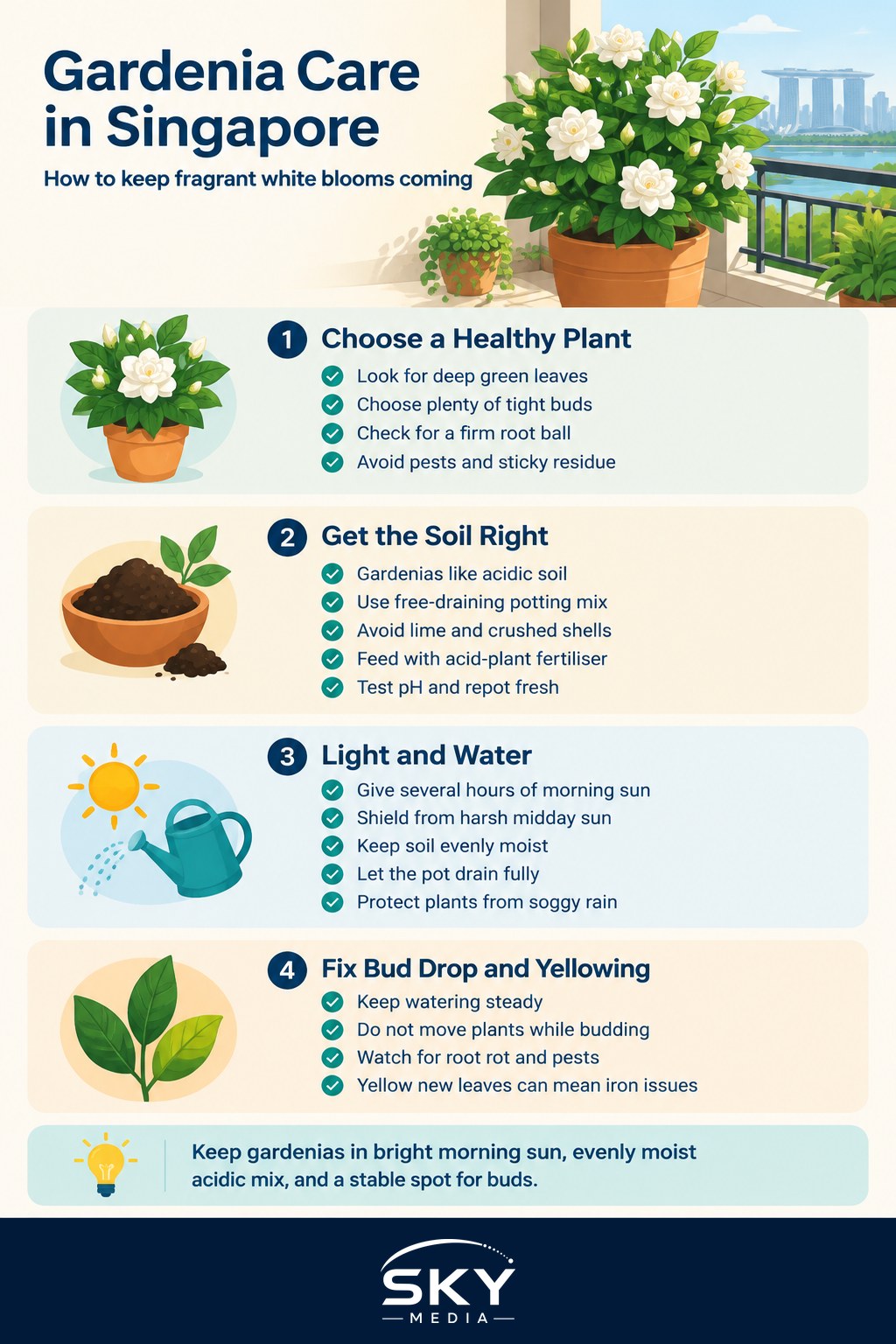
When buying, look for:
- Deep green leaves with no widespread yellowing or sticky residue underneath.
- Plenty of tight buds rather than a plant already covered in open flowers, which may be near the end of its flush.
- A firm root ball that does not wobble in the pot.
- No signs of pests such as white fluffy mealybugs in leaf joints or tiny moving dots that suggest spider mites.
The Acid Soil Question
The single most important thing to understand about gardenias is that they are acid-loving plants. In soil that is neutral or alkaline, the roots struggle to take up iron and other nutrients even when those nutrients are present. The classic result is new leaves that turn yellow while the veins stay green, a pattern called interveinal chlorosis.
To keep the root zone acidic:
- Start with the right mix. A free-draining potting mix with added organic matter such as compost, composted bark or a little peat-free coir works well. Some nurseries sell mixes labelled for acid-loving plants.
- Avoid adding lime or crushed shells, and be cautious with potting mixes heavy in materials that raise pH.
- Use a fertiliser formulated for acid-loving plants, following the label rates. Products sold for azaleas, camellias or gardenias are typical.
- Consider chelated iron if new leaves keep yellowing between the veins despite good care. Follow the product’s directions closely, as more is not better.
- Test occasionally. Simple soil pH test kits and meters are sold at garden shops. Gardenias are generally happiest in mildly acidic conditions.
Tap water in Singapore is treated and can slowly nudge potting mix away from acidic over time. Many growers collect rainwater for acid-loving plants where practical, or simply repot every year or two with fresh mix to reset the soil.
Light, Water and Humidity in a Tropical Home
Gardenias need bright light to flower well. In Singapore, several hours of morning sun with some protection from the harshest midday and afternoon sun suits most plants. On a west-facing HDB corridor or balcony, light shade cloth or placement behind taller plants can stop leaf scorch.
Watering is where many gardenias go wrong:
- Keep the soil evenly moist but never waterlogged. Check with a finger. Water when the top couple of centimetres feel just dry.
- Water deeply until it runs from the drainage holes, then let the pot drain fully. Do not leave the pot standing in a saucer of water.
- Avoid swings between bone dry and soggy. Inconsistent moisture is a leading cause of bud drop.
- Watch for heavy rain. During monsoon spells, potted plants under open sky can stay wet for days. Move them under cover if the mix stays soggy.
Our natural humidity suits gardenias, though plants kept indoors in air conditioning can suffer from dry air and low light. Gardenias are best treated as outdoor or balcony plants here.
Why Gardenia Buds Drop and How to Stop It
Bud drop is the most common complaint. Plants set dozens of buds, then many turn yellow or brown and fall off before opening. It is usually a stress response, and the cause is often one of these:
| Likely cause | What you notice | What to do |
|---|---|---|
| Uneven watering | Buds drop after the pot dried out or stayed soggy | Water on a steady routine and improve drainage |
| Moving the plant | Drop starts a few days after relocating or repotting | Find a good spot and leave it there during budding |
| Too little light | Many buds, few open, leggy growth | Move to a brighter spot with morning sun |
| Heat and harsh sun | Buds brown at the edges, leaves scorched | Give light afternoon shade |
| Pests | Sticky leaves, sooty mould, distorted buds | Inspect and treat mealybugs, aphids or thrips |
| Root problems | Wilting despite moist soil, sour smell | Check roots, repot into fresh free-draining mix |
A few other tips help. Avoid repotting while the plant is in heavy bud. Do not fertilise heavily just before or during flowering, as it can push leafy growth at the expense of flowers. And accept that a plant carrying a huge number of buds may shed a few naturally.
Yellow Leaves: Reading the Signs
Not every yellow leaf is a problem. Gardenias shed some older, lower leaves as part of normal growth, especially after a flowering flush. Look at where the yellowing appears:
- Older lower leaves turning yellow and dropping, with healthy new growth, is usually normal turnover.
- New leaves yellow with green veins points to the soil pH or iron uptake issue covered above.
- Widespread yellowing with wilting and wet soil suggests overwatering or root rot.
- Pale, slow growth overall may mean the plant is hungry and needs regular feeding.
- Yellow speckling with fine webbing suggests spider mites. Check the undersides of leaves.
Feeding, Pruning and Pests
Feed gardenias regularly during active growth with an acid-plant fertiliser at the label rate. Slow-release granules or diluted liquid feed both work. Since our growing season is year-round, many growers feed lightly but consistently instead of in big doses.
Prune lightly just after a flush of flowers fades. Pinch or trim leggy stems to encourage bushier growth and more flowering tips, and remove spent flowers to keep the plant tidy. Avoid hard pruning just before buds form.
The main pests are mealybugs, scale, aphids, whitefly and spider mites. Inspect leaf undersides and stem joints regularly. Wipe off small infestations with a damp cloth or rinse with water, and if you use an insecticidal soap or horticultural oil, follow the product label and avoid spraying in hot midday sun. Sticky honeydew and black sooty mould on the leaves are signs that sap-sucking pests are present.
Enjoying the Blooms
Single gardenia flowers last only a few days, but a healthy plant flowers in flushes, so you get a steady supply. A floating flower in a bowl of water is a simple way to bring the scent indoors.
If you want more scent around your home, see our guides to growing a fragrant garden, growing jasmine and fragrant climbers and the best fragrant night-blooming plants for Singapore balconies. Gardenias pair well with all of them, provided each plant gets the soil and light it prefers.
Further reading: Growing Crown of Thorns (Euphorbia Milii) in Singapore · Growing Lucky and Fengshui Plants