
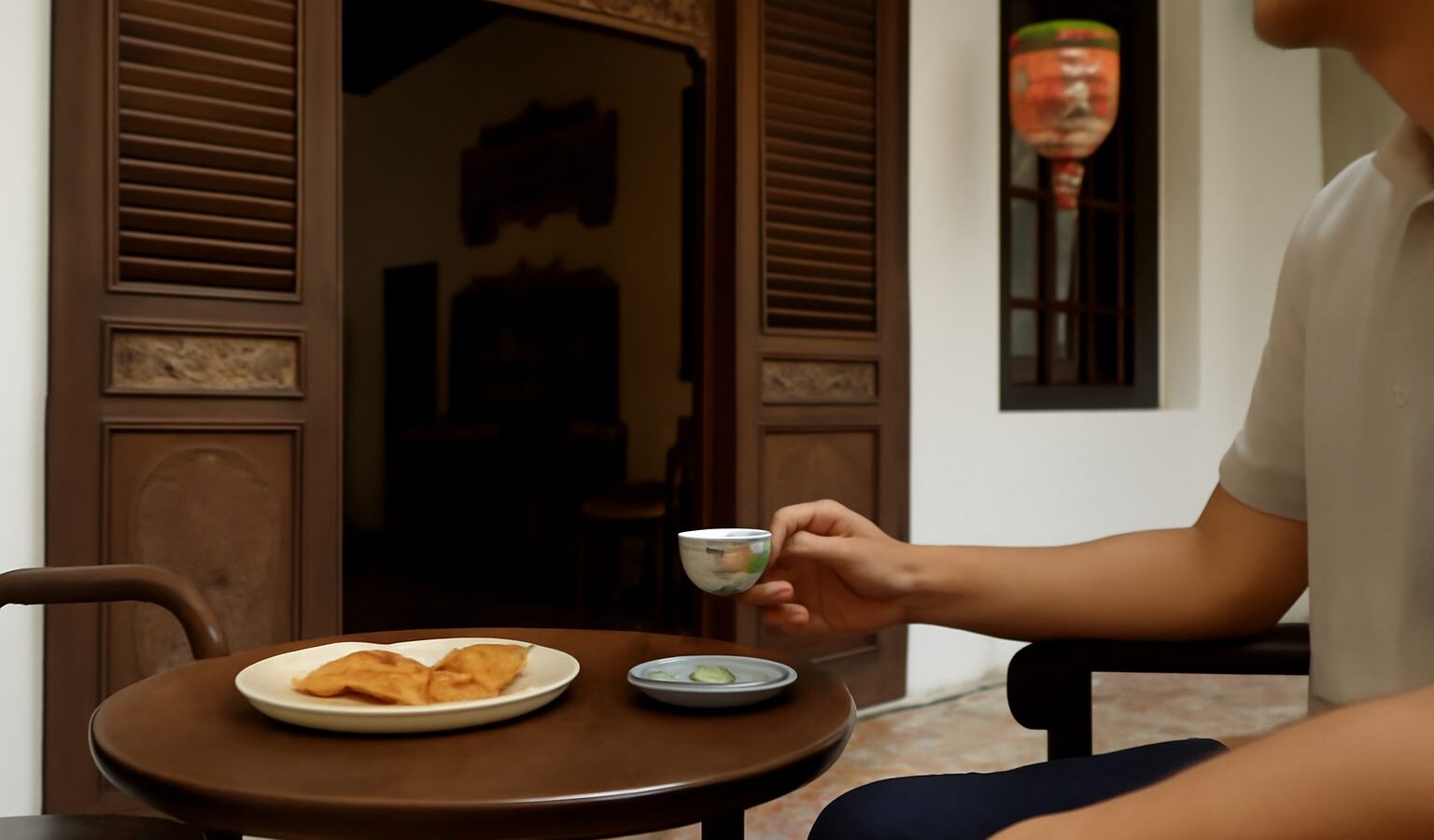
Step through the deep blue façade of the Baba House on Blair Road and you leave the modern city behind. Inside is a Peranakan family home restored to look much as it might have around a century ago, from the carved timber screens to the ancestral altar upstairs. Cared for by the National University of Singapore (NUS), the Baba House is one of the most atmospheric heritage homes in the country, and a rare chance to see how a Straits Chinese family actually lived rather than reading about it behind glass.
This guide explains what the Baba House is, what you will see inside, how visits usually work, and why this single conserved home tells such a rich story about Singapore’s multicultural past.
What the Baba House Is
The term “Peranakan” describes communities of mixed local and immigrant heritage in the region, the best known being the Straits Chinese, descendants of early Chinese settlers who married and settled in the Malay world over generations. Men in this community were traditionally called “Baba” and women “Nyonya”, which is why a Straits Chinese family home like this is known as a Baba house. The culture blended Chinese, Malay and European influences into a distinctive style of dress, food, language and design.
The house on Blair Road is a conserved terrace shophouse in the Blair Plain area, near Outram and Tanjong Pagar. It was once a real family home, and after careful restoration it was opened as a heritage house under NUS. Rather than turning it into a conventional museum with modern display cases, the team restored the interiors and furnished the rooms so the house reads as a lived-in home. The result is intimate and quietly moving.
What You Will See Inside
The house is arranged over several floors, and each tells part of the story of a well-to-do Straits Chinese family.
- The front reception hall, the most formal and decorated space, where guests were received. Look for intricately carved and gilded woodwork, patterned floor tiles and the mix of Chinese and European furniture that marks Peranakan taste.
- The ancestral hall, with an altar honouring the family’s forebears. Ancestral respect was central to family life, and this space shows how devotion was woven into the home itself.
- Private living quarters and bedrooms, furnished with everyday objects, textiles and personal items that suggest the routines of daily life.
- Decorative details throughout, including beadwork, porcelain, embroidered pieces and the famous colourful tiles, all hallmarks of Peranakan craft and identity.
Part of the pleasure is how personal it feels. Because the rooms are furnished as a home, you notice small human things, the placement of a chair, the wear of a threshold, that a display case would never convey.
How a Visit Usually Works
The Baba House is a conserved home rather than a large public museum, so access is more careful and considered, and details can change. Always check the current arrangements with NUS before planning your trip.
- Look up current details first. Visiting the Baba House has often been arranged through guided sessions or booked visits rather than casual walk-ins, so check the NUS Museum or Baba House pages for how visits and any tours currently work, opening days and whether booking is needed.
- Book ahead if required. If guided visits or registration apply, reserve your place early, as small-group heritage sessions can fill up.
- Arrive on time and respectfully. This is a heritage interior with delicate finishes, so follow the guides on where you may walk, what you may touch, and photography, which may be limited to protect the house.
- Allow time to linger. A guided visit typically walks you through the rooms with context, so give yourself the full session rather than rushing.
- Come by public transport. The house sits in a quiet residential conservation street near Outram Park, easily reached by MRT, with limited parking nearby.
Peranakan Heritage Across Singapore
The Baba House is one of several places where you can meet Peranakan culture, and each offers something different. The table below compares their general character, not fixed details, which you should verify before visiting.
| Place | What it offers | Best for |
|---|---|---|
| NUS Baba House | A restored family home furnished as if lived in | Intimate, room-by-room atmosphere |
| A dedicated Peranakan museum | Broad galleries on the community’s history and objects | The wider story and context |
| A Peranakan enclave such as Katong or Joo Chiat | Colourful shophouses, kueh and eateries in situ | Living streetscape and food |
| A heritage shophouse trail | Architecture and conservation across a district | Design and building details |
Seen together, they move from the personal to the panoramic. Many visitors find the Baba House the most affecting because it is a single home, not a survey.
Why This Heritage Home Matters
Singapore’s story is one of many communities arriving, mixing and making something new, and the Peranakan world is one of the oldest and clearest examples. A Baba house captures that blend in physical form: Chinese ancestral devotion, Malay and regional influences in food and language, and European touches in furniture and fashion, all under one roof.
Preserving a home like this matters because everyday heritage is easily lost. Grand monuments tend to survive, but the ordinary interiors where families lived, argued, celebrated and mourned usually disappear as neighbourhoods change. By conserving one home so carefully, NUS keeps a whole way of life legible for future generations, and gives newcomers a warm, human doorway into understanding how diverse Singapore has always been.
For a curious visitor, an hour in the Baba House is time well spent. You come away not with facts memorised, but with a feeling for a family and a culture, which is exactly what heritage at its best should do.
Explore more: to place this home in the bigger picture of the city, visit the Singapore City Gallery to see how conservation fits into planning, read about the gotong royong and kampong spirit that shaped older neighbourhoods, or step into other vanishing trades such as traditional Chinese medicine shops.