
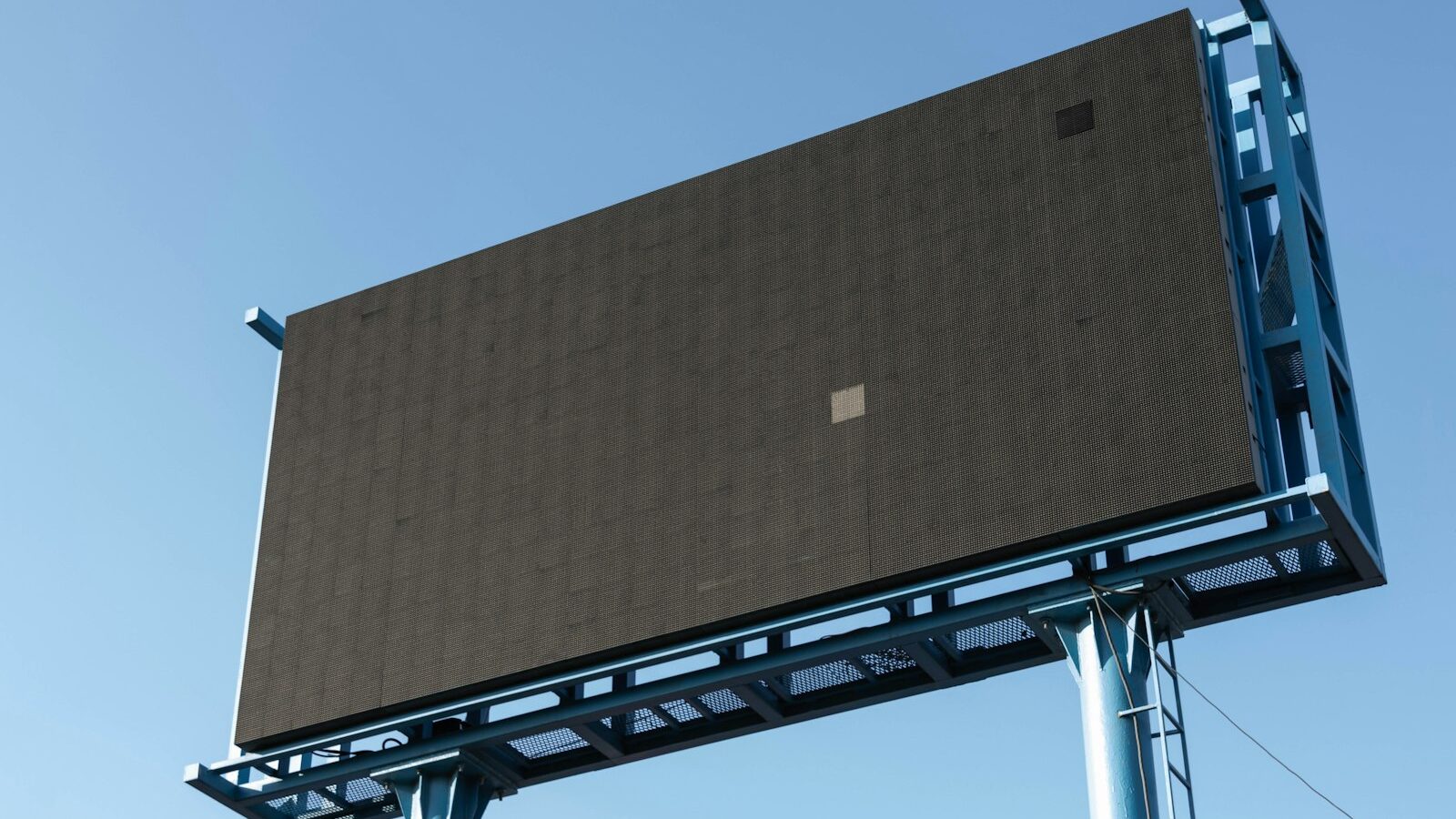
Specifying outdoor digital signage in Singapore is a different exercise from choosing a screen for an air-conditioned lobby. Our climate is unforgiving: equatorial sun, ambient temperatures that regularly sit in the low-to-mid thirties, humidity above 80 per cent for much of the year, and monsoon downpours that arrive with little warning. A display that performs beautifully indoors can wash out, overheat or fail within months if it is deployed at a storefront, a bus interchange or an open-air event without the right engineering behind it.
This guide explains what actually makes a screen outdoor-ready, the local conditions your specification has to account for, and the buying considerations that separate a five-year asset from an expensive mistake. It is written for facilities managers, F&B operators, retail marketers and procurement teams who need the display to still be legible, and still switched on, after eighteen months in the Singapore weather.
Why Singapore’s climate is the real specification
Most signage failures here are not about the picture quality on day one. They are about whether the hardware can survive the environment it is placed in. Four local factors drive nearly every decision.
- Direct sun and glare. A north-south facing shopfront on Orchard Road or a screen on an open concourse can receive intense direct sunlight for hours. Standard indoor panels, typically 300 to 500 nits, simply disappear under that load.
- Heat build-up. Ambient heat combined with solar gain can push the inside of a sealed enclosure well past 60 degrees Celsius. Liquid crystal displays can suffer “blackening” or “clearing” when internal temperatures exceed their rated limit, and electronics degrade faster in sustained heat.
- Humidity and condensation. Persistent moisture is the quiet killer. It corrodes connectors, fogs the glass and, if the enclosure “breathes” incorrectly, allows condensation to form on the inside of the front panel.
- Monsoon rain and wind-driven water. During the year-end monsoon, water does not fall neatly downward. It is driven sideways into gaps, seams and cable entries.
If your supplier cannot explain how a proposed unit handles each of these, the specification is not yet complete.
What makes a display genuinely outdoor-ready
An “outdoor digital display” is a system, not just a brighter television. Several elements work together to keep it readable and reliable.
High brightness for sunlight readability
Brightness is measured in nits (candelas per square metre). As a working rule for Singapore conditions:
- 700 to 1,000 nits suits covered walkways, semi-sheltered building frontages and shaded five-foot-ways.
- 2,000 to 2,500 nits is the sensible baseline for a window-facing display or a partially exposed storefront.
- 3,000 to 5,000 nits is what you need for fully exposed, direct-sun positions such as freestanding totems or facade screens.
High brightness signage should also include an ambient light sensor so the panel dims automatically at night. This protects the components, reduces running costs and avoids blinding passers-by after dark.
IP rating and weatherproof enclosures
The ingress protection (IP) rating tells you how well a unit resists dust and water. The two digits matter: the first covers solids, the second covers water. For outdoor use in Singapore, look for an IP65-rated display on exposed surfaces, which means dust-tight and protected against water jets from any direction. A semi-sheltered position may accept IP54 on the rear while keeping IP65 on the front face.
A weatherproof digital signage enclosure does more than keep rain out. Good ones manage airflow so that heat escapes without letting moisture in, use marine-grade or powder-coated housings to resist corrosion, and seal cable entries properly at the base.
Cooling and thermal management
Because our ambient temperature is already high, passive venting is rarely enough for a fully sealed, sun-facing screen. Look for active cooling: internal fans, heat exchangers or, on larger units, air-conditioned enclosures that keep the panel within its operating range. Ask for the rated operating temperature and confirm it comfortably exceeds the real-world internal temperatures described above.
Anti-glare and optical bonding
A bright panel behind a reflective sheet of glass still fights you. Anti-glare or anti-reflective coatings cut mirror-like reflections, and optical bonding (filling the air gap between the glass and the panel) reduces internal reflection, improves contrast in sunlight and prevents internal condensation. For any screen a customer reads at close range, these features are worth the premium.
A quick field test: if you cannot read the screen clearly while standing with the midday sun behind you, the brightness, coating or placement is wrong. Fix it before you sign off, not after.
Where outdoor signage earns its keep
The strongest deployments solve a specific commercial problem rather than simply “adding a screen”.
- F&B storefronts. Digital menu boards and promotional displays at a cafe or restaurant frontage let operators change pricing, dayparts and offers instantly. If you run a food business, our note on enhancing restaurant operations with digital menu boards covers this use case in detail.
- Malls and retail facades. High-brightness screens at entrances and along walkways carry tenant promotions, wayfinding and advertising that a static poster cannot match.
- Transport and transit. Bus stops, interchanges and carparks use weatherproof displays for arrival information, advertising and directional guidance, often in high-vibration, high-dust settings.
- Events and pop-ups. Outdoor concerts, roadshows and night markets rely on rugged, quick-to-deploy screens that tolerate a sudden shower and pack down again.
- Building directories and totems. Freestanding outdoor kiosks and totems handle wayfinding and self-service. If interaction is involved, read our guide on how to select the best digital kiosk.
Buying considerations that protect your investment
Once you have shortlisted outdoor-rated hardware, the following considerations usually decide whether the project succeeds over its full lifespan.
Placement, mounting and power
Wherever possible, choose a covered or semi-sheltered position. Even a modest awning dramatically lowers heat load, glare and rain exposure, which in turn lets you specify a less expensive, longer-lasting unit. Confirm mounting structure and wind loading, and make sure power and network cabling are routed and sealed to the same standard as the enclosure.
Serviceability and warranty
Outdoor units work hard, so ask how you service one when it fails. Is access front or rear? Are spare parts held locally? What does the warranty cover, and does it include on-site labour in Singapore? A slightly higher upfront cost with local support usually beats a cheaper unit that sits dark for weeks awaiting overseas parts.
Content management and remote monitoring
A screen you cannot update easily will quickly show stale content. A good content management system lets you schedule campaigns, push changes across multiple sites and monitor each display’s status and temperature remotely, so you learn about a fault before your customers do.
Total cost of ownership
Compare units on running cost, not just purchase price. Power draw, cooling, expected panel life at high brightness and maintenance intervals all add up. A commercial-grade outdoor panel rated for extended daily operation will outlast a consumer television used out of place, which is a false economy in this climate.
Getting the specification right the first time
Outdoor digital signage in Singapore rewards a careful brief. Start from the position and its exposure, work out the brightness and IP rating that position demands, confirm the cooling and coatings, then match the content system and support arrangement to how the display will be used. When those pieces align, an outdoor screen becomes a dependable, weatherproof asset that keeps working through heat, humidity and the monsoon alike.
If you are weighing up suppliers and want a structured way to compare them, our guide to choosing the right digital signage supplier in Singapore sets out the questions to ask before you commit.
Explore more: Digital Signage hub · Choosing the right digital signage supplier in Singapore · How to select the best digital kiosk · Enhancing restaurant operations with digital menu boards