
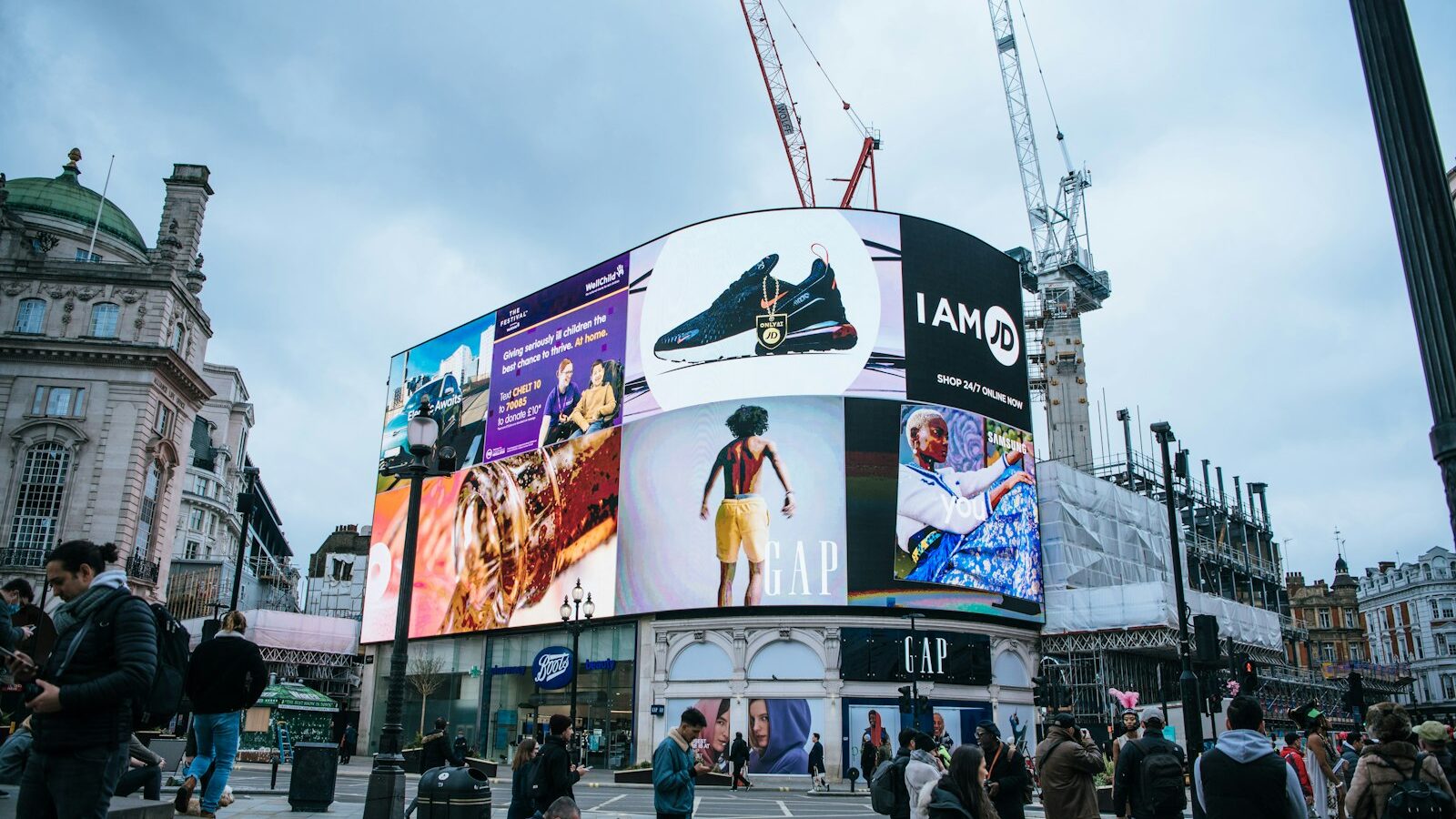
Digital signage has quietly become part of everyday life in Singapore – the menu boards at your neighbourhood kopitiam chain, the wayfinding screens in Orchard malls, the promotional displays in clinic waiting rooms. But behind every good screen network is a decision most businesses only make once: which digital signage supplier do you actually trust to build and support it?
Pick well and the system runs itself for years. Pick badly and you inherit frozen screens, licensing surprises, and a vendor who stops answering emails. This guide walks through what separates a dependable Singapore digital signage partner from a box-shifter – and the exact questions to ask before you sign anything.
What a digital signage supplier actually provides
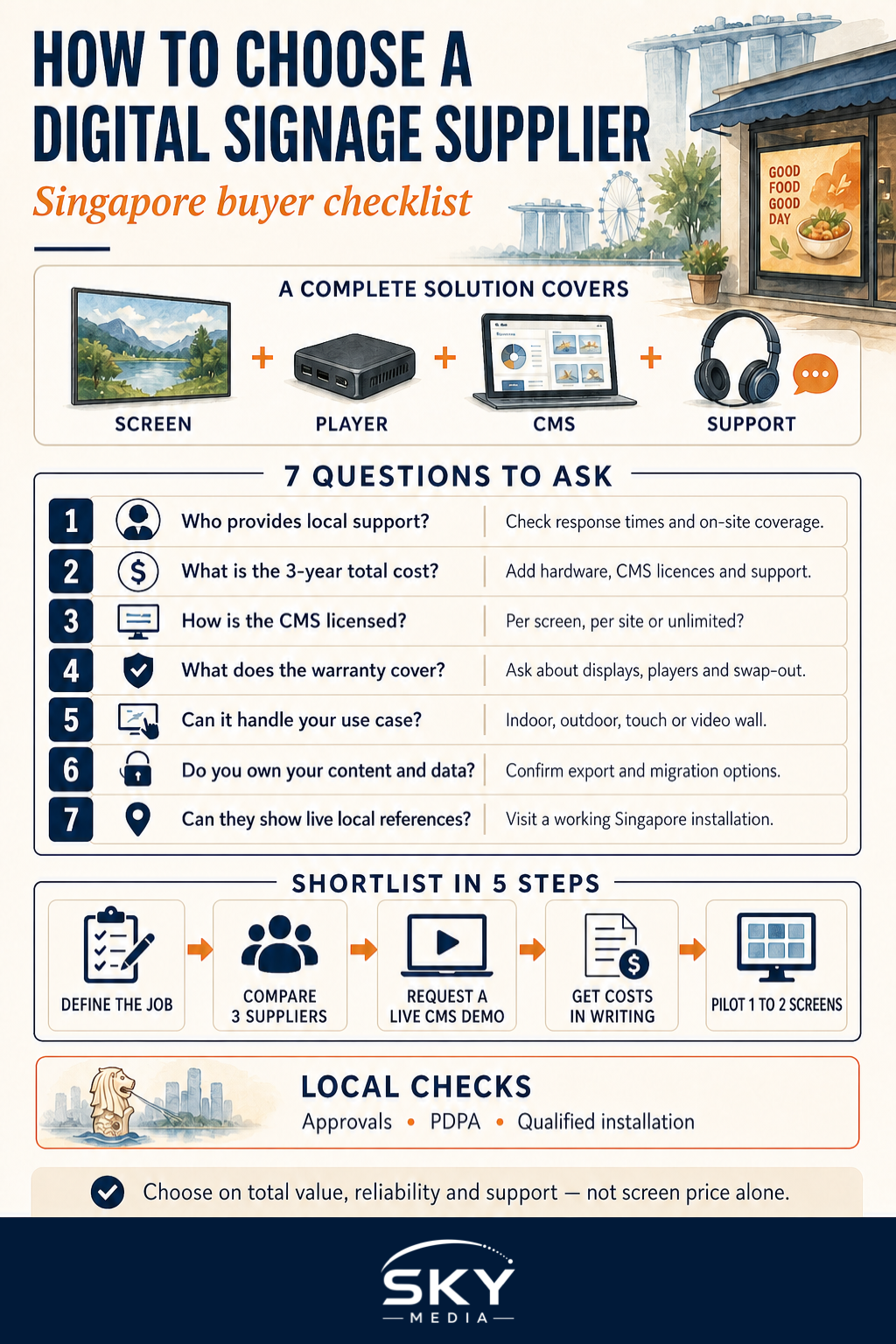
“Digital signage” is really three things bundled together, and a good supplier is clear about all three:
- The displays – commercial-grade screens rated for long operating hours (consumer TVs are not; they void warranty and dim quickly under 12-16 hour daily use).
- The media player – the small device that drives each screen. Your choice of digital display player in Singapore determines reliability, so ask what hardware they standardise on and whether it’s fanless (fanless units survive our humidity and dust far better).
- The CMS – the content management system you log into to schedule and update content remotely. This is where cloud vs on-premise matters (below).
If a supplier only wants to talk about screen prices, that’s a red flag. The screen is the commodity; the software and support are where you live for the next five years.
Cloud vs on-premise: the first real decision
Most cloud based digital signage in Singapore now runs on a subscription CMS, and for good reason:
- Update from anywhere. Change a promotion across ten outlets from one browser tab, instead of walking a thumb drive to each screen.
- Automatic monitoring. A proper cloud platform tells you the moment a screen goes offline, before your customer notices the black rectangle.
- Lower upfront cost. No on-site server to buy or maintain.
On-premise still makes sense for networks with strict data-isolation needs or unreliable connectivity. But for the vast majority of Singapore SMEs and retail chains, cloud is the default – just confirm what happens to your screens if the internet drops (good players keep playing the last schedule offline and re-sync when they reconnect).
Ask this: “If my broadband goes down for a day, do the screens keep showing content?” The right answer is yes.
Seven questions that separate good suppliers from the rest
Use this as your shortlist scorecard when comparing digital signage providers:
- Who provides on-the-ground support? Local Singapore support with real response-time commitments beats a cheaper overseas reseller every time a screen fails on a Friday evening.
- What’s the total cost over three years? Add hardware + CMS licence + support. A “cheap digital signage” quote often hides recurring per-screen licence fees that overtake a slightly higher upfront price within a year.
- Is the CMS licence per-screen or unlimited? This changes the maths completely as you scale.
- What warranty covers the displays and players, and is replacement swap-out included?
- Can it handle your content type? Menu boards, video walls, touch kiosks and outdoor units each have different requirements – see our guides on outdoor digital signage and choosing a digital kiosk.
- Do you own your content and data, and can you export/migrate if you leave?
- Can they show you live local references? A supplier proud of their work will point you at screens you can go and look at.
What “good value” really means in Singapore
The cheapest quote is rarely the cheapest system. A display that dims after 18 months, a player that needs a site visit to reboot, or a licence that quietly renews at a higher rate – these are the costs that don’t appear on the first invoice. Weigh a digital signage supplier in Singapore on total cost of ownership and support responsiveness, not the sticker price of the screen.
For content-heavy environments like F&B and retail, also factor in how easy the CMS makes day-to-day updates. If your staff can’t confidently change a price or swap a promo in two minutes, the system won’t get used – and unused signage is the most expensive signage of all.
A simple shortlisting process
- Define the job. How many screens, where, indoor or outdoor, static or interactive?
- Shortlist three suppliers and put each through the seven questions above.
- Ask for a live demo on the actual CMS you’d use – not a slide deck.
- Request a three-year cost breakdown in writing.
- Start with a pilot of one or two screens before committing the whole network.
Get those five steps right and you’ll avoid the expensive mistakes most first-time buyers make.
Common mistakes first-time buyers make
Most signage regret in Singapore does not come from choosing the wrong screen brand. It comes from a handful of avoidable planning errors that only surface months after installation, when the honeymoon quote is long forgotten. Knowing them in advance is the cheapest insurance you can buy.
- Buying on screen size alone. A big bright panel means nothing if it sits above eye line in a narrow corridor, or faces a west-facing window where afternoon glare washes it out. Brightness (measured in nits) and viewing angle matter far more than diagonal inches for a screen people actually read.
- Forgetting who updates the content. Signage is only as good as the person keeping it fresh. If nobody owns the schedule, screens drift into showing last quarter’s promotion. Decide early whether your own staff will manage the CMS or whether you want a managed-content arrangement from the supplier.
- Underestimating cabling and power. Retrofitting a screen into an existing shopfront often needs new power points and concealed data runs, which can cost more than the display itself. Ask for the installation scope in writing, not just the hardware price.
- Ignoring the exit plan. Buyers rarely ask what happens when they want to switch suppliers. Confirm you can export your content library and that the players are not locked to one proprietary CMS you can never leave.
Catch these four early and you sidestep the complaints that fill most signage support inboxes.
Singapore-specific rules and site considerations
Digital signage does not exist in a regulatory vacuum, and a supplier who knows the local landscape will raise these points before you do. A box-shifter usually will not.
For outdoor or shopfront displays, advertising and signboard approvals may apply depending on your premises and location, so check current requirements with the URA and your building management before committing to an outdoor unit. Illuminated or large-format signage near roads can also carry conditions, and the LTA is the reference point where a display could affect drivers or sits near a road reserve.
If your screens are interactive or capture any visitor information – a touch kiosk that collects feedback, a camera that counts footfall, or a form that takes contact details – you are handling personal data. Make sure your setup aligns with the Personal Data Protection Act, and refer to the PDPC for current guidance on notification, consent, and data retention.
Finally, treat electrical safety and installation standards as non-negotiable. Confirm that mounting, wiring, and any fixed installation work is carried out to the relevant Singapore standards by properly qualified installers, and keep the documentation. It protects your warranty, your insurance position, and the people walking underneath the screen.
Explore more: browse all our digital signage guides, or read up on cloud-based digital signage, outdoor digital signage and choosing the best digital kiosk.