
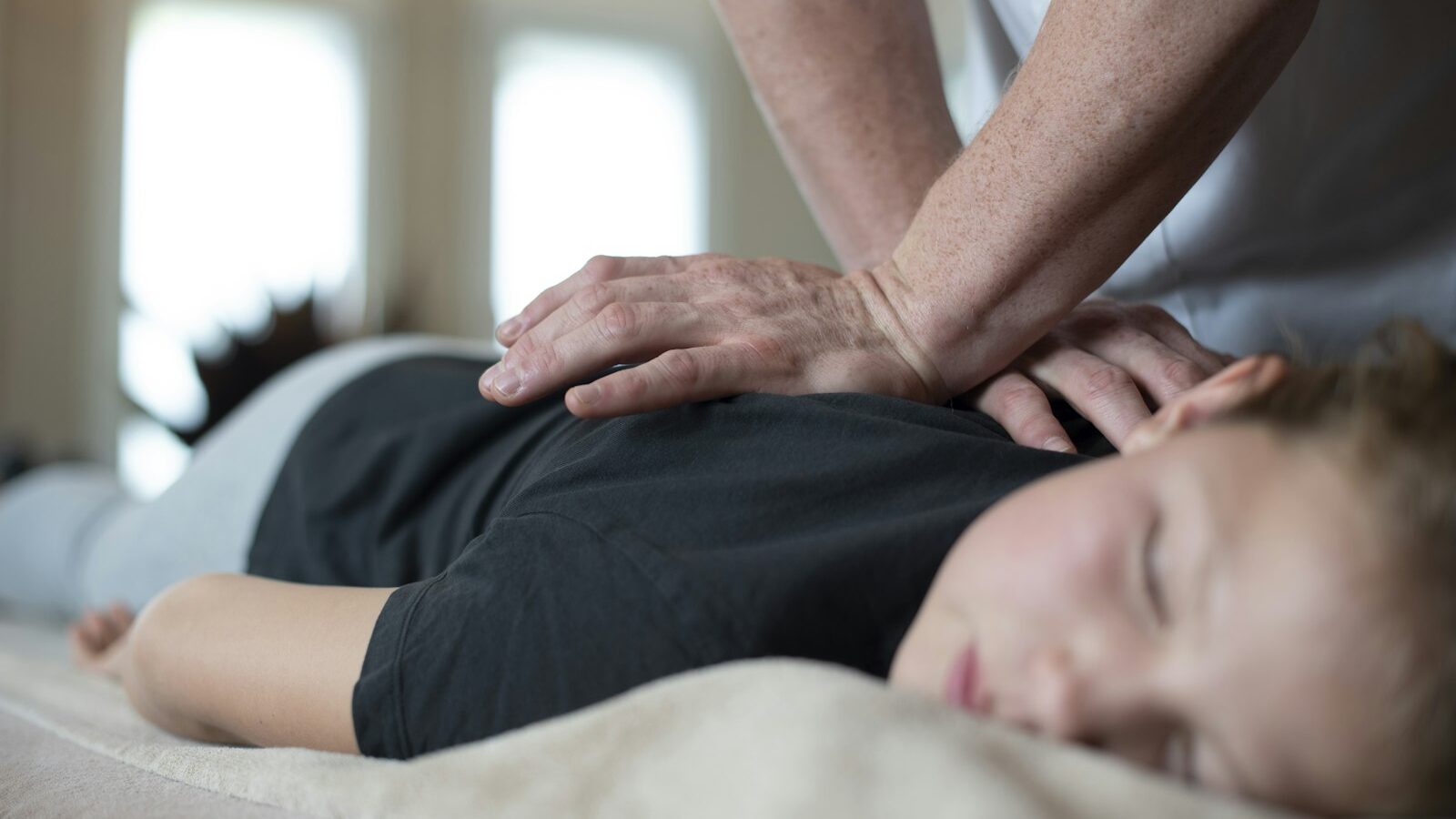
Many Singapore families grew up with a grandparent rubbing their tummy for a stomach ache or pinching along their spine to “open the appetite”. Today, paediatric tuina in Singapore is offered as a formal service at a number of TCM clinics, and parents often ask whether it is safe, whether it works and how to pick someone qualified. This guide explains what children’s tuina and other TCM treatments for kids usually involve, what the evidence says so far, and how to choose a registered practitioner.
It is general information, not medical advice. Always speak to your child’s doctor or a polyclinic first for any illness, and keep them informed about any complementary treatment you try.
What Paediatric Tuina Involves
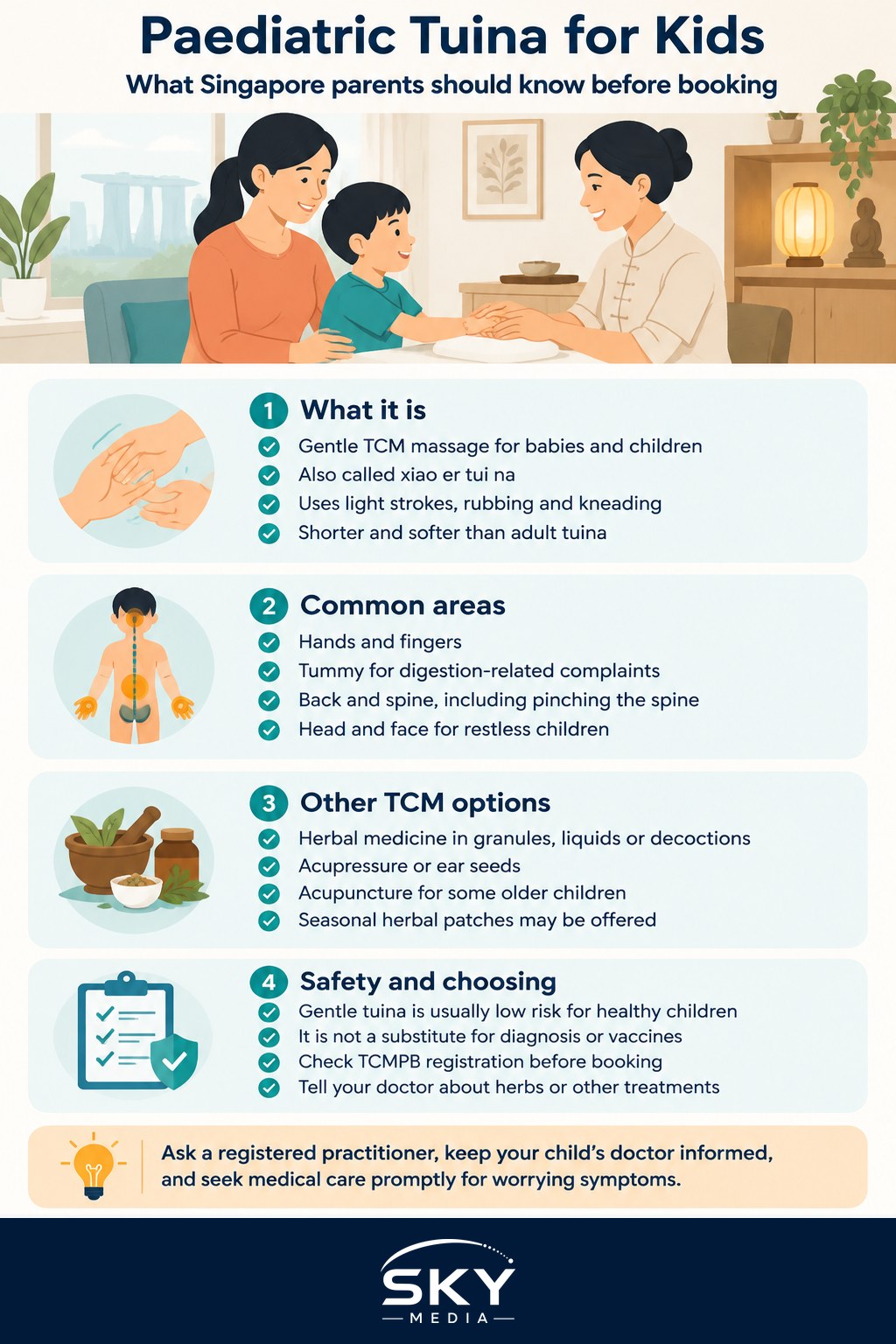
Tuina (推拿) is the hands-on massage and manipulation branch of Traditional Chinese Medicine (TCM). Paediatric tuina, sometimes called xiao er tui na (小儿推拿), is a gentler version adapted for babies and young children. Instead of the deep pressure used on adults, practitioners use light, rhythmic strokes, rubbing and kneading.
Sessions commonly focus on:
- The hands and fingers. Paediatric tuina traditions use specific points and lines on a child’s hands and forearms, stroked in particular directions.
- The abdomen. Gentle circular rubbing around the tummy is commonly used for digestion-related complaints.
- The back and spine. A technique often called “pinching the spine” (捏脊) involves lifting and rolling the skin along the back.
- The head and face. Light strokes on the forehead and around the eyes are sometimes used for children who are restless at night.
A session is usually short compared with adult tuina, and practitioners typically use a little powder or oil. A child should not be in pain. Crying from unfamiliarity is common in toddlers, but a practitioner should stop or adjust if your child is genuinely distressed.
Our guide to TCM tui na, massage and cupping covers the adult treatments, which are quite different in strength and approach.
Other TCM Treatments Offered for Children
Beyond tuina, TCM clinics may offer children:
- Herbal medicine, as granules, liquids or decoctions. This is the area to be most careful with. Tell your paediatrician before your child takes any herbal product, especially if they take other medicines or have allergies.
- Acupressure or ear seeds, small seeds taped to ear points, which avoid needles.
- Acupuncture, which some practitioners offer to older children. Many practitioners avoid needles with very young children.
- Seasonal treatments, such as herbal patches applied at certain times of the year, a practice some families follow.
Practitioners differ in what they offer and to which age groups, so ask before booking.
What the Evidence Says
Parents deserve a straight answer here. Research on paediatric tuina exists, much of it from China, looking at complaints such as infant colic, constipation, poor appetite and diarrhoea. Some studies report benefits, but systematic reviews often point out that many trials are small, short or have design limitations, so the overall quality of evidence is generally considered low to moderate.
In practical terms:
- Gentle tuina from a trained practitioner is generally regarded as low risk for healthy children.
- It may be helpful as a comforting, complementary practice for mild, ongoing complaints.
- It is not a replacement for diagnosis, vaccinations, antibiotics when needed or any treatment your doctor prescribes.
- Herbal medicines carry more potential for side effects and interactions than massage does.
If a practitioner claims tuina can cure serious conditions, replace vaccines or treat developmental conditions on its own, treat that as a warning sign.
When to See a Doctor Instead
Some symptoms need prompt medical attention, not a massage appointment. Go to a doctor, polyclinic or A&E as appropriate if your child:
- Is a young baby with a fever
- Shows signs of dehydration, such as very few wet diapers, a dry mouth or unusual drowsiness
- Has breathing difficulty, a rash that does not fade, persistent vomiting or blood in stool
- Seems unusually floppy, irritable or hard to wake
For general guidance on children’s healthcare options, see our overview of paediatric care in Singapore for families. HealthHub also has parent-friendly information on common childhood illnesses.
Choosing a Registered Practitioner
In Singapore, TCM practitioners who practise acupuncture or TCM must be registered with the TCM Practitioners Board (TCMPB), which operates under the Ministry of Health. You can check whether a practitioner is registered through the board’s online register before you book.
| What to check | Why it matters | How to check |
|---|---|---|
| Registration with TCMPB | Confirms the practitioner is allowed to practise TCM | Search the official register by name |
| Experience with children | Paediatric tuina uses different techniques and pressure | Ask how often they treat children and which ages |
| Clear explanation of treatment | You should know what will be done and why | Ask before the first session starts |
| Herbal product sourcing | Products should meet Singapore safety rules | Ask what is prescribed and keep the labels |
| Willingness to work with your doctor | Good practitioners encourage medical follow-up | Notice whether they ask about doctor visits |
Other good signs:
- The practitioner asks about your child’s medical history, medicines and allergies.
- They explain how many sessions they suggest and why, without pressuring you into a large prepaid package.
- They tell you to see a doctor if symptoms persist or worsen.
- The clinic is clean, and the practitioner washes their hands before touching your child.
Masseurs at general spas and wellness centres are not the same as registered TCM practitioners. If your goal is a TCM treatment for your child, choose a registered practitioner. Our guide on how to find a TCM practitioner in Singapore explains the search process in more detail.
Preparing Your Child for a Session
A little preparation makes the first visit easier:
- Pick a time when your child is not hungry or overtired. Avoid a session straight after a big meal.
- Explain to older children that it is a gentle massage, and let them sit on your lap if that helps.
- Bring a favourite toy or book for distraction.
- Stay in the room throughout the session.
- Write down what was done and anything prescribed, so you can tell your doctor.
If you are thinking about learning some simple techniques at home, ask the practitioner to show you, but stick to gentle, comforting strokes and avoid anything that hurts or that you are unsure about.
Costs and Insurance
Fees differ between clinics and depend on session length and whether herbs are included. Ask for the price per session and for any herbal prescription before treatment. Coverage under insurance plans varies, and many plans offer limited or no TCM coverage for children, so check your policy wording or ask your insurer or HR. Our article on whether TCM and acupuncture are covered by insurance explains what to look for.
Paediatric tuina can be a gentle, reassuring addition to your child’s care when it is done by a registered practitioner and alongside, not instead of, your child’s doctor.
Frequently Asked Questions
What age can a child start paediatric tuina? Practitioners differ on age ranges, and some treat babies while others prefer older children. Ask the registered practitioner what age group they work with and how they adapt for infants. For very young babies, speak to your paediatrician first.
Should I cancel a tuina session if my child has a fever or cold? Yes, in most cases it is better to postpone and see a doctor first, because fever in a child needs medical attention, especially in a baby. Tell the practitioner about any recent illness. Reschedule when your child is well and your doctor agrees.
Is paediatric tuina suitable for a child with eczema or sensitive skin? Tell the practitioner beforehand, since massage oils or powder can irritate inflamed or broken skin. Treatment may need to avoid affected areas or be delayed. Check with your child’s doctor, and stop if redness or itching gets worse.
Is it normal for my child to have red marks after tuina? Mild, short-lived redness can occur, but marks that look like bruises, persist or are painful should be taken seriously. Ask the practitioner what to expect and tell them if your child seems hurt. See a doctor if you are concerned.
How many tuina sessions will my child need, and how often? It varies with the complaint and the practitioner, and no number suits every child. A good practitioner explains the plan, reviews progress and suggests seeing a doctor if there is no improvement. Be cautious of large prepaid packages.
Further reading: Heaty Foods and Kids: TCM Beliefs vs Paediatric Advice